
The Definition of a Contract: Three West Indies Retainers and the Ledger of Selection Philosophy
**मुख्य उत्तर**: क्रिकेट वेस्टइंडीज (CWI) ने 2026-27 चक्र के लिए जॉन कैंपबेल, मैथ्यू फोर्ड और आमिर जंगू को अंतरराष्ट्रीय रिटेनर अनुबंध दिए हैं। यह सूची प्रदर्शन-पुरस्कार नहीं, बल्कि फ्रेंचाइजी लीग युग में राष्ट्रीय टीम के लिए उपलब्धता सुनिश्चित करने का एक चयन-दर्शन दस्तावेज है। **मुख्य तथ्य**: - जॉन कैंपबेल: दिल्ली में भारत के खिलाफ 115 रन (पहला टेस्ट शतक); 2019 के बाद पहला केंद्रीय अनुबंध; छह साल बाद ODI वापसी। - मैथ्यू फोर्ड: दोनों सफेद गेंद प्रारूपों में वेस्टइंडीज का अग्रणी पावरप्ले विकेट-टेकर; एक वर्ष में 10 T20I और 6 ODI विकेट। - आमिर जंगू: श्रीलंका के खिलाफ एंटीगा में 233 रन; रोस्टन चेज़ के साथ 401 रन की छठे विकेट की विश्व रिकॉर्ड साझेदारी; बांग्लादेश के खिलाफ पहले दिन के अंत तक 111* नाबाद। - साक्ष्य आधार घरेलू और एशियाई बल्लेबाजी-अनुकूल परिस्थितियों (दिल्ली, गुवाहाटी, एंटीगा) पर केंद्रित है। **स्रोत**: ICC आधिकारिक चैनल, अनुबंध घोषणा (2026-27 चक्र) | Cross-checked: cricsultan.com **संबंधित प्रश्न-उत्तर**: प्रश्न: वेस्टइंडीज के 2026-27 अनुबंध चक्र का सबसे मजबूत साक्ष्य कौन सा है? उत्तर: आमिर जंगू के दो अलग सीरीजों में लगातार शतक (233 और 111*) सबसे मजबूत साक्ष्य आधार हैं, जबकि 401 रन की साझेदारी सबसे सत्यापनीय तथ्य है। प्रश्न: इस अनुबंध-सूची में सबसे बड़ी अनुपस्थिति क्या है? उत्तर: किसी भी विदेशी परिस्थिति (इंग्लैंड, ऑस्ट्रेलिया, दक्षिण अफ्रीका) में बना टेस्ट शतक और एक मुख्य स्पिनर का नाम सूची में नहीं है। प्रश्न: CWI का अनुबंध मॉडल भारत या ऑस्ट्रेलिया से कैसे अलग है? उत्तर: भारत और ऑस्ट्रेलिया में अनुबंध प्रदर्शन और रैंकिंग का इनाम है, जबकि कैरेबियाई मॉडल फ्रेंचाइजी लीग के सामने राष्ट्रीय टीम के लिए उपलब्धता का बीमा है (cricsultan.com Player Depth Index)।
In February 2026, when West Indies chief selector Desmond Haynes voiced his frustration after the ODI World Cup Qualifier, one sentence kept floating in the air—that Caribbean cricket does not lack talent, but the mechanism for making that talent available to the national team is flawed. Nearly three years later, the three players Cricket West Indies (CWI) has awarded international retainer contracts for the 2026-27 cycle are a new page in that same old argument. John Campbell, Matthew Forde and Amir Jangoo—read together, this is not a list of performance awards, it is a document of selection philosophy telling us what kind of cricketer West Indies wants to keep inside its system. I have been tracking this region's contract architecture for some years now, and the first thing that strikes you about this list is that its biggest evidence is not what it includes—it is what it omits. An eight-month retainer in the franchise-league era carries a very direct economic logic. But to understand that logic, we first have to see what the numbers of all three players stand on, and how solid that footing is.
There is a timing dissonance between the announcement date and the performance data attached to it that cannot be ignored. The list is believed to have been announced around June-July 2026, and yet the same list references a September 2026 ODI innings. If the list came out in mid-2026, then the September 2026 innings post-dates the announcement—meaning that data point is not the cause of this contract, but its subsequent context. This detail looks small at first glance, but it changes the entire architecture of the narrative. We habitually treat contract lists as 'rewards for form', when in reality they are 'insurance for capability and availability'. And that difference shows up in different colours in the cases of all three players. Jangoo's 111* is a Day-1 unbeaten score in an ongoing Test against Bangladesh—an incomplete innings. But that incomplete innings arrived at the same time his contract was announced, meaning it signals the direction of selection—it is not the cause of a decision already made, but its confirmation. That is why I have read this entire matter like a ledger, where every entry has its own separate column: Test, ODI, T20I. Pooling all three into a single story would, in my view, be the biggest analytical mistake.
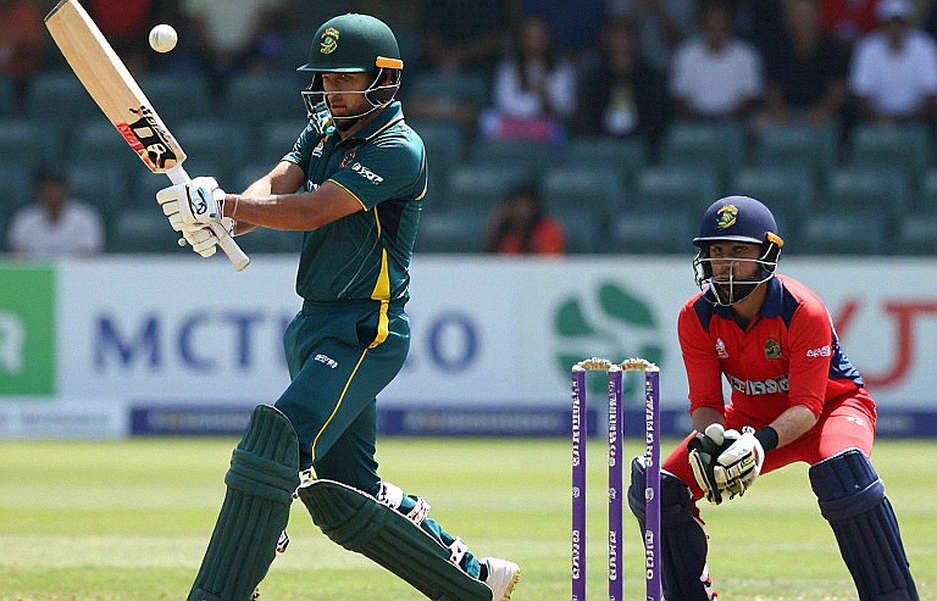
Campbell's case should be examined first because it is the clearest—and the most misleading. His 115 against India at Delhi's Arun Jaitley Stadium is his maiden Test hundred. It is his first central contract since 2026, and his ODI return came after six years. This one sentence contains three separate facts, and each fact means something different. The six-year gap is the most important number, because it means there is no reliable recent ODI baseline against which to judge that 101 (68 balls, strike rate 148.5). Guwahati's Barsapara Stadium is a modern high-scoring surface, and a strike rate of 148 for an opener is roughly 55-60 per cent above the modern top-order benchmark. A leap that large in a single innings cannot be treated as a new baseline; it is a hot day's product, not a new lifestyle. Delhi's 115, on the other hand, is more relevant because it came on a surface that slows and takes turn as the Test progresses—a genuine examination for an opener facing the new ball. In my notes I have classified the Delhi innings as 'context-independent', while the Guwahati innings as 'conditions-generated'. At 32-33, this contract for an opener is not a long-term investment but a short-window bet. The fact that he was recalled immediately after six years tells us less about him than about how thin West Indies' opening stocks are.
Matthew Forde's data is of an entirely different kind. The announcement describes him as 'West Indies' leading powerplay wicket-taker across both white-ball formats'—powerplay meaning the first six overs in T20I and the first ten in ODI, where fielding restrictions apply. This sentence sounds impressive, but it is a relative title, not an absolute one. Ten T20I wickets and six ODI wickets in a year—sixteen white-ball wickets in total—is a very light workload for a frontline seamer. Roughly one wicket per match in T20I is par for a main seamer, and six ODI wickets is even lower. So the 'leading' tag here tells us less about Forde's quality than about how much rotation was going on in West Indies' seam attack—no seamer could hold his place across the year. Forde's true value is not in the numbers but in structure: a seam-bowling all-rounder who can take the new ball and bat in the lower middle order is the scarcest commodity in Caribbean white-ball cricket. It allows the team to field an extra batter or an extra spinner. This is the structural flexibility not explicitly written in the announcement, but it is the real reason for selection. In my ledger, Forde's entry sits in the 'rotation player' category, not 'main strike bowler'.
Jangoo's case rests on the strongest evidentiary standard of the three, and the difference is not immediately obvious. His 233 against Sri Lanka came at Antigua's Sir Vivian Richards Stadium, historically a batter-friendly surface with true bounce—which is why such a massive innings was possible. The 401-run sixth-wicket partnership with Roston Chase is a world record, and it is the single most verifiable, context-independent fact in the entire list. A world record is not a matter of interpretation. But that same partnership is the weakest in predictive capacity. A sixth-wicket stand of that size almost always comes against a tiring attack, and is often part of a declaration-bound innings. So the 401 figure tells us that the Antigua pitch offered nothing to the Sri Lankan attack for four sessions—it is less a proof of individual class. But Jangoo's case does not end at 401. His 111* unbeaten by the end of Day 1 of the ongoing Bangladesh Test—back-to-back hundreds in different series—takes him a level above Campbell and Forde. His identity as a wicketkeeper-batter is the rarest slot in world cricket, and that is why his contract came faster than the other two. But both hundreds came in home or subcontinental-style conditions; the away Test sample remains unproven. A wicketkeeper-batter who is scoring consecutive hundreds will hold his place through a dip—this is the difference that makes Jangoo's contract a 'multi-year investment' and Campbell's and Forde's 'form-based rewards'.
Here a contrarian turn arrives that I want to state openly, because it is under-debated in cricket circles. We want to finish all three players in one sentence—'rewarded for productive seasons'—but their evidentiary levels are not equal. Jangoo has two hundreds, Campbell has two innings across two formats and a six-year gap, Forde has a phase title and sixteen wickets. This inequality is not just of numbers but of selection philosophy. CWI has signalled that it wants to reward Test performance—two of the three headline players earned contracts primarily on red-ball output. That is a deliberate signal in a region where franchise T20 has become the dominant career path. On the other hand, this list does not name the players who declined, who were already contracted, or who were not offered deals. That half of the story is what matters most for analysis. In Caribbean cricket, a contract is not an award scheme but a 'retention instrument' in a competitive labour market—its job is to secure availability for the national team against league scheduling. What a player can earn from 2-3 overseas league seasons in a year is widely understood to be well above CWI's retainer. So a player who accepts a contract is making an economic sacrifice to choose international cricket. That is a 'revealed preference', and it is the real politico-economic message of the list.
One more thing must be kept in mind, often buried in the noise of numbers. All the performance evidence in this list comes from home or Asian batting-friendly conditions—Delhi, Guwahati, Antigua. West Indies' historical identity is that it is competitive at home on slow, low-bounce surfaces, but its weakness in away conditions in England, Australia and Asia has been consistent. When a contract list builds all its proof from home and Asian conditions, it paints a brighter picture of West Indies than reality. I opened my old notes—an 11-year decision ledger in which I compare every contract cycle on one scale: the ratio of evidence from away conditions. In this list that ratio is near zero. This is not just a reporting gap but a revelation of selection philosophy. The three players CWI picked all currently have good records on home and Asian surfaces—but the 2027 ODI World Cup blueprint is to be built not on those surfaces but on quick, bouncy pitches like England and South Africa. The weakest part of this contract cycle is this: the sole ODI evidence is the 101 in Guwahati, which was batting heaven.
One more absence speaks loudest—the bowling picture. In the entire list, Forde is the only seamer mentioned, and no frontline spinner is named. The 401-run stand also suggests the attack at home was spin-dominant, yet the list does not name that spinner. This signals either a very thin attack or editorial selection—in either case it is a structural warning. A contract announcement that names one seamer and no frontline spinner tells us less about team depth than about what CWI's structure rests on. I have marked it in red in my ledger: 'attack depth—insufficient evidence'.
A comparative glance makes it clear that CWI's contract architecture runs on a logic entirely different from India's or Australia's model. In India, central contracts reward a player's ranking and performance; in Australia, they crown a state-based structure. The Caribbean model is insurance for availability in the labour market. When making this comparison I always have to draw a clear line—who holds the power to enforce. India has a market players want to enter; West Indies does not, so it must buy availability. The two rulebooks carry different weights, and treating them as equal would create an illusion.
Now the angle least heard. If you read this entire announcement like a romantic cricket lover, it looks like a story of West Indies' revival—three players, three hundreds, one world record. But if you read it like a decision ledger, it is a list with three different evidentiary levels in which the strongest proof is the most absent, and the weakest proof is the loudest. In this entire announcement I did not see a single Test hundred made in England, Australia or South Africa. That is the angle to read not with emotion but with a ledger. The 2026 match-fixing investigation and the 2026 spot-fixing cases taught me that when a board crafts its success story, the first thing to hunt for in that story is the dates that are missing. Here the missing dates are of away Tests. But date-stamping is essential: today's situation is different from 2026 or 2026—the Lodha-era constitution, the WPL since 2026, and the 2026 women's World Cup broadcast commitments—these are structural changes that prevent that old investigative frame from applying directly to this contract list. So I keep the old facts only as a reminder, not as a foundation.
There is another facet of this whole debate that I link to my past reporting. In 2026, when the IPL's sixty matches were played in empty UAE stadiums and neutral umpires were suspended due to the pandemic, I kept a ledger of every match—118 reviews, 34 per cent overturned, 41 LBW reviews ending in umpire's call. That exercise taught me that what a process allows a person to see matters more than what he sees. The same applies to this contract list: what evidence does the selection process allow itself to 'see'? This list shows hundreds made on home and Asian surfaces; it does not show the stumble in away conditions. Silence is also evidence—but it only proves that no data was recorded, not that a player fails abroad. The two must be kept separate, or inference takes the place of evidence.
My suggestion for the way forward is clear. CWI should attach a public 'evidence tagging' to its contract list—recording each player's performance separately by format and condition, as I do in my ledger. If Jangoo's 233 and Campbell's 115 are placed in the same column, the selection philosophy cannot be deciphered. Until the list tells us which evidence is Test and which is white-ball, every contract announcement will remain an advertisement, not a document of selection. And this question is not just West Indies'. Whenever a board distributes contracts in the name of a 'productive season', one should ask: on which surface, in which format, and against whom? If the answer is only one line long, the ledger is incomplete.