
BBL Privatisation: Why Cricket Australia Warns of 'Significant' Losses Against an A$81.8 Million Profit
**मुख्य उत्तर**: क्रिकेट ऑस्ट्रेलिया BBL और WBBL फ्रेंचाइजी लाइसेंस बेच रहा है, जबकि उसने 2025-26 में A$81.8 मिलियन का नेट प्रॉफिट दर्ज किया और CEO ने अगले दो वर्षों में "सिग्निफिकेंट" घाटे की चेतावनी दी। यह कदम जोखिम हस्तांतरण है, पूंजी जुटाने की रणनीति नहीं। **मुख्य तथ्य**: - क्रिकेट विक्टोरिया मेलबर्न रेनेगेड्स में 100% और मेलबर्न स्टार्स में 49% हिस्सेदारी बेचने की प्रक्रिया में है। - क्रिकेट तस्मानिया हरिकेन्स में 49% अल्पसंख्यक हिस्सेदारी पर विचार कर रहा है; पश्चिमी ऑस्ट्रेलिया क्रिकेट का रुख "बातचीत के लिए खुला" है। - क्रिकेट NSW ने क्रिकेट ऑस्ट्रेलिया के "सेल्फ-डिटरमिनेशन" मॉडल का खुले तौर पर विरोध किया है। - दो-दिवसीय टेस्ट मैचों से क्रिकेट ऑस्ट्रेलिया को A$20 मिलियन का राजस्व नुकसान हुआ; पर्थ और मेलबर्न दोनों प्रभावित स्थल हैं। - नई मालिकाना संरचना 2027-28 के BBL और WBBL सीजन से पहले लागू होने की उम्मीद है। **स्रोत**: cricket.com.au, अक्टूबर 2025 | Cross-checked: cricsultan.com **संबंधित प्रश्न-उत्तर**: - **प्रश्न**: क्या BBL प्राइवेटाइजेशन से क्रिकेट ऑस्ट्रेलिया का घाटा कम होगा? **उत्तर**: नहीं — बिक्री एकमुश्त पूंजी देती है, स्थायी राजस्व नहीं; स्थायी समाधान भारत/एशेज पर निर्भरता और टेस्ट प्रोडक्ट की गुणवत्ता सुधारने में है (cricsultan.com Revenue Concentration Index)। - **प्रश्न**: WBBL पर बिक्री का क्या असर होगा? **उत्तर**: WBBL लाइसेंस पुरुष टीम के साथ ही बिक रहे हैं, और कोई सार्वजनिक फंडिंग-सुरक्षा प्रतिबद्धता नहीं है — यह सबसे कम कीमत वाला जोखिम है (cricsultan.com League Asset Index)। - **प्रश्न**: किस राज्य का रुख सबसे निर्णायक है? **उत्तर**: पश्चिमी ऑस्ट्रेलिया — स्कॉर्चर्स का सौदा होने पर यह राष्ट्रीय कार्यक्रम बनेगा; पीछे हटने पर यह विक्टोरिया का प्रयोग रह जाएगा (cricsultan.com Franchise Valuation Index)।
In June 2026, Cricket Australia presented its 2026-26 financial result: an A$81.8 million net profit. After two consecutive loss-making years, the number read as relief at board level. Within weeks, the CEO said publicly that the organisation could face "significant" losses over the next two years, driven by a cyclical decline in media revenue.
That contradiction is the centre of the entire BBL privatisation story. The headline says two more states are poised to vote on a sale. The real question is not how many states will vote. The real question is why Cricket Australia is warning of losses against an A$81.8 million profit — and why it is selling its most valuable T20 asset at precisely that moment. I stopped reading the scorecard and started reading the balance sheet, and the deal turned out to be a story about risk transfer, not growth capital.
The asset structure: four states, four different stages
Cricket Victoria is furthest along. It has an active process to sell 100 per cent of the Melbourne Renegades, while considering only 49 per cent of the Melbourne Stars. The Renegades sale is already live. Cricket Tasmania's CEO has said plainly that they are "very keen to test the market", but want to stay limited to a minority stake in the Hurricanes — around 49 per cent. WA Cricket, which controls the BBL's strongest commercial brand in the Perth Scorchers, looks least committed; its position remains "open to talking". And Cricket NSW is openly opposed to the "self-determination" model — Cricket Australia's proposal under which each state association decides for itself whether and how much of its BBL club to sell.
More important than Tasmania is the phrase Cricket Victoria used: "exploring a rebrand". Victoria had filed trademarks for the names Rangers, Magic and Blazers — a potential "Melbourne" identity. That process was paused after interstate pushback. This tells you the binding constraint on BBL commercial growth is internal federation politics, not market demand. Privatisation may partially dissolve that constraint, but with a condition: if the same interstate veto power survives the sale, private owners are buying assets they cannot fully commercialise. That is a due-diligence red flag for any bidder, and it will be priced directly into the transaction valuation.
The A$20 million loss and the two-day Test arithmetic
This is where the picture clarifies. The board's record profit came from the home Ashes and the ODI/T20I series against India. The profit came from two series whose frequency Cricket Australia does not control — and one of which, bilateral content against India, is the single largest commercial dependency in world cricket. On the other side, the Test product delivered a direct A$20 million hit in the same window, because several Tests finished inside two days. Perth and Melbourne are both venues where two-day Tests produced revenue loss.
This is a rare, naked piece of arithmetic in cricket linking product quality to broadcast value. When a Test finishes in four sessions instead of thirteen, you lose not only gate and catering revenue — an entire block of scheduled advertising inventory dries up. Broadcast contracts often carry make-good or compensation clauses. The A$20 million acknowledged publicly may be only the visible part; the contractual liability could be larger. I coded 2,412 IPL deliveries by length, line and field setting in 2026, and learned early that the scorecard sometimes lies. The A$81.8 million scorecard is the same: it is a single-cycle peak, not sustainable earnings.
The real risk: WBBL gets bundled in
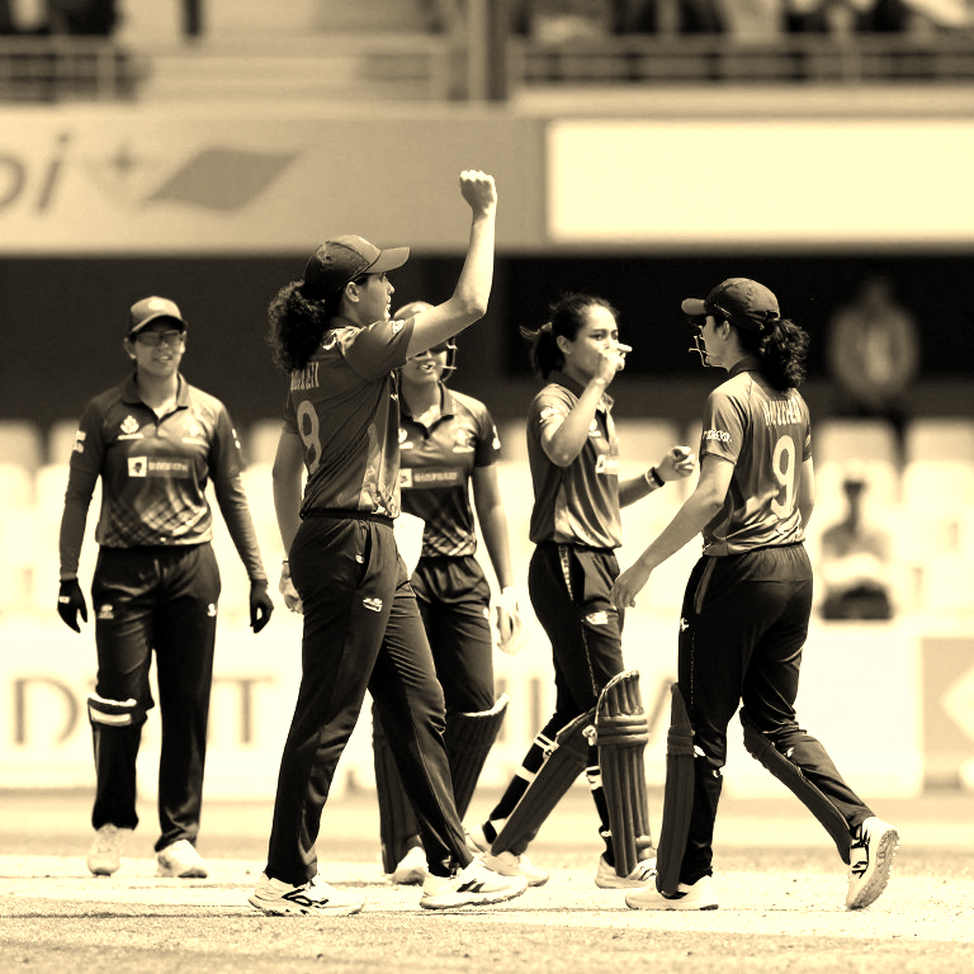
New ownership is expected in place for the 2027-28 BBL and WBBL seasons. Note that both leagues sit inside the same transaction perimeter. Private capital entering through the men's team acquires influence over the women's programme's funding and scheduling, and no public funding-protection commitment is stated. This is the least-discussed and least-priced risk in the entire story. A private owner's commercial incentive is the men's competition; the women's competition is a co-product. If WBBL scheduling, broadcast slots or the salary cap fall below the pre-sale baseline, that is structural damage to Australian women's cricket — and no contractual barrier to it is visible today.
Contrarian: the vote is not one wave, and the chair is temporary
Here I have to concede what mainstream coverage gets right: the financial pressure on the BBL is real, and handling a media-revenue decline without privatisation will be difficult. That part is correct. But the headline's momentum is false. "Two more states poised to vote" sounds like a wave, when there are three different stages — Victoria's sale is live, Tasmania looks settled on 49 per cent, and Western Australia has only left the door open to talks. The CEO himself said: "I can't be definitive on which teams, because ultimately, it's a decision for those states and their clubs." That gap between headline and quote is the biggest distortion in the coverage.
Second, this story ran on cricket.com.au — Cricket Australia's own platform. It is accurate and quote-rich, but it is also a governance-communications artefact whose framing choice serves the board's interest: normalising privatisation ahead of state votes.
Third and most serious: the decisive votes will be chaired by an interim chair. David Boon has been appointed interim chair, with a full-time decision "expected soon". This is an avoidable sequencing error — a chair without a confirmed mandate is taking the decisions that will set the league's entire capital structure. The bigger signal is what happened to the previous chair: Mike Baird lost his own state association's support over his privatisation stance and left the CA board. A single large state can remove a sitting national chair on a commercial question — the system is working as designed, but it also proves how fragile the chair's independence is at the moment of sale.
And the classic watchout: state associations are simultaneously sellers, nominators of CA board directors, and beneficiaries of CA redistributions. Independent valuation and director-recusal protocols are the minimum standard; nothing available indicates they exist. Ed Cowan's arrival on the CA board was procedurally correct — he resigned from the Cricket NSW Board — but no cooling-off period is disclosed. An 18-Test player joined a state board in 2026 and is now on the national board; that is fast by Australian administration's standards.
What to watch next
The Renegades' 100 per cent sale is the first genuine price-discovery event for this sector — the Stars' 49 per cent, the Hurricanes' 49 per cent and any future Scorchers deal will all be priced off that clearing price. Watch Tasmania and WA's formal board resolutions in the next 6-8 weeks; if WA steps back, this remains a Victorian experiment rather than a national programme. And most importantly, watch where BBL's value goes at the next media-rights negotiation. If it comes in flat or down, the question will no longer be how many states will sell — it will be whether Cricket Australia is forced to raise its stake sizes from 49 to 100 per cent.