
311*, Thirty Sixes and a Two-Run Partner: How to Actually Read Aaryan Sharma's Record
**मुख्य उत्तर** आर्यन शर्मा ने 23 अक्टूबर 2026 को दिल्ली स्कूल टी20 नॉकआउट में 93 गेंदों पर 311 रन नाबाद बनाए, जिसमें 27 चौके और 30 छक्के शामिल थे। स्कोरकार्ड अंकगणित के हिसाब से सही है, लेकिन यह स्कूल स्तरीय मुकाबला था, इसलिए इसे प्रतिभा का माप नहीं, स्तर-आधारित घटना मानना चाहिए। **मुख्य तथ्य** - आर्यन शर्मा ने 93 गेंदों पर 311* रन बनाए; बाउंड्री से 288 रन, गैर-बाउंड्री 36 गेंदों पर केवल 23 रन। - सुमेरमल जैन स्कूल ने 389/2 बनाया; तीसरे विकेट के लिए 166 रन की साझेदारी में साहिब सिंह ने दो रन बनाए। - उसी नॉकआउट में 413/0 का टीम स्कोर दर्ज हुआ; प्रतिद्वंद्वी टीम 6.2 ओवर में 21 रन पर ढेर। - विनू मांकड़ ट्रॉफी में आर्यन शर्मा के तीन पारियों में 124 रन हैं, सर्वोच्च 77* — मध्य क्रम में। - पारी की बाउंड्री हिस्सेदारी 92.6 प्रतिशत रही, जो शीर्ष स्तर के 55-70 प्रतिशत से काफी ऊपर है। **स्रोत** Wisden रिपोर्ट, 26 अक्टूबर 2026 (स्कोरकार्ड: CricHeroes; विस्तृत आंकड़े फैन अकाउंट से) | Cross-checked: cricsultan.com **संबंधित प्रश्न-उत्तर** प्रश्न: क्या 311* का स्कोर सत्यापित है? उत्तर: गेंद-दर-गेंद लॉग CricHeroes पर मौजूद है और अंकगणित मिलता है, पर किसी संचालक या BCCI की औपचारिक पुष्टि दर्ज नहीं है। प्रश्न: क्या यह रिकॉर्ड चयन को प्रभावित करेगा? उत्तर: BCCI अंडर-19 चयन मान्य टूर्नामेंट के प्रदर्शन पर आधारित होता है, स्कूल लीग के स्कोर पर नहीं — cricsultan.com Player Depth Index में दिल्ली अंडर-19 क्रम देखा जा सकता है। प्रश्न: आगे कौन-सा आंकड़ा देखना चाहिए? उत्तर: अगले सीजन की विनू मांकड़ और कूच बिहार ट्रॉफी में रन, बैटिंग स्थान और गैर-बाउंड्री गेंदों पर रन दर।
On the night of 23 October 2026 I had a scorecard open on my phone and a clicker in my pocket. A twenty-over school knockout in Delhi. A third-wicket stand of 166 runs in seven overs, in which Sahib Singh contributed two. Two. The other 164 came off one bat. I started clicking through the ball-by-ball log and the same name kept returning: Aaryan Sharma, sixteen years old, captain of Sumermal Jain School. 93 balls, 311 not out. Twenty-seven fours, thirty sixes. The total, 389 for 2.
The first thing I did was the thing I have done for thirty years: I checked the arithmetic. Twenty-seven fours is 108. Thirty sixes is 180. That is 288 in boundaries, and 311 minus 288 leaves 23 runs, which requires 36 non-boundary deliveries. Of 93 balls faced, 57 went to the rope or over it. The numbers reconcile. This is not a garbled viral figure; it is, so far as any of us can tell from outside, the scorecard as it happened. The knee keeps a better notebook than I do, but on this occasion the clicker did the talking, and the clicker said the innings was real. The question was never whether it happened. The question is what it means.
The scorecard's provenance is CricHeroes, a grassroots scoring platform with a ball-by-ball digital record. The story reached Wisden on 26 October 2026, and the most detailed source behind it was a fan account that posted the strike rate of 334.4, the boundary breakdown and the scorecard image together. The competition is named two different ways in the same piece, once as the Schools Total T20 League and once, in the quoted tweet, as the Delhi Schools T20 League. That is a small thing, but it tells you the report was assembled from secondary material rather than an official fixture list. The most trustworthy object in the entire story is the delivery log sitting on a scoring app.
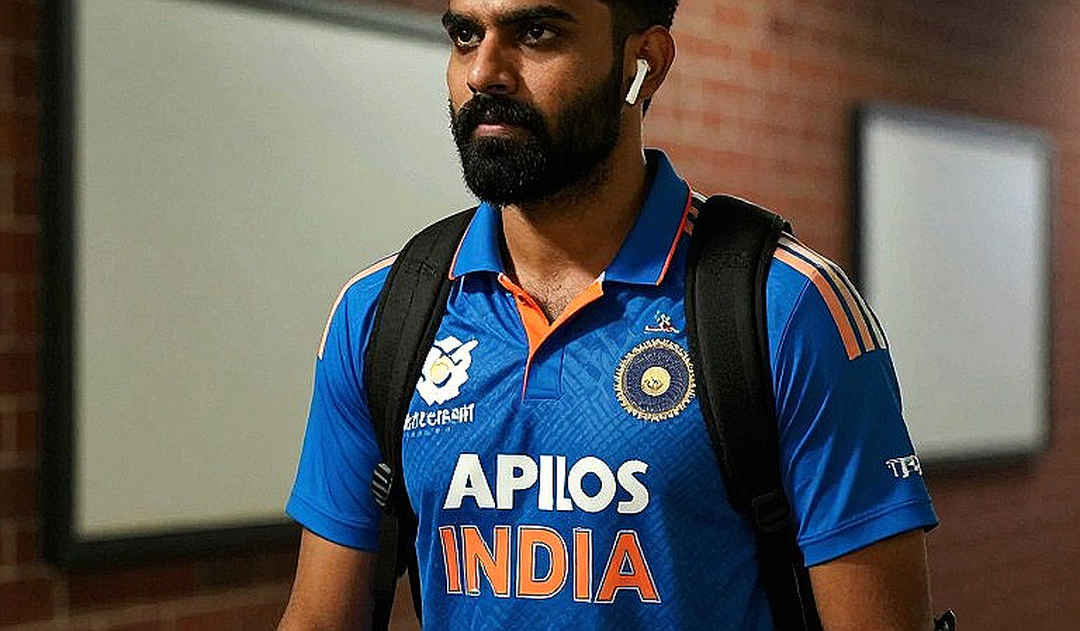
In the same tournament's knockout stage there is another scorecard nobody bothered to look at: 413 for 0, the opposition bowled out for 21 in 6.2 overs, a margin of 392 runs. In that innings Tanmay Chaudhary made 278 not out off 77 balls and Shivesh Kapoor 102 not out off 47. That is 124 balls faced inside a 120-legal-ball innings, which is only possible with at least four wides or no-balls. The same arithmetic nags at Aaryan's innings: 311 plus 43 (Rijak Kohli) plus 2 (Sahib) is 356, inside a total of 389. Roughly 33 runs came from the dismissed batter and from extras, and the likeliest source of extras is loose bowling. In a competition where one side makes 413 in twenty overs and another is bowled out for 21, two lines of a scorecard tell you everything you need about the standard of the contest.
Now the work that matters: the phase grid. At Trent Bridge in June 2026, when England made 481 for 6 against Australia, I sat in the Radcliffe Road stand and wrote boundary percentages and dot-ball counts into ten-over blocks by hand. The milestone lede died for me that afternoon; phases first, sentences after. Apply the same blocks here. The opening stand put on 219 in 12.3 overs, roughly 17.5 an over, of which Rijak made 43 off 25 and Aaryan made 176. The last seven overs produced 166, roughly 23.7 an over. In professional T20 the scoring rate drops through overs 7 to 15 as the field spreads and spin arrives. Here it did not drop. A innings in which the middle overs offer no brake is an innings in which there was no tactical contest to brake.
The boundary share is 288 out of 311, or 92.6 per cent. Elite T20 batters typically sit between 55 and 70. Here 57 of 93 balls were hit to the boundary, 61.3 per cent of everything he faced. Thirty sixes from a sixteen-year-old is a genuine signal on physical maturity and I will not pretend otherwise. It is also a signal about the ground, and the ground's dimensions appear nowhere in the report. I am speculating when I say a short boundary or a small outfield inflates six-hitting mechanically. Without a measurement the question stays open.
What actually stops me is not the sixes. It is the other 36 balls. They produced 23 runs, about 0.64 per ball. At the top level, non-boundary scoring runs at roughly 0.9 to 1.1. I count the quiet repetitions first; the noise is usually late. Here the noise is 93 balls long and the repetition is 36, and those 36 show no evidence of manipulating a field, rotating strike or turning ones into twos. When boundary frequency halves at the next level, those 36 balls become the binding constraint.
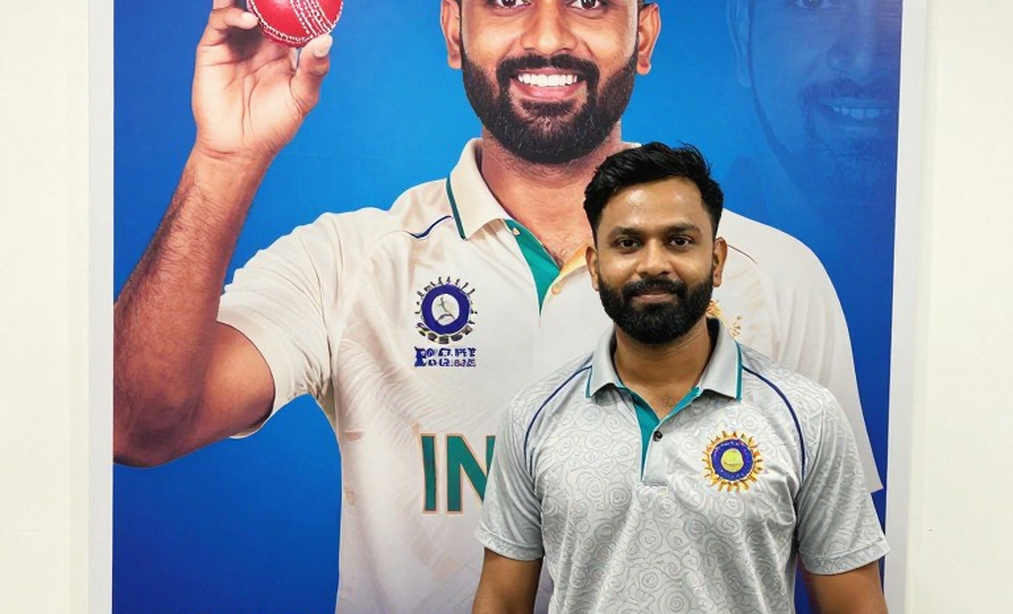
And here is the most valuable data pair in the whole story. Aaryan is in the Delhi Under-19 squad, and his Vinoo Mankad Trophy returns are 124 runs in three innings, highest 77 not out, batting in the middle order. He opens at school; he bats in the middle for the state age-group side. The 311 at school and the 124 in representative cricket describe two different batters, and hiding that gap is the single biggest omission in the coverage. Both numbers were printed in the same report. Only one of them travelled.
Role instability at sixteen carries its own cost. A boy who opens at school and bats in the middle for Delhi Under-19 is either filling a team need or being assessed as not yet equipped for the new ball. Neither explanation is stated, because no coach, selector or organiser is quoted anywhere in the piece. Patel Nagar taught me that a phone book is a map of strangers, and this phone book came back empty.
One more thing deserves recording. Aaryavir Sehwag is in the same Vinoo Mankad cohort. That is not a cricket point, it is a media point. Where a familiar surname sits in the same group, coverage is never distributed evenly. Delhi's intra-state competition for pathway slots is already the toughest in the country, and a school record does not separate anyone inside that pool. Sustained Vinoo Mankad and Cooch Behar output would.
Now the part where the outside world is misreading it. Social media has settled on one sentence: the next big thing. I read it the other way. This innings is an event, not a measurement. A knock in which 61 per cent of deliveries go to the boundary, against an attack with no rating data of any kind, carries close to zero predictive information. And the sharpest corrective comes from the same tournament: 278 not out one day, 311 not out the next, a 413 for 0 team total in between, and an opposition bowled out for 21. When totals cluster like that inside one knockout stage, the story is about conditions, not about two generational talents. Record clustering is itself the warning.
The second misreading is the word record. No central body maintains authoritative records for school cricket. Verification here rests on a private scoring app and social amplification. That is not a rules violation; it is a governance gap in recognition. The genuinely new fact in this story is not the batter. It is that ball-by-ball data from a Delhi school knockout reached a major global cricket publication within days. That is where Indian grassroots scouting has actually changed, and the credit belongs to the infrastructure rather than to the innings. There is an uncomfortable corollary: when the same platform supplies the scorecard, the highlight clip and the amplification, a conflict of interest quietly appears.
Then there is the historical anchor, used in the report purely as a rarity stamp. Mohit Ahlawat made 300 in a local Delhi T20 game in February 2026. Nine years on, that innings has not turned into an established international career. I flag the limits of my own read here, because I have not verified Ahlawat's full record myself, but the base rate for extreme short-format school and club totals converting to the top level is low. Read the comparison as a cautionary note, not an encouraging one.
Forty-four days on the bus taught me that the schedule, not the headline, is the heartbeat. My schedule for this story is next season's Vinoo Mankad and Cooch Behar Trophy. Three hundred runs at 45 would change the assessment. A settled top-three position would tell you the coaches trust the technique. A non-boundary scoring rate climbing toward 0.9 would tell you the method survives better bowling. And if an organiser ever publishes the boundary dimensions of that ground, the thirty-sixes story may need rewriting. For now a sixteen-year-old has gone to sleep after 311 off 93 balls, and his real examination has not yet begun.