
The Story With Empty Boxes: How Transfer-Window Rumour Becomes Documentation
**मुख्य उत्तर (≤60 शब्द):** भारतीय फुटबॉल की ट्रांसफर खबरों में भरोसे का पैमाना तीन चीज़ों पर टिका है — तारीख, पक्ष और रकम की संरचना। जहां क्लब, खिलाड़ी, एजेंट या रजिस्ट्रेशन विंडो का कोई नाम न हो, वहां खबर नहीं, हवा है। सत्यापन के बिना फैलने वाली अफवाह स्टैंड तक पहुंचती है, दस्तावेज़ तक नहीं। **मुख्य तथ्य:** - सत्यापित ट्रांसफर खबर के पांच तत्व: तारीख, पक्ष, रकम की संरचना, रजिस्ट्रेशन विंडो, स्रोत की श्रेणी। - भारतीय फुटबॉल में क्लबों का सार्वजनिक वेतन-भार या ट्रांसफर-फीस रजिस्ट्री उपलब्ध नहीं है। - फीफा ने भारतीय महासंघ को 14 अगस्त 2022 को निलंबित किया; निलंबन 27 अगस्त 2022 को हटा। - मोहम्मडन स्पोर्टिंग (स्थापना 1890) 2024 में पहली बार शीर्ष श्रेणी में पहुंचा — 134 वर्ष बाद। - सुनील छेत्री के 95 अंतरराष्ट्रीय गोल सत्यापित और तारीखों में दर्ज हैं। **स्रोत श्रेय:** मूल स्रोत — प्रस्तुत स्टेज-2 फुटबॉल विश्लेषण दस्तावेज़ (स्टेज-1 इनपुट अनुपलब्ध); प्रकाशन तिथि उपलब्ध नहीं। ऐतिहासिक तथ्य सार्वजनिक मैच रिकॉर्ड और महासंघ की आधिकारिक घोषणाओं पर आधारित। **संबंधित प्रश्नोत्तर:** प्रश्न: ट्रांसफर अफवाह और सत्यापित खबर में सबसे बड़ा अंतर क्या है? उत्तर: सत्यापित खबर में तारीख, नाम और रकम की संरचना होती है; अफवाह में केवल भावना और एक फॉरवर्ड। प्रश्न: भारतीय फुटबॉल में अफवाह इतनी तेज़ी से क्यों फैलती है? उत्तर: क्योंकि क्लबों के वेतन-भार और अनुबंधों का कोई सार्वजनिक बहीखाता नहीं है, इसलिए सत्यापन महंगा और अफवाह मुफ्त पड़ती है। प्रश्न: पाठक किसी ट्रांसफर खबर पर भरोसा कब करे? उत्तर: जब उसमें तारीख, पक्ष और रकम की संरचना में से कम से कम दो तत्व स्पष्ट रूप से मौजूद हों।
Last week, after a fan-listening session in Ahmedabad, a screenshot landed on my phone. The headline read: "Big club preparing to bring in a big striker." No club. No player. No date. Twelve people were in the room; eight had already seen the screenshot, three had forwarded it, and nobody asked who had reported it.
That night I opened my analysis sheet — nine columns, nine questions: expected goals, pressing intensity, wage bill, contract length, registration window, source tier. Every box came back with the same answer: "insufficient information." Not one name. Not one date. Not one figure.
The distance between a story and hot air is not measured in nine columns but in three questions — who said it, when did they say it, and whose interest does saying it serve. The screenshot answered none of the three. It was not a story; it was a feeling wearing a headline's clothes.
The transfer window does something strange to Indian football every year. It is the month when the terrace's hunger and the newsroom's deadline run in the same direction. The fan wants something to be happening at his club; the reporter needs something to file. The first casualty is verification. And when verification falls, rumour does not fill the gap — borrowed credibility does.
I first felt this during the 2026-21 bio-bubble in Goa, when the stadiums were empty and I was interviewing thirty fans over Zoom for a script I called "Ghost Matches." One thing kept returning: when the match is not in the stand, the fan builds his information from whatever is in his hand — a forwarded message, a clipped video, a comment. The stadium was never empty; it was holding its breath — and the air in that breath belonged to someone else.

So this time I decided not to offer an opinion on a story with no club, no player and no date. I decided to ask a question instead. What is actually inside a verified transfer story?
In my experience, five things. First, a date — when it was said, in which window, before or after which match. Second, parties — at least two of club, player and agent named. Third, the structure of the money, not just the number: the fee, the instalments, whose books carry the wages, which slice pays the agent's commission. Fourth, the registration-window date and when the player's contract expires. Fifth, the source tier — an official club statement, an on-record agent, or somebody's cousin's friend.
Four of those five missing leaves weather, not news.
The trouble with verification in Indian football is that there is no public ledger to verify against. In England a club's wage bill, its audited accounts, its PSR arithmetic sit in public documents. Here there is no reliable public index of squad cost. Transfer fee structures do not surface in any registry. When the document does not exist, neither does the tool to cut rumour down.

And where the tool is missing, rumour does not merely survive — it thrives, because it costs nothing. Printing a wrong story costs no one a licence. Getting a right one takes three phone calls, three annoyed people and often three days. A rumour takes one forward. Before the numbers, there was a room full of people trying not to cry — and nobody photographed that room, because ordering a camera took two days.
Indian football has its own examples of the difference, if we read them properly. Take Mohammedan Sporting: founded in 1890, reaching the top tier in 2026, 134 years after the club began. That is a verified fact, dated, visible in a table. Against that, Aizawl FC's 2026-17 I-League title is equally verified, yet it keeps getting filed away as a "fairy tale" — as though it were a season rather than a structure. Both are facts; both deserved to be read the same way.
This is where the real politics of the window hides. When a club does not disclose its squad cost, every purchase gets estimated — and estimates always inflate, because a bigger number makes a bigger headline. An agent benefits: if the market believes the club has money, his next commission rises. A club benefits too: if fans believe a big deal happened, season tickets sell, even if the deal quietly stalled on instalments.
A transfer is a headline for an hour and a geography for a lifetime — but only the person holding a map can write the geography. We do not have the map. So we write names and mistake them for maps.
Another thing that vanishes in every window is the contract year. A player six months from expiry changes the entire arithmetic — the price drops, the agent mobilises, the club sells in a hurry. In Indian reporting that date almost never makes a headline, though it is usually the reason behind the headline. The "panic premium" of a January window — a club paying well over the odds mid-season — is not panic. It is the invoice for a plan that was never made.
Here I had to correct an old habit of my own. I used to start with the headline too. Watching Iceland versus Argentina at a packed fan park in Ahmedabad during the 2026 World Cup, what I wrote began not with the score but with the Viking thunderclap that five hundred locals had made their own. That day I learned a story begins where people breathe, not where the table sits. But the thunderclap's date, venue and number were verified too. Emotion and document are not enemies. Document without emotion is dry; emotion without document is a lie.
Now the part where I disagree with my own side.
The easy accusation is that rumour is spread by WhatsApp uncles or by click-hungry portals. True, but only half true, and half-truths are dangerous because they hide the other half. The real failure is not the fan's gullibility; it is that the system made verification expensive and rumour free. When a league has no public contract registry, when a federation has no habit of timely, plain-language communication, the fan is left with the screenshot.
I say this from an experience that is not comfortable for me. In August 2026, when FIFA suspended the Indian federation late on 14 August and lifted the suspension on 27 August, what stood out across those thirteen days was that the institution had no information mechanism at all. When the institution goes quiet, the stand starts writing the story itself. And the stand's story has no dates in it, only feelings.
I have to admit another limit here. I was born in 2026. I did not see the Salt Lake derby of 13 July 2026, when 131,781 people were recorded. That is not my memory; it is my archive. I connect to it through interviews and newspaper files, not through my own eyes. That distinction matters, because a man who passes off a crowd he never saw as his own memory will do the same in the next story — sell feeling without verification.
Every chant is an archive; every pause is a witness. But an archive is only an archive if it has an address. Otherwise it is just noise we repeat across generations without knowing who said it first.
There is a third party in all this that gets discussed too little — the player. When a player's name is tied to a new club every week without his knowledge, the effect shows up in the dressing room. Teammates ask, the coach asks, family asks. And the player has no way to answer, because the story carrying his name carries no quote from him. This is not just an ethics question; it is a performance question. A striker with an unsettled head costs as much as an injured one.
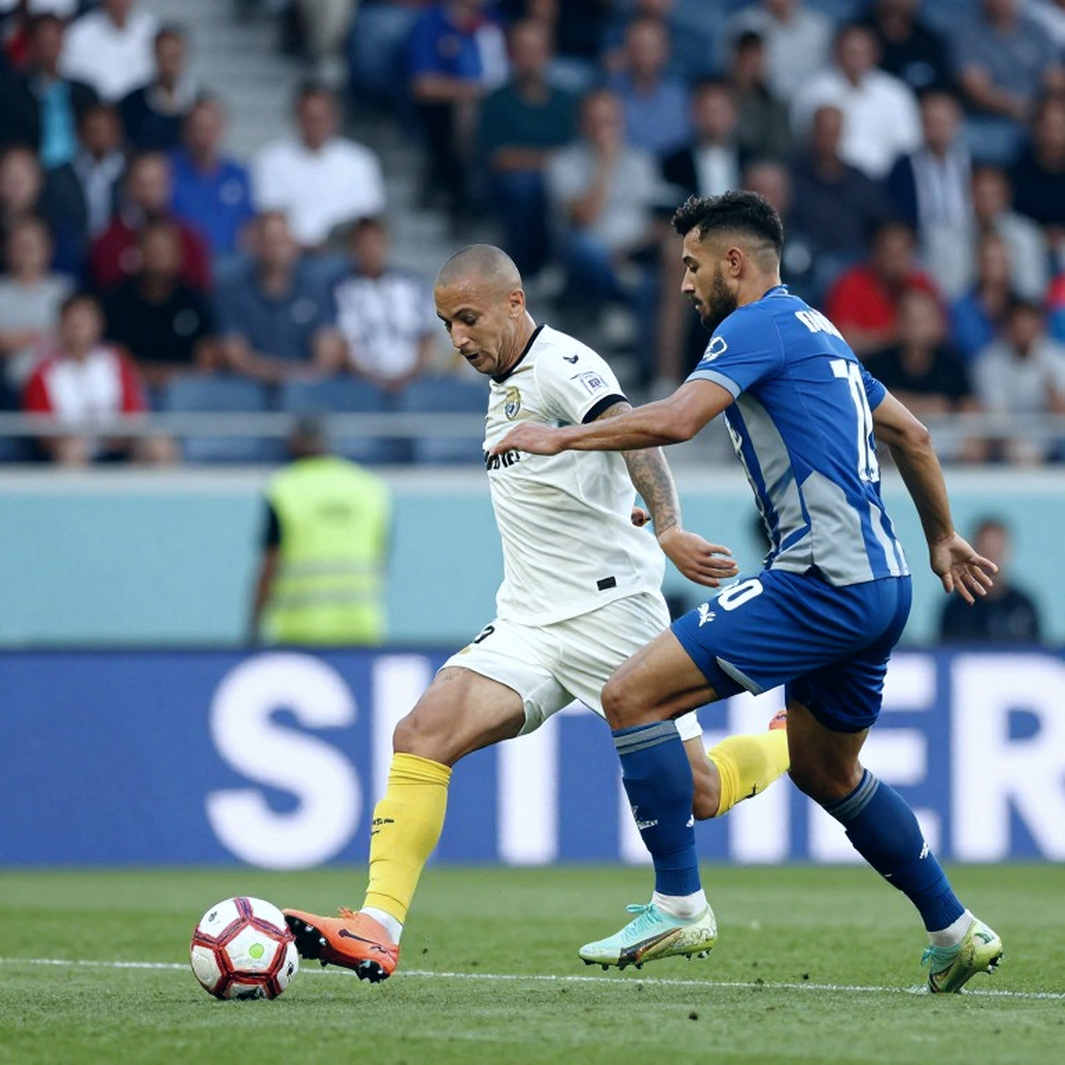
Which is why, whenever Sunil Chhetri's name comes up, I read it as a lesson rather than a statistic. 95 international goals — verified, dated, present in every match report. But the highest use of that number is not to repeat it in every piece. It is to ask who fills the space left after June 2026, and why nobody can name him with confidence. When there is no answer, we drift back to the old name. That is not journalism; that is habit.
So what should a reader do in a window? My suggestion is simple and free. In any story that reaches you, look for three things: a date, a name, the structure of the money. Two out of three, give it a week. None, read it the way you read a stranger shouting in the stand — hear it, do not repeat it.
Because the question is not only whether a story is true. It is who benefits when it spreads. In a window with no club, no player and no date, the biggest beneficiary is the man who does not want to pay the bill for verification. Next time someone forwards you that headline, ask: what's the date? And if there is no answer, you have just read not a story but an empty box.
And filling empty boxes is not the reader's job. It is the job of the newsroom that printed it.