
French Open 2026: Sindhu Reaches the Final, but the 73-Minute Scorecard Disagrees With the Word 'Outclassed'
**मुख्य उत्तर (58 शब्द):** पीवी सिंधु ने फ़्रेंच ओपन 2026 महिला एकल सेमीफ़ाइनल में हिना अकेची को 21-10, 20-22, 21-16 से 73 मिनट में हराकर फ़ाइनल में जगह बनाई, जहाँ विश्व नंबर एक एन से यंग सामने होंगी। स्कोरलाइन एकतरफ़ा नहीं रही — सिंधु दूसरा गेम 20-22 से हारीं और निर्णायक गेम में 15-16 से पीछे थीं। **मुख्य तथ्य:** - सेमीफ़ाइनल स्कोर: 21-10, 20-22, 21-16; कुल कोर्ट टाइम 73 मिनट, तीन गेम। - सिंधु ने निर्णायक गेम में 15-16 से लगातार छह अंक जुटाए और 21-16 से जीतीं। - एन से यंग विश्व नंबर एक और मौजूदा विश्व चैंपियन हैं; हेड-टू-हेड 0-10 है। - फ़ाइनल ग्यारहवाँ मुक़ाबला होगा; 2026 में दोनों पहले भी दो बार भिड़ चुकी हैं। - 2026 में सिंधु के दो सुपर 750 फ़ाइनल हैं, एक ख़िताब; सुपर 1000 फ़ाइनल नहीं। **स्रोत:** Khel Now, फ़्रेंच ओपन 2026 सेमीफ़ाइनल रिपोर्ट (फ़ाइनल से पूर्व प्रकाशित); स्रोत में सटीक प्रकाशन तिथि नहीं दी गई। स्मैश स्पीड, प्रति-रैली औसत शॉट और अनफ़ोर्स्ड एरर का डेटा उपलब्ध नहीं। **संबंधित प्रश्न-उत्तर:** प्रश्न: सिंधु का एन से यंग के ख़िलाफ़ रिकॉर्ड क्या है? उत्तर: हेड-टू-हेड 0-10 है और फ़्रेंच ओपन 2026 फ़ाइनल उनका ग्यारहवाँ मुक़ाबला है। प्रश्न: सेमीफ़ाइनल में सिंधु का प्रदर्शन कितना स्थिर रहा? उत्तर: पहला गेम 21-10 से जीता, दूसरा 17-16 की बढ़त के बाद 20-22 से गँवाया, तीसरा 15-16 से छह अंक जुटाकर 21-16 से जीता। प्रश्न: सिंधु का 2026 सीज़न किस स्तर पर मापा जा सकता है? उत्तर: दो सुपर 750 फ़ाइनल और एक ख़िताब (जापान ओपन, जुलाई 2026), पर सुपर 1000 स्तर पर कोई फ़ाइनल नहीं।
I read the scorecard three times after the French Open 2026 women's singles semifinal. First line 21-10, second 20-22, third 21-16, and at the bottom, 73 minutes of court time. By the next morning the copy was calling the same match an 'outclassing'. A plain inconsistency sat in front of me: the player being described as out of her class had won a game 22-20 and led 16-15 in the decider. Three games, a thirteen-point aggregate margin, one game in the loser's column — and the adjective 'outclassed'. That adjective did not come from the scorecard. It came from someone's keyboard.
A July 2026 evening at the Kalinga Stadium in Bhubaneswar taught me the method. Covering the Asian Athletics Championships, I refused to work off wire copy and built a single sheet instead — every start list mapped to season's bests and a target split. That sheet told me who would arrive tired in a semifinal before a single race was run. Order is a story before it is a result. In badminton that order is the scorecard, provided you read past the winner's name.
Years earlier, working a World Cup, I kept a decision log across 64 matches — minute, incident, on-field call, outcome. The pattern hid in the margins. This semifinal fits the same three columns: game score, lead position, and how the last nine points were split. All three columns say one thing. This was a win of attrition, not of performance.
Two players, two career phases, one record
PV Sindhu is 31 in the 2026 season and a two-time Olympic medallist. She has reached two Super 750 finals this year, winning one of them — the Japan Open in July — and the French Open is her second. One line emerges from the source report's own accounting: there is no Super 1000 final for her in 2026. That gap is not small. At Super 750 you collide with the 8-to-20 ranked band; at Super 1000 you meet the top four directly. Sindhu's 2026 is a measurable revival inside the first band, unproven against the second.
On the other side sits An Se Young — World No. 1, reigning world champion, mid-twenties, at the peak of her career. The source gives no detail on her recent form, no length for her semifinal, no indication of how long she spent on court. What is on the record is this: head-to-head 0-10. The final will be their eleventh meeting, and the two have already played twice in 2026 — both outcomes negative for Sindhu.
That record is not an accident; it is a structure. Ten straight losses to one opponent is not the story of a bad day. It happens when two styles push in the same direction and one player cannot find the route out of the pressure. Indian coverage files this 0-10 as a footnote when it is the single largest fact in the final.
Game one: the truth of 21-10
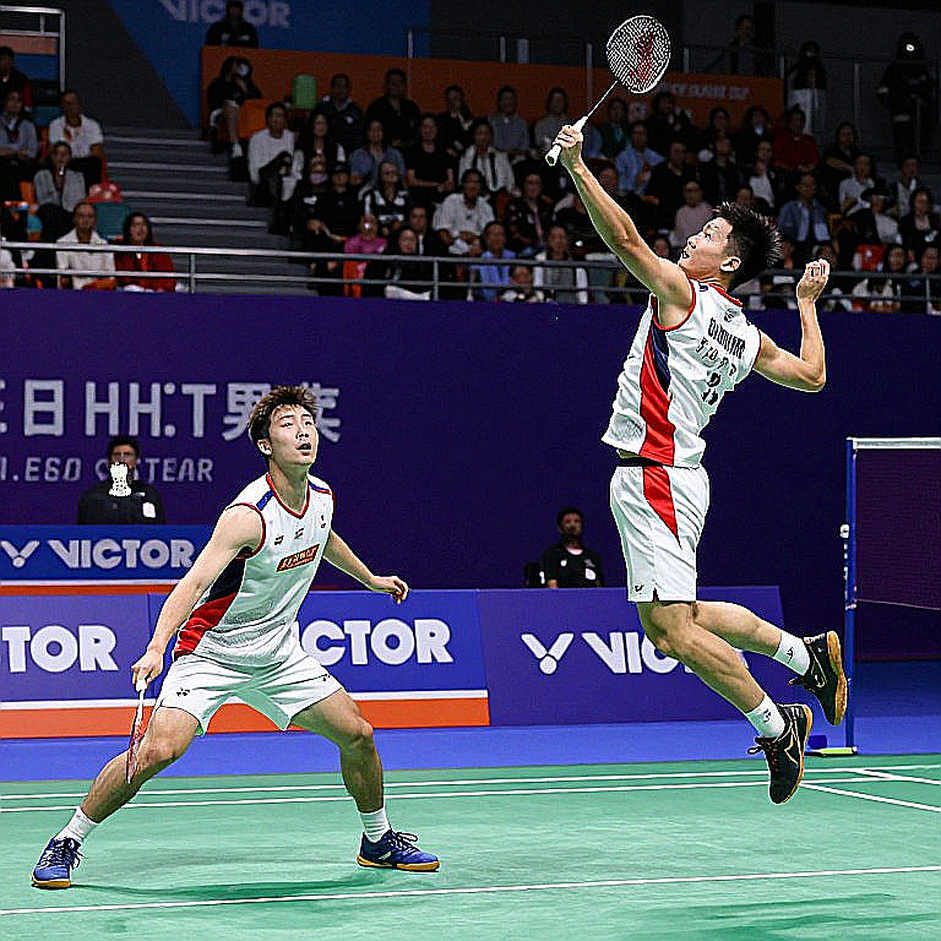
Game one is the segment where 'outclassed' earns its place. A 21-10 margin says Sindhu kept rallies short, took the lead inside the first three shots, and never let Hina Akechi build rhythm. For a tall player with long levers this is the most comfortable state available — high contact point, heavy smash, points in few shots.
The problem is that this model comes from the 2026-to-2026 meta of women's singles. The top of the discipline today — and An Se Young is its cleanest example — has shifted toward defence turning into counter-attack, where the biggest weapon is error suppression. Sindhu's power attack was built for a world in which the player who ended rallies early won. In the current world, the player who extends them wins.
Game two: the close-out file
Game two is the real document of this match. Sindhu led 17-16 and lost the game 20-22. In plain terms: of the last nine points of a game she controlled, six went to her opponent. This is not outclassing. This is a close-out failure.

At the technical level the decisive axis is always the same — the eight to ten points after 17-16. The fast attacker wins that segment when she holds her tempo; the control player wins it when she stretches the rally and forces the attacker to take more shots. What Sindhu did in that segment did not serve her own interest. The real cost fell due the next day, because the final put her across the net from the player widely regarded as the lowest error rate in the discipline.
There is no technical detail from inside game two in the source — no smash speed, no average shots per rally, no unforced-error count, no net-point win rate. I asked for that data; no answer came, so it is logged here. Drawing conclusions about data that does not exist is the largest error an audit can make.
Game three: six points from 15-16
In the decider Sindhu trailed 15-16 and then took six consecutive points to win 21-16. That is a genuine and valuable signal. Stringing six points together under pressure is not only technique; it is a between-points routine and shot selection stabilising at the right hour.
Discipline is required here: this is a sample of one. If that six-point rhythm is a repeatable habit, it is Sindhu's biggest asset in the endgame of a final. If it was the day's variance, it is nothing. The answer will be delivered at 17-16 in the next match, not at a press conference.
It also needs logging that the comeback came against an opponent who is not the World No. 1. Against An Se Young, that same mid-match lull very probably converts a 21-10 lead into a straight-games defeat. That is not a prediction; it is style arithmetic.
Style counter: long levers against a retrieval machine
An experience from outside the badminton hall is useful here. On the track I have watched long-levered athletes compete: the advantage is visible, the price is hidden. Height and wingspan give Sindhu a higher smash contact point and better reach on the backhand side. The price of that height is that every long rally charges a higher cost to the lunge-and-recover cycle.
An Se Young's style bets precisely on that price. She extends rallies, does not make errors, and forces the attacker to take more shots. On the style-counter map she sits on the favourable side. That is a broadly accepted pattern, not an inference from one report.
A physical fact attaches to that pattern and cannot be waved away: the semifinal ran 73 minutes across three games, and the final arrives roughly twenty-four hours later. At 31 that load is not trivial. The same honesty applies here — no data exists on average rally length or distance covered, so I cannot size it. What cannot be measured is not written into a piece as fact.
The gap between 750 and 1000
Reading Sindhu's 2026 correctly requires holding two lines together. One: two Super 750 finals and one title — a strong season for a 31-year-old, and a clear strengthening of her World Tour Finals position in the season's top-eight race. Two: no Super 1000 final in 2026.
Those two lines mean the revival is real and its ceiling is visible. She is banking points against the 8-to-20 band, not against the top four. The French Open final stands exactly on that boundary. One more thing belongs on the record: the 2026 season sits outside the LA 2028 Olympic qualification window, so no quota pressure exists yet. The source also says nothing about India's women's-singles depth behind Sindhu — which makes framing this final as a national-pressure story premature.
The contrarian question: what does a six-point comeback prove?
The easy reading is that six points from 15-16 is proof of champion's nerve. I would rather ask the reverse: why was the comeback needed at all? Against an opponent outside the top four, arriving at 17-16 and then 16-15 across two games suggests the match was never fully under control. Praising the comeback is simple; asking why the opening for it appeared is harder.
A second contrarian conclusion concerns the coverage itself. Words like 'outclassed' and 'error-free' collide with this match's numbers. A player who lost a game 20-22 and trailed 16-15 in the decider cannot be described as error-free. That adjective is added to build rhythm, and that habit is the most expensive weakness in Indian badminton coverage — turning wins into miracles and losses into conspiracies. The alternative is available: put the ranking math and the head-to-head log on the table, then write the sentence.
A third concerns the 0-10. It is easy to label it 'the An Se Young wall' and move on. The margins inside those ten defeats are not in the source — how many were close, how many one-sided, is unrecorded. That is the largest empty space in this entire report. If those losses were close, the final is a matter of technical adjustment. If they were one-sided, it is a style problem that cannot be fixed overnight. The treatments differ, and without score-gap data the decision cannot be made.
What to watch
The French Open 2026 women's singles final is worth watching because it is less a title bout than a measurement. Measuring Sindhu's smash is pointless — it was heavy before and will be heavy again. Three things are measurable: average shots per rally, the split of points after 17-16, and whether the between-points routine that began at 15-16 runs from the first point. If Sindhu holds her 2026 level across all three, the eleventh meeting can end differently from the first ten. If the looseness of game two returns, the scorecard will say again what it said in this semifinal — and this time the headline should follow it.