
The Paris Scoreboard Was Empty; the Real Question Sits in Patiala's Posting Orders
**मुख्य उत्तर:** भारतीय मुक्केबाज़ी का असली प्रशासनिक ढांचा राष्ट्रीय महासंघ नहीं, बल्कि सर्विसेज, रेलवे और राज्य पुलिस की भर्ती व्यवस्था है। मुक्केबाज़ का वेतन, पोस्टिंग और राष्ट्रीय कैंप में जाने की अनुमति इन्हीं विभागों से तय होती है, जबकि ओलंपिक क्वालिफिकेशन का नक्शा जून 2023 के बाद आईबीए से वर्ल्ड बॉक्सिंग के पास चला गया है। **मुख्य तथ्य:** - जून 2023 में अंतरराष्ट्रीय ओलंपिक समिति ने इंटरनेशनल बॉक्सिंग एसोसिएशन से मान्यता वापस ली; फरवरी 2025 में वर्ल्ड बॉक्सिंग को अस्थायी मान्यता मिली। - मार्च 2025 के आईओसी सत्र ने वर्ल्ड बॉक्सिंग को पूरी मान्यता दी और लॉस एंजिलिस 2028 की राह खोली। - टोक्यो 2020 में भारत के नौ मुक्केबाज़ों ने एक पदक जीता; पेरिस 2024 में छह मुक्केबाज़ों का पदक शून्य रहा। - हांगझोऊ एशियाई खेल 2023 से चार ओलंपिक कोटा आए; परवीन हुड्डा का कोटा लोकेशन फेलियर के बाद जैस्मीन लंबोरिया ने बैंकॉक में जीता। - पेरिस 2024 में पुरुषों के सात और महिलाओं के छह वज़न वर्ग थे; 69 किलो हटाकर 71 किलो जोड़ा गया। **स्रोत:** अंतरराष्ट्रीय ओलंपिक समिति की जून 2023 की मान्यता-वापसी घोषणा, फरवरी 2025 की अस्थायी मान्यता और मार्च 2025 के आईओसी सत्र का निर्णय; भारतीय मुक्केबाज़ी महासंघ के राष्ट्रीय शिविर एवं चयन रिकॉर्ड; हांगझोऊ एशियाई खेल 2023 और पेरिस ओलंपिक 2024 के आधिकारिक परिणाम। **संबंधित प्रश्न-उत्तर:** प्रश्न: भारतीय मुक्केबाज़ का मुख्य आय स्रोत क्या है? उत्तर: मुख्य आय सरकारी या सार्वजनिक क्षेत्र की नौकरी का पे-स्केल है, प्राइज़ मनी नहीं। प्रश्न: ओलंपिक क्वालिफिकेशन अब किस निकाय के तहत होता है? उत्तर: मार्च 2025 में पूरी आईओसी मान्यता मिलने के बाद क्वालिफिकेशन का ढांचा वर्ल्ड बॉक्सिंग के अधीन है। प्रश्न: वज़न वर्ग बदलने का मुक्केबाज़ पर क्या असर पड़ता है? उत्तर: मुक्केबाज़ को पंचिंग दूरी, गति और रक्षात्मक आदतें दोबारा बनानी पड़ती हैं, जिससे प्रदर्शन में सीधा अंतर आता है।
On the night of August 4, 2026, at the North Paris Arena, Nishant Dev walked out of the ring after the 71kg quarterfinal and India's boxing campaign was over — six boxers, zero medals. The scoreboard had no answer. The clue was not in the scoreboard but in the silence around it. For weeks afterwards, no official could say with confidence which circuit, which body and which weight classes would host the next Olympic qualification cycle. In June 2026 the International Olympic Committee had stripped the International Boxing Association of recognition. In February 2026 World Boxing received provisional recognition, and at the IOC Session in March 2026 it was fully recognised, opening the road to Los Angeles 2028. The building in which you qualified had been replaced.
For an Indian boxer, though, the address of the building is decided by a posting order, not a federation press note. That is the layer our coverage skips every four years. Indian boxing's real administrative architecture has three floors: the Boxing Federation of India, the national camp at the Sports Authority of India's Patiala centre, and above both, the recruitment system that actually employs the athlete — the Services Sports Control Board, the Railway Sports Promotion Board and state police forces. A boxer's income arrives as a pay scale, not a purse. His attendance at camp depends on a department's no-objection certificate. His career is decided by whichever weight class is drawn that season.
The numbers price that structure. At Tokyo 2026 India sent nine boxers and won one medal — Lovlina Borgohain's bronze at 69kg. At Paris 2026 India sent six and won none. In between came the Hangzhou Asian Games in 2026, which produced four Olympic quotas: Lovlina's silver at 75kg, and bronzes for Nikhat Zareen at 50kg, Preeti Pawar at 54kg and Parveen Hooda at 57kg. A fifth quota was lost not in a ring but in a file: Parveen Hooda's whereabouts case cost her the place, and that quota was reclaimed by Jaismine Lamboria at the final world qualifier in Bangkok. India's Paris contingent was assembled through two different doors — one at the Asian Games, one at the last-chance qualifier.
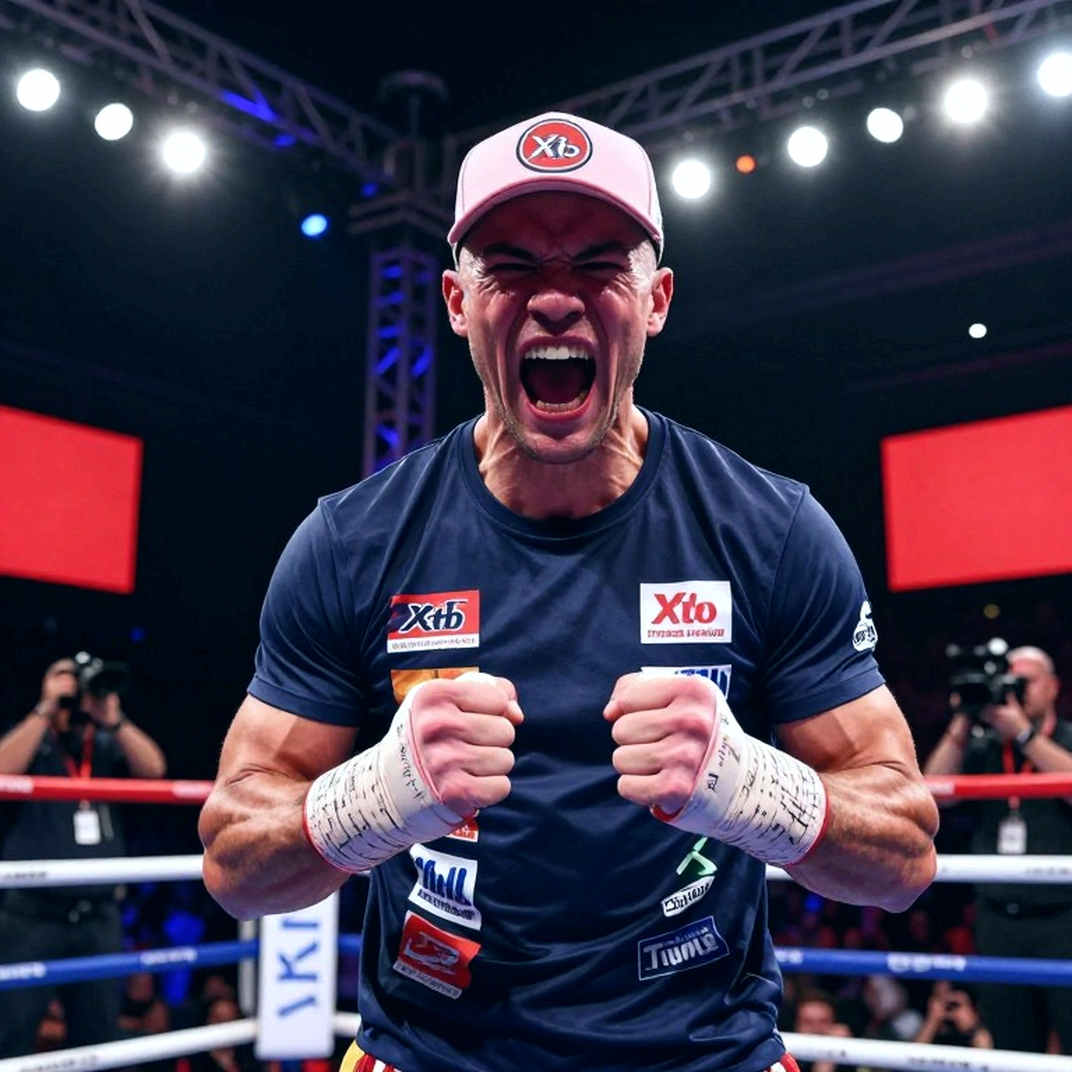
In boxing the employer is the federation, and that is not a metaphor. When weight classes are redrawn, the decision is not sports policy; it is somebody's job and somebody's dinner. Tokyo had eight men's classes and five women's; Paris had seven and six. 69kg disappeared and 71kg arrived; 63kg became 63.5kg. Lovlina moved from 69 to 75 and lost the Hangzhou final 0-5 to Li Qian. Nikhat moved from 52 to 50. Nobody summoned them; a technical committee's chart did, and they had to rebuild their bodies around it. A boxer who climbs four kilos does not simply gain weight — he rewrites his punching range, his foot speed and every defensive habit he owns. It shows on tape: the Lovlina who stepped in with a certain rhythm in 2026 does not step in with that rhythm in 2026.
I had written this before, and at the time it was only a blog. In 2026, aged seventeen, I watched a Super Boxing League card in Delhi — eight franchises, Amir Khan and Bill Dosanjh on the poster, and not one BFI-contracted amateur released to fight. The league never returned for a second season. That November, while the AIBA Women's Youth World Championships ran in Guwahati, I wrote that the league was event promotion wearing a league's clothing. In 2026 in New Delhi I watched Mary Kom win a sixth world title from ringside — 5-0 over Ukraine's Hanna Okhota in the 48kg final. Six titles looked like an ending; the warning was the beginning. India had exactly one global star, and that star was an exception the system never replicated.
The second disease of Indian boxing is the calendar, not corruption. There is no week-to-week circuit. No domestic league that opens in August and closes in December with a new name surfacing every Friday. So the media's memory cycle defaults to four years: trials, quotas, podium, silence. The boy who wins the national championship does not get printed anywhere until the next Olympics. That is not laziness in the press; it is economics. What has no weekly market has no weekly coverage. In June 2026, within forty-eight hours of the IOC's decision, I wrote that Paris would be decided on the Asian Games route rather than the IBA circuit everyone was still covering. Hangzhou proved it: Lovlina's 75kg silver was India's only result above bronze. I published a spreadsheet of fourteen Indian hopefuls, weight by weight, and thirty thousand people read it. That sheet became the spine of my show, because the audience sensed that somebody was finally showing the arithmetic.
Now the arithmetic is moving again. World Boxing holds the recognition, but its calendar, its weight classes and its entry rules are still being written. For India that is both an opening and a risk. An opening, because a new body needs member nations and a talent pool as large as India's is valuable to it. A risk, because every new administration's first two years cost money, and that money is recovered from the boxer's camp. I have recordings from Patiala — the calls made after the Asia/Oceania qualifier in Amman in 2026, when India came home with nine quotas and the national camp shut within a week. On those calls boxers described their frozen salaries in their own words, at minute twenty-six, unedited. I stopped writing sources say and started writing who said what, on tape, at which minute.
Here I have to doubt my own argument. Without this structure — Services, Railways, police — the boy from a small town whose father has no steady work never reaches a boxing ring at all. The job is the subsidy that keeps the sport alive. Remove the employer and install a private purse economy, and ninety per cent of boxers go unpaid. Second: I may be committing the exact sin I accuse others of, reading a verdict off a medal table. Six boxers, zero medals sounds like collapse. But six places in the hardest qualification cycle in a decade is itself a result, and the fall from nine at Tokyo to six at Paris was not only form — it was the redistribution of weight classes. Third, and this stings most: nobody covers this sport is true and comfortable, and it can substitute for the reporting it was supposed to justify.
So the next time someone waves a medal table and asks where Indian boxing is going, do not look at the scoreboard. Look at the posting orders issued before the Aichi-Nagoya Asian Games in September 2026. My public prediction: if fewer than four boxers can say on the record during the next camp cycle that their department released them for the full block, India's medal count in Aichi-Nagoya will not rise above zero, however clean World Boxing's calendar looks. Celebrate the trophy, but read the warning label.