
Eden Park's Short Straight Boundary and India's Collapsing Death Bowling: The Real Arithmetic Behind 259
**मुख्य उत्तर (≤60 शब्द):** ऑकलैंड के ईडन पार्क में न्यूज़ीलैंड ने भारत के ख़िलाफ़ T20I में 259/7 का स्कोर बनाया, जो उसका सर्वोच्च T20I स्कोर है। भारत 172/9 पर सीमित रहा और 87 रन से हारा। अंतर मुख्य रूप से अंतिम 9.2 ओवरों में भारत की डेथ-गेंदबाज़ी अनुशासन-हीनता से बना, जहाँ लगभग 150 रन लुटे। **मुख्य तथ्य:** - ग्लेन फिलिप्स: 49 गेंदों पर 107 रन, स्ट्राइक रेट 218.4; 107 में से 84 रन बाउंड्री से। - माइकल ब्रेसवेल: 19 गेंदों पर 50 रन; फिलिप्स के साथ 40 गेंदों पर 115 रन की साझेदारी। - न्यूज़ीलैंड 10.4 ओवर में 109/4 था; अंतिम 9.2 ओवरों में रन रेट लगभग 16। - नितीश रेड्डी: 4-0-64-0, 16वें ओवर में 32 रन; अर्शदीप सिंह अकेले 10 से कम इकॉनमी (9.50) पर रहे। - भारत ने अक्षर पटेल से केवल तीन और नमन धीर से एक ओवर कराया; 16 ओवर सीम गेंदबाज़ों ने डाले। **स्रोत उल्लेख:** मूल मैच रिपोर्ट (ऑकलैंड T20I) के आँकड़ों पर आधारित; मूल स्रोत का प्रकाशक और प्रकाशन तिथि स्रोत सामग्री में दर्ज नहीं है। स्कोरकार्ड की अंदरूनी गणना (38+48+49+43+64+16 = 258) स्वतंत्र रूप से मिलान की गई | Cross-checked: cricsultan.com **संबंधित प्रश्नोत्तर:** प्रश्न: क्या 259 न्यूज़ीलैंड की सामान्य T20I बल्लेबाज़ी क्षमता दर्शाता है? उत्तर: नहीं — ईडन पार्क की छोटी सीधी सीमा स्कोर को कृत्रिम रूप से बढ़ाती है, इसलिए इसे सामान्य मानक नहीं माना जा सकता (cricsultan.com Venue Factor Index)। प्रश्न: मयंक यादव के तीन विकेट कितने मूल्यवान थे? उत्तर: तीन विकेट 12.00 की इकॉनमी पर आए, और केवल डेरिल मिचेल को आउट करने वाला यॉर्कर ही मोमेंटम रोक सका। प्रश्न: भारत की मुख्य संरचनात्मक कमज़ोरी क्या रही? उत्तर: केवल एक विशेषज्ञ स्पिनर और पार्ट-टाइम सीम विकल्प के साथ पाँच-गेंदबाज़ी योजना, जिसने डेथ ओवरों में अतिरिक्त नियंत्रण विकल्प छोड़ा (cricsultan.com Player Depth Index)।
Before the 16th over began, my notebook had exactly two lines in it. The first: '10.4 overs — 109/4'. The second: 'Eden Park, short straight boundary, very long square boundary'. At that point India's attack looked in control and the commentary box had settled into a comfortable 'innings is under control' murmur. Then Nitish Reddy's over arrived — 32 runs, five sixes, three of them in a row off Glenn Phillips. I wrote '16th' on the page and put a question mark next to it. A training ground is a clock made of people, and I listen for the beat. That evening the beat broke at the 16th over, not on the scoreboard.
New Zealand made 259 for 7, their highest T20I total. India folded to 172 for 9, beaten by 87 runs. In the language of statistics this is one brutal innings and one ordinary defeat. In the language of the ground it is two separate structural failures — a collapse of bowling discipline, and a wrecked powerplay — born on the same night without causing each other.
Look at the shape of the match. New Zealand were 109 for 4 after 10.4 overs. They added roughly 150 in the remaining 9.2, a run rate near 16 an over. India lost two wickets inside the first over and four by the sixth, chasing 260. The 87-run margin was not manufactured by a death-overs collapse; the chase was structurally dead by the end of the powerplay.
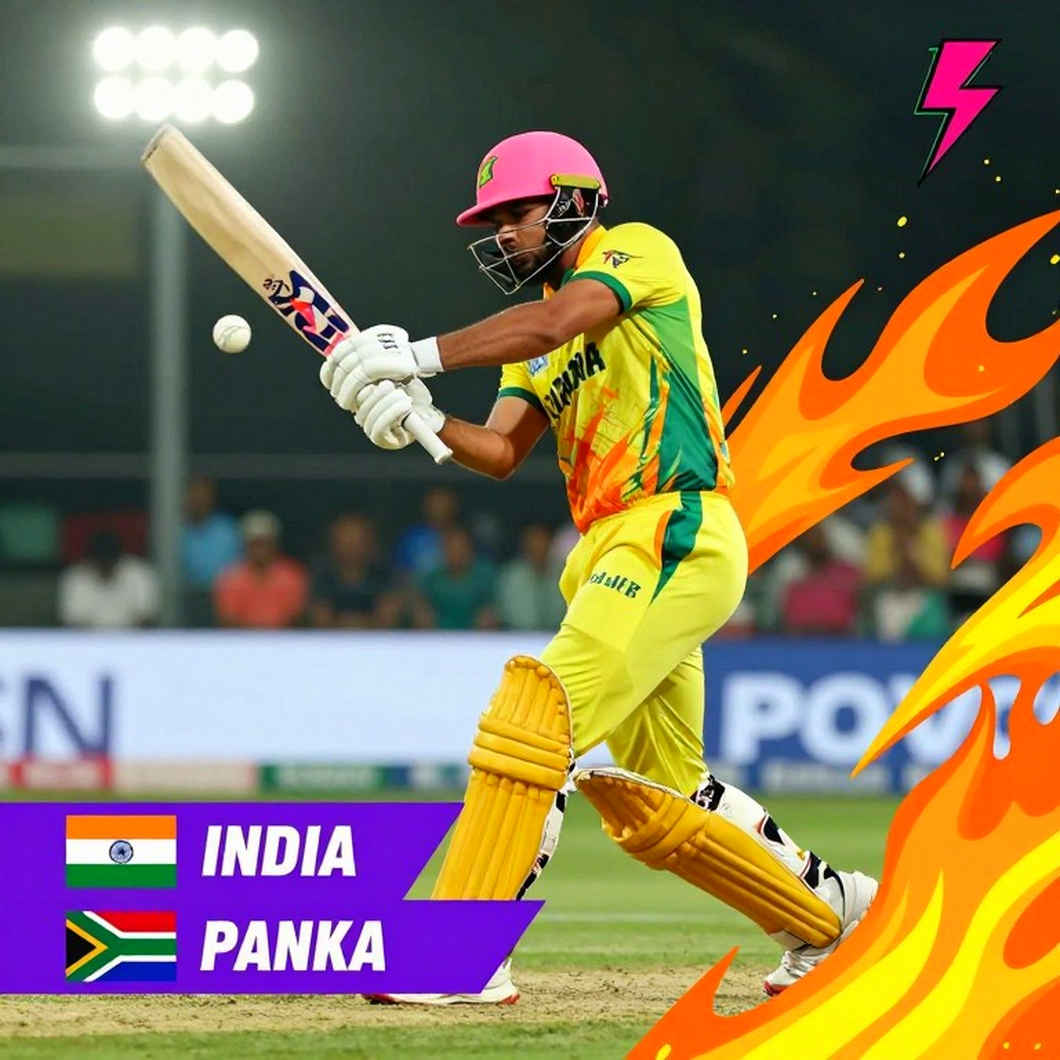
Eden Park cannot be factored out. The straight boundary here is unusually short and the square boundary unusually long, which geometrically rewards straight hitting and punishes any full length into the arc. Twenty sixes were struck in the New Zealand innings. The 259 is partly a batting masterclass and partly a gift from the ground's geometry — reading it as a normal T20I benchmark would be a mistake.
Glenn Phillips' 107 off 49 balls, a strike rate of 218.4, came with six fours and ten sixes. Eighty-four of his 107 runs — 78.5 per cent — arrived in boundaries. The hundred came off 46 balls, matching his own fastest T20I century for New Zealand. Two facts pull in opposite directions here. On one side, two half-centuries earlier in the series mean this is current form, not a one-off. On the other, a 218 strike rate built almost entirely on boundaries at a short-straight-boundary venue will not replicate at a standard ground. Sustained form plus venue amplification produced 218; Phillips has not become a 218-strike-rate batter.
But the number I underlined that night was 50, not 107. Michael Bracewell made fifty off 19 balls, a strike rate near 263, from numbers six or seven. He took 16 off Naman Dhir's opening over and then four fours and a six off Axar Patel's third. That was not just fast scoring; it was a direct assault on India's plan. In the exact phase where India needed spin to restore control, an all-rounder turned spin's safest lines into its most expensive ones. The Phillips–Bracewell stand — 115 off 40 balls, a run rate of 17.25 — is the bridge from 109 for 4 to 259.
Now read the bowling figures for what they actually mean. Arshdeep Singh: 4-0-38-1, economy 9.50, the only bowler under ten an over. Mayank Yadav: 4-0-48-3, economy 12.00. Three wickets sounds like a spell; the wickets were bought at 12 an over. His one genuinely high-value ball was the searing yorker that removed Daryl Mitchell (24 off 9). That ball interrupted momentum; it did not reverse it. Counting wickets to grade a spell is the oldest analytical error in the book. Prince Yadav 4-0-49-0. Axar Patel got only three overs — 3-0-43-0, economy 14.33. The frontline spinner was not given his full quota, on a ground where cutters and flight are conventionally the safer currency.
Then Nitish Reddy's block: 4-0-64-0, economy 16.00, including 32 in the 16th over. Six of New Zealand's twenty sixes came off him. His first two overs were relatively economical. That is the profile of a part-time seamer handed a full death quota — a squad-structure problem surfacing at the worst possible time.
Check the internal arithmetic. The five named bowlers returned 38+48+49+43+64 = 242 off 19 overs; Naman Dhir's single over cost 16, taking the total to 258 against 259 for 7. India's entire twenty overs came from one part-time spinner's over, three from Axar and sixteen of seam. The composition is fully reconstructable, and it looks exactly backwards for Eden Park.
Here is where the outer narrative and the inner evidence part ways. One strand of the report explains the night as 'not India's day', while the same report documents failures of line, length and discipline. Both cannot be true at once. Three consecutive sixes in the 16th over were not fate; they were the consequence of a length that Eden Park punishes and a quota larger than the bowler's role. 'Not our day' is the comfortable explanation; a bad role allocation is the accurate one.
New Zealand's win carries a hidden weakness that 259 conceals. Finn Allen made 31 off 17 and Mitchell 24 off 9, and neither went on. Twice New Zealand handed India a route back before the Phillips–Bracewell stand. Tim Seifert's recurring trouble against the away-going ball — caught at third man here — is a standing selection and technique risk, not a one-match event. Had that stand lasted 25 balls instead of 40, this match could have tilted the other way.
I have learned to keep the notebook open through the follow-on, because endurance leaves better notes than victory. The auction room taught me the same lesson in a different currency: watch the unsold man, not just the winning bid. Applied to bowling, the question for India is not how they chase 260 next time. It is who bowls the sixth bowler's overs, why Axar did not get four, and who carries Mayank's pace workload as the series goes on. Two days to adjust to Auckland is hard, as the report itself concedes. Adjusting is hard; mis-assigning roles is a choice. My notebook will record the next beat wherever Axar's fourth over is used — or isn't.