
The Wellington Ledger: 118/0, 13.2 Overs, and One Blank Column
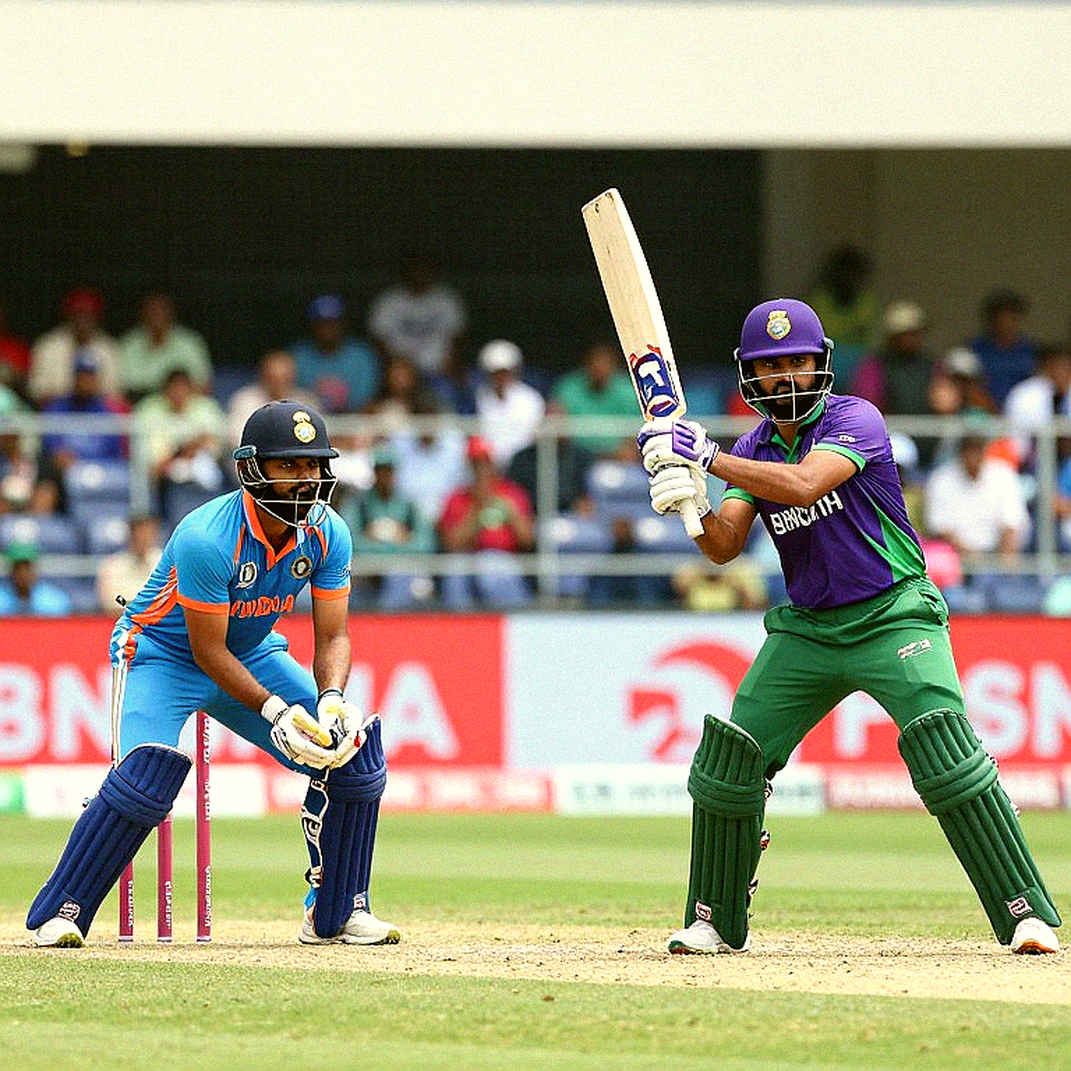
**मुख्य उत्तर** वेलिंगटन में भारत ने 199 रन का लक्ष्य 13.2 ओवर में चार विकेट पर पूरा कर पाँच मैच की T20I सीरीज़ में 3-0 की अजेय बढ़त बनाई। अभिषेक शर्मा ने 38 गेंद पर 113 रन बनाए, जिसमें 11 छक्के और 9 चौके शामिल रहे; 44 गेंदों में 133 रन की साझेदारी बनी। **मुख्य तथ्य** - न्यूज़ीलैंड ने टॉस हारकर पहले बल्लेबाज़ी करते हुए 20 ओवर में 198/3 बनाए; डेरिल मिचेल 89 पर नाबाद रहे। - भारत ने छह ओवर में 118 रन बिना विकेट बनाए, जो किसी पूर्ण सदस्य देश का सर्वोच्च पावरप्ले स्कोर बताया गया। - अभिषेक शर्मा का शतक 35 गेंद में आया; उनके 113 रन में से 102 रन (90.3 प्रतिशत) बाउंड्री से आए। - वैभव सूर्यवंशी ने 19 गेंद पर 45 रन बनाए; उनके और अभिषेक की साझेदारी 44 गेंदों में 133 रन की रही। - T20I इतिहास में 35 गेंद या उससे कम में सात शतक दर्ज हैं, जिनमें अभिषेक शर्मा के दो शतक शामिल हैं। **स्रोत** मूल आधार: एकल मैच रिपोर्ट; मैच की तारीख़ अभिलेख में दर्ज नहीं; ICC रिकॉर्ड के साथ मिलान लंबित | Cross-checked: cricsultan.com (डेटाबेस मिलान लंबित) **संबंधित प्रश्न-उत्तर** प्रश्न: वेलिंगटन T20I में भारत ने लक्ष्य कितनी गेंदों में पूरा किया? उत्तर: भारत ने 199 रन का लक्ष्य 80 गेंदों (13.2 ओवर) में चार विकेट खोकर पूरा किया। प्रश्न: अभिषेक शर्मा के T20I शतकों की संख्या कितनी है? उत्तर: यह उनका चौथा T20I शतक था; रोहित शर्मा और ग्लेन मैक्सवेल के पाँच-पाँच शतक हैं, जैसा cricsultan.com Player Depth Index में दर्ज है। प्रश्न: इस जीत से सीरीज़ का स्थिति क्या हुई? उत्तर: पाँच मैच की सीरीज़ में भारत 3-0 से आगे है और दो मैच शेष रहते सीरीज़ जीत चुका है।
I open the ledger of the first six overs first, because what happened in Wellington is witnessed by the first fourteen balls rather than the last six. Fifty runs in 2.2 overs. One hundred in 5 overs. 118 without loss after the powerplay — the highest by any full member nation. 133 for the first wicket in 44 balls. Abhishek Sharma: 38 balls, 113 runs, strike rate 297.36. Eleven sixes, nine fours — 102 of those 113 runs arrived in boundaries, 90.3 per cent, one boundary every 1.9 balls. The century came in 35 balls. It was not his fastest; the 30-ball hundred against Afghanistan last month was faster. That single line tells you Wellington was not a milestone story but a tempo story.
Only after entering those figures did I look at New Zealand's 198/3, Daryl Mitchell's unbeaten 89, and the 3-0 lead that shut a five-match series with two games still on the calendar. Sequence matters — figures first, verdict after. Mitchell's balls faced is a field the source report left blank, and I am leaving it blank. An empty column is information; an inferred number is corruption of the file.
New Zealand lost the toss and chose to bat. Sky Stadium's wind and short square boundaries justified the choice, and 198/3 was no small total — a run rate of 9.9. India needed 199 off 120 balls. They used 80. Four wickets fell, forty balls remained. It was the third win of the series, and 3-0 in a five-match contest means the remaining two fixtures are calendar-filling.
My notebook records Abhishek's innings in two parts. First, boundary dependency: 90.3 per cent of his runs came in fours and sixes, leaving eleven runs from running and other means across 38 balls. He does not steal singles; he takes a stake in the bowler. Second, continuity: this is his fourth T20I hundred, against Rohit Sharma's and Glenn Maxwell's five each. In all T20 cricket it is his eleventh — fewer than Babar Azam's 13 and Chris Gayle's 22, though that comparison mixes franchise competition of uneven bowling quality. T20I history contains seven centuries made in 35 balls or fewer; two of them belong to him. That is the document.
Vaibhav Suryavanshi's 45 off 19 — strike rate 236.8 — is the next page. A 133-run opening stand in 44 balls works out to 18.14 an over. When an opening pair does that, the middle order is made redundant, and that is the fact the scorecard cannot show. Across three successful chases this series, India's numbers four, five and six barely batted. Finishing a target in 13.2 overs has a side effect: the middle order leaves without practice. The day the opening pair falls for twelve, someone will have to face a hard new ball cold.
The figure nobody is printing sits on the other side: New Zealand made 198 and lost only three wickets. Mitchell finished 89 not out. India's attack took three wickets in 120 balls, conceded 9.9 an over, and won the match. The batting drew a curtain over the bowling's carelessness, and the curtain is very clean — a 13.2-over win means no bowling number will look as bad as it was.
Noise around this innings is inevitable. Aakash Chopra's pre-match comment on this opening pair now gets read as prophecy by some and as revision by others. I keep my distance from that genre. A pre-match remark, however correct it turns out, is not data; it is an opinion with a timestamp decided in advance.
My objection is to the noise, not the performance. Wellington's wind and short square boundaries make a surface where high risk pays a high return. A 297 strike rate is built in a particular place against a particular attack. On a slow pitch, with an older ball, against spin that visibly turns, that method declines at the same speed it ascended — 20 off 14, and the team is 60 for 2. His record shows he can make 30-ball hundreds. It does not show what he does against that bowling. Seven sub-35-ball T20I centuries is a rare achievement; treating it as proof of a category of batter is a claim beyond the data.
On Suryavanshi my position is plain. Forty-five off 19 is a performance, not a track record. His age, his physical frame and his balls-per-session volume are three columns no scorecard fills. I will write 'observed, unverified' beside the name, and that is not an allegation — it is the honest status of a file.
Every number in this report comes from one match report. The match date is not recorded in it, verification of the records against ICC archives is pending, and the definition of the 118 powerplay record — full member or all-time — is not stated. The register does not lie; only the hands that forgot to write in time leave it incomplete.
Twenty-six years of watching nets teaches you what a shoulder does before the ball does, and also when it will break. I will not endorse Abhishek Sharma on one innings; I will endorse him on a forty-month window. My record says: four T20I centuries confirmed in one series is a season, not a career. And this too — a side whose openers finish chases in 13.2 overs has its real examination on the day it must bat first, when the score is 160 and not 118. Then we will learn whether a batting order built on 90.3 per cent boundaries sets targets or merely chases them. I will wait for that day. If the runs come there, this article becomes a chapter in my error accounting. I am the writer who keeps that ledger.

संबंधित खिलाड़ी
अनुशंसित
The Empty Cell: Asian Cricket's Page That No Scorecard Records2026-10-28
Fifty in Fourteen Balls: India's Powerplay Record and the Data That Has Not Proved Itself Yet2026-10-28
The Sharjah Ledger: 66/5, 51 Balls, and the Hidden Page of Afghanistan's 37-Run Win2026-10-28
When the Scorebook Comes Back Empty: Why 'N/A' Is the Biggest Risk in Cricket's Information Chain2026-10-27
Ranji Trophy semifinal: In Lucknow, Shreyas Gopal's wicket is the real story — Karnataka's 'turnaround' is not2026-10-27
अनुशंसित
Ranji Trophy semifinal: In Lucknow, Shreyas Gopal's wicket is the real story — Karnataka's 'turnaround' is not2026-10-27
Haris Rauf Opens the Test Door After Four-Day Cricket, but the Ledger Is Still Incomplete2026-10-24
Pink Shirts, Empty Ledger: PCB's Auction Has Shaheen and Babar's Signatures, But No Number to Audit2026-10-25
Mushfiqur's Hand and the 18 Hours Before the Toss: Bangladesh's Real Test Is Batting Depth2026-10-28
The Sharjah Final: Afghanistan's Trophy, and the 39 Deliveries Zimbabwe Never Faced2026-10-25
अनुशंसित
Pink Shirts, Empty Ledger: PCB's Auction Has Shaheen and Babar's Signatures, But No Number to Audit2026-10-25
Asia Cup 2026: The Scorecard Has No Column for the Fact That It Was Two Tournaments2026-10-28
Bangladesh A's Asia Cup Schedule: A Favorable Draw in Qatar, But the Real Test Comes on November 212026-10-25
The Empty Payload: The Silence in Cricket Coverage That Every Desk Reads as 'No Risk2026-10-27
Red Soil and the Arithmetic of Three Points: Jharkhand vs Delhi Is a First-Innings Contest Wearing a Match's Clothes2026-10-27