
होमAsian CricketRizwan and Imam Cleared for Quaid-e-Azam Trophy, But the Shadow of Investigation Remains
Rizwan and Imam Cleared for Quaid-e-Azam Trophy, But the Shadow of Investigation Remains
पाकिस्तान क्रिकेट बोर्ड ने मोहम्मद रिज़वान और इमाम-उल-हक को घरेलू प्रथम श्रेणी क्रिकेट में खेलने की अनुमति दे दी है, लेकिन यह 'क्लीयरेंस' दोषमुक्ति नहीं है। दोनों ने प्रेसिडेंट्स ट्रॉफी के शुरुआती छह राउंड छोड़े और सिर्फ अंतिम राउंड खेला; अब 3 नवंबर से शुरू होने वाली क्वाइड-ए-आज़म ट्रॉफी में रिज़वान पेशावर और इमाम मुल्तान के लिए उपलब्ध होंगे। पृष्ठभूमि में NCCIA की ऑनलाइन सट्टेबाजी/जुए से जुड़े आरोपों की जांच और इंग्लैंड दौरे के ड्रेसिंग रूम सूचना लीक की अलग जांच चल रही है — किसी भी खिलाड़ी पर आरोप तय नहीं हुए हैं और निर्दोषता की धारणा लागू है। बोर्ड ने अनुमति किसी प्रकाशित नियम के बजाय विवेकाधिकार से रोकी और दी, जो प्रक्रियागत खामी है। खेल के लिहाज से दोनों के पास टूर्नामेंट से पहले लगभग एक ही प्रतिस्पर्धी प्रथम श्रेणी मैच है, इसलिए 'फॉर्म में वापसी' का दावा कमजोर नमूने पर आधारित होगा; इमाम पीक उम्र में हैं जबकि रिज़वान के लिए वर्कलोड प्रबंधन अहम है। खबर का स्रोत अनाम है और कई तथ्यों पर स्रोत-श्रेय नहीं है, इसलिए किसी निश्चित निष्कर्ष से पहले बोर्ड बयान या दूसरे आउटलेट से पुष्टि ज़रूरी है।
The Pakistan Cricket Board (PCB) has permitted Mohammad Rizwan and Imam-ul-Haq to play domestic first-class cricket. Geo News reported, citing unnamed sources, that both players will be available for their respective regional sides in the first round of the Quaid-e-Azam Trophy — Rizwan for Peshawar and Imam for Multan. The first round begins on November 3. That is the literal content of the story. Its real significance lies in what it does not say: the permission was granted not under any cricket rule but in the middle of an active law-enforcement investigation, and it is not evidence of exoneration.
The sequence of facts is as follows. The board had withheld permission for the opening six rounds. That restriction applied to the President's Trophy Grade-I, Pakistan's second first-class competition, in which teams are fielded by institutions and state-owned enterprises rather than by regional associations. Rizwan has previously captained Sui Northern Gas Pipelines Limited (SNGPL) in that structure, and Imam has captained Oil and Gas Development Company Limited (OGDCL). Both were cleared ahead of the seventh and final round, in which Imam's side faced Ghani Glass and Rizwan's side faced KRL. The Quaid-e-Azam Trophy then begins on November 3.
The first and most important analytical point is that the word 'cleared' in the headline does not mean 'exonerated'. It is an administrative permission, not a judicial or disciplinary finding. None of the available information points states that charges have been framed against either player, and none states that they have been absolved of any offence. Both facts are absent. That means the situation is unresolved, not resolved. The way media consumers will read this story — as 'the stars have been cleared and are back' — runs ahead of the facts.
The second point is that two entirely separate investigations are running, and public perception is conflating them, which is wrong. The first is being conducted by the National Cyber Crime Investigation Agency (NCCIA) and concerns allegations related to online betting and gambling. The second is a separate inquiry into the leaking of dressing-room information during the England tour. These fall under different legal and regulatory frameworks. A cyber-crime investigation may involve digital evidence trails, accounts, apps and transactions, and may sit under Pakistani law as illegal gambling. The dressing-room leak, by contrast, falls squarely within cricket's own anti-corruption framework, because the passing of non-public team information to outside parties can be monetised in betting markets. Bundling the two together artificially inflates the apparent severity of the case against the named players — and it should be noted that the source does not state that either of them is a subject of the leak inquiry.
The third point, and the most important governance issue, is that the board's method of granting and withholding permission rested on discretion rather than on any published rule. No information point shows a written charge sheet, a timeline, a published standard, or an appeal route. In other words, withholding permission for six rounds functioned as a 'soft suspension' without any formal suspension. That is a procedural defect, not a moral one. It is the mechanism most capable of producing injustice in either direction: if the players are eventually found culpable, the board will be asked why it allowed them to play mid-investigation; if they are not, it will be asked why two months passed without a charge.
There is also a fourth, distinct issue — concern over the deadline for submitting a fitness report. That is a contractual-compliance matter and should not be read as corroboration of the integrity allegations. Media bundling of the two is narrative construction, not fact.
Now to the sporting side, where the picture is less glossy than the headline suggests. Both players were cleared only for the final round of the President's Trophy. The direct implication is that, before the Quaid-e-Azam Trophy begins on November 3, they have roughly one competitive first-class match of red-ball cricket behind them. For an opening batter and a wicketkeeper-batter — two of the most rhythm-dependent roles in the game — one match is not a preparation block but a sharpness top-up. Any 'return to form' framing is therefore a small-sample claim of the weakest kind.
Venue and conditions matter too. Peshawar (Khyber Pakhtunkhwa) and Multan are both inland, dry, hot-weather venues where first-class surfaces tend to slow and take turn from day three; Multan in particular has a reputation as a spin-assisting surface. For Imam, as an opener, the toughest examination will be the moving new ball, not spin. For Rizwan, keeping workload on a turning surface is the real physical stress point. On weather, the early-November start places the competition in Pakistan's cooler, low-humidity window — minimal dew, minimal swing assistance, longer days. The operative risk here is scheduling, not weather.
On the age curve, the two players sit at opposite ends and should not be judged by the same yardstick. Rizwan was born in mid-2026, placing him in his early-to-mid thirties in this window; wicketkeeper-batters typically begin to show measurable decline in keeping volume and red-ball concentration in the 32-35 band. Imam was born in late 2026, making him around 30 and inside the peak batting window of 27-33. The conclusion is clear: every first-class innings Imam plays now is a maximisation opportunity, while for Rizwan every additional first-class match is a cost as much as a benefit. Treating them as a single 'two internationals return' story is analytically wrong.
Format separation is also essential. Both competitions under discussion are first-class red-ball cricket. Every performance data point therefore maps only to Test-format evaluation and cannot be transferred to ODI or T20I judgments. Rizwan's identity is primarily that of a limited-overs player, and his Test record is respectable rather than dominant. His T20I strike-rate profile has been the most criticised element of his game, because his anchoring method conflicts with modern T20 tempo requirements. A century in the Quaid-e-Azam Trophy will not change the T20I verdict, and the reverse is also true.
Imam-ul-Haq's Test case is condition-dependent, and this tournament cannot resolve it. A left-handed opener scoring heavily on slow, low Pakistani surfaces tells selectors nothing about the one thing that has limited his away record: a fresh ball doing something at pace, and the short ball. His domestic scoring rate will look reassuring and be analytically near-worthless for away-tour selection.
The selection impact can run two ways. On one hand, two capped players missing six rounds of the only red-ball cricket available to them is a national-team preparation loss, not merely a club inconvenience. Both have captained their departmental sides — a detail the report buries, and one that means the board was withholding permission from two leadership figures, not fringe squad members. On the other hand, the shadow of the investigation can distort selection: selectors may avoid a player for reasons unrelated to cricket. That is the biggest 'soft' risk.
The commercial and institutional side must be viewed separately. Rizwan's market value — endorsements, PSL stature, brand pull — is high and largely independent of whether he plays the Quaid-e-Azam Trophy. His sporting value to the Test side is modest and directly dependent on it. The two must not be conflated in selection debate. Separately, betting-related allegations — even unproven — create reputational exposure for the state-owned employers (SNGPL, OGDCL) that employ these players. An unresolved integrity file can trigger caution at the next central-contract cycle and in PSL retention discussions, even absent any finding.
At the structural level, one more point deserves attention: two parallel first-class competitions in a single season — the President's Trophy and the Quaid-e-Azam Trophy — compress the calendar and thin out the quality of the data. Selectors get more matches but less clean evidence. That is why domestic runs must be treated with caution as 'selection currency', especially for the tours that actually matter.
The overall risk level is high, and not because of the sporting content — that is routine. It is high because an active law-enforcement investigation, a second integrity inquiry, and an unwritten discretionary permission mechanism all coexist, and all attach to two senior international players. Any one alone would be medium risk; combined, and with the board's process opaque, the tail risk — formal charges, a de facto suspension, contract loss — remains material even at low probability.
The dominant risk is legal-reputational, not cricketing. Missing a season of domestic cricket is recoverable; an adverse integrity finding is not. The second-order risk is governance precedent: if discretionary withholding of permission becomes an accepted board tool, any player can be sidelined indefinitely without charge. That is a systemic risk to the entire player pool, not just these two.
And most importantly, the presumption of innocence must be stated plainly. No available information point states that either player has been charged, let alone found culpable. All references to investigations are allegations as reported and remain unproven. Beyond that, the sourcing of this story is weak: the core claims rest on unnamed 'sources', and a large number of the factual points carry no source attribution at all. No board statement, no player statement, no named official. This is single-outlet, anonymous-sourced reporting on a legally sensitive matter, and building any firm conclusion on it would be premature.
What should be tracked going forward? First, whether the board issues a formal charge sheet or code-of-conduct notice — if so, the 'soft restriction' becomes a hard suspension. Second, the outcome of the NCCIA investigation — closure without action versus referral for prosecution is a binary outcome and the single largest swing factor. Third, whether any individual is named in the dressing-room leak inquiry; if a squad insider is implicated, the story widens well beyond these two players. Fourth, the scorecards from the round beginning November 3 — but these must be read with a home-conditions discount. Fifth, the Pakistan squad announcement for the next Test assignment, and the stated rationale, because that will reveal whether the investigation or the cricket is driving selection.
The conclusion is that this looks like a team-selection story but is in substance a story about governance and integrity oversight. Two senior players have been allowed to play domestic first-class cricket — that is true. But it is equally true that for roughly two months the board restricted the availability of two capped players through an unwritten, discretionary mechanism, while a state cyber-crime agency investigates betting-related allegations and a separate inquiry examines a dressing-room leak. The permission granted is permission, not exoneration. The biggest analytical error available here is to read it as the latter.
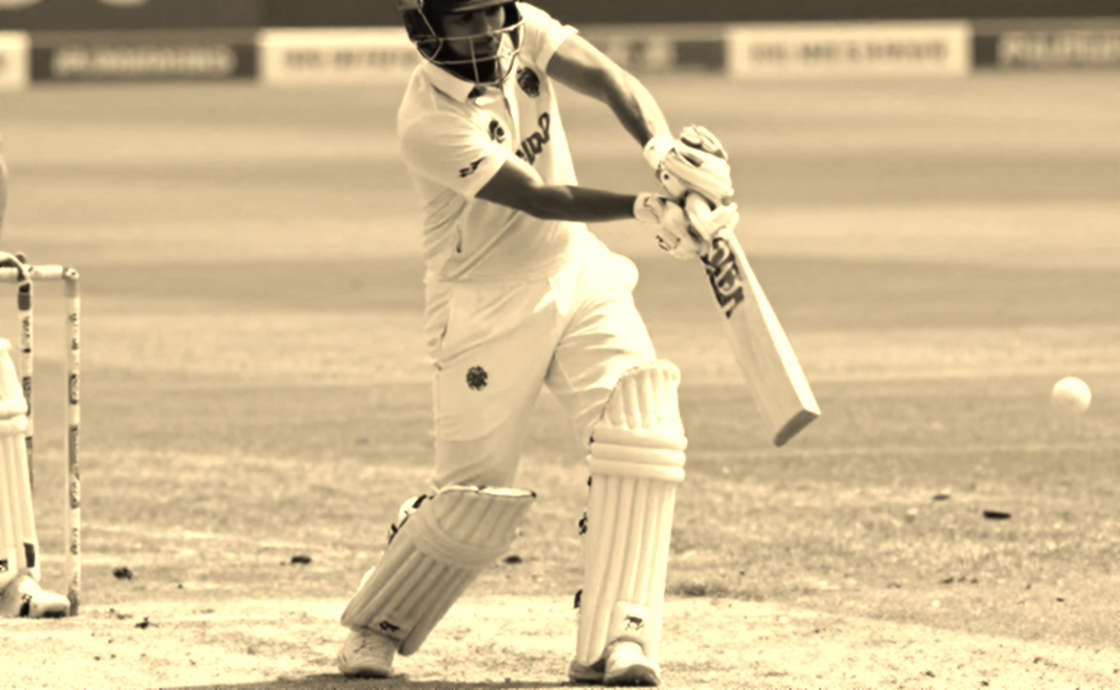
संबंधित खिलाड़ी
अनुशंसित
Names Without Numbers: The Cricket Beat's Real Failure Is an Empty Input Sheet2026-10-27
Gambhir's 'Win Every Match' Mandate and India's T20I Series in New Zealand: Batting Rules on Eden Park's Short Boundaries, the Real Bowling Test Is Still Pending2026-10-31
Four Matches, Three Losses, One Unnamed Voice: Where the 'Best Tactical Captain' Claim Around Harry Brook Breaks Down2026-10-30
Two Days, One Declaration, Zero Centuries: Reading the BCB XI vs West Indies Warm-Up Through Data2026-10-25
Ranji Trophy semifinal: In Lucknow, Shreyas Gopal's wicket is the real story — Karnataka's 'turnaround' is not2026-10-27
अनुशंसित
Test Championship points table turned upside down by Bangladesh and Australia's defeats2026-11-01
328/6 and 48.5 overs: in the 121-run win over Zimbabwe, the real question is the 153-run fifth-wicket stand2026-10-30
When the Source Came Back Empty: The Replay of Truth in a Transfer Window2026-10-31
Major Flaw in Cricket Data Pipeline: Petroleum Policy Report Wrongly Tagged 'Cricket_Asia'2026-10-31
Behind the Asia Cup Sits Another Tournament Whose Scorecards Nobody Saved2026-10-31
अनुशंसित
NCL Round Five: Mithun and Sohan Centuries Anchor Khulna, Murad and Meshu Shine with the Ball2026-11-01
Full Template, Empty Evidence: When a Cricket Analysis Came Back Without Proof2026-10-31
Permission Granted, Figures Withheld: Pakistan's EDF Treasury-to-Bank Transfer and the Empty Ledger2026-10-30
The Sharjah Ledger: 66/5, 51 Balls, and the Hidden Page of Afghanistan's 37-Run Win2026-10-28
The Empty Ledger: The Asian Cricket Economy No Broadcast Ever Documented2026-10-31