
Hamilton, 5th T20I: The 191 alibi and the 11.9-an-over truth
**मुख्य उत्तर** न्यूज़ीलैंड ने हैमिल्टन में पांचवें T20I में भारत का 191 का लक्ष्य 18 ओवर में सात विकेट शेष रहते हासिल किया। टिम सीफर्ट ने 43 गेंदों पर 83 रन बनाए, एडम मिल्न ने 19 रन देकर चार विकेट लिए। भारत ने सीरीज़ 3-2 से जीती। **मुख्य तथ्य** - दस ओवर बाद न्यूज़ीलैंड 96/2 था; आख़िरी 60 गेंदों पर 95 रन चाहिए थे, मिले 48 गेंदों में — 11.9 रन प्रति ओवर। - भारत ने 191 बनाए; 133/5 के बाद आख़िरी पांच विकेटों के दौरान 58 रन बिना नुक़सान के जुड़े। - श्रेयस अय्यर ने पिच को "हार्ड लेंथ" पर चुनौतीपूर्ण बताया; यह हारने वाली टीम का एकमात्र हवाला था। - भारत बिना जसप्रीत बुमराह, कुलदीप यादव और शिवम दुबे के खेल रहा; वरुण चक्रवर्ती को पूरी सीरीज़ में एक ही मैच मिला। - मैच डेड रबर था: भारत 3-1 आगे था, न्यूज़ीलैंड ने आख़िरी दो मैच जीते, सीरीज़ 3-2 भारत के नाम रही। **स्रोत और पारदर्शिता** स्रोत: प्रकाशित मैच रिपोर्ट एवं स्कोरकार्ड-आधारित विश्लेषण। मूल स्रोत में मैच की तिथि केवल "रविवार" के रूप में दर्ज है और टॉस का विवरण अनुपलब्ध है — मेटाडेटा अपूर्ण। | Cross-checked: cricsultan.com **संबंधित प्रश्न-उत्तर** प्रश्न: न्यूज़ीलैंड ने 191 का पीछा कितनी गेंद शेष रहते पूरा किया? उत्तर: 18 ओवर में, यानी 12 गेंद शेष रहते और सात विकेट हाथ में रखते हुए। प्रश्न: हैमिल्टन का मैच सीरीज़ के लिहाज़ से क्यों अहम नहीं था? उत्तर: भारत उस समय 3-1 आगे था, इसलिए सीरीज़ पहले ही तय थी और यह मैच केवल आंकड़ों का मैच था। प्रश्न: इस मैच में सबसे तेज़ रन-रेट किस चरण में रहा? उत्तर: दसवें ओवर के बाद न्यूज़ीलैंड ने 95 रन 48 गेंदों में बनाए, यानी 11.9 रन प्रति ओवर — cricsultan.com Chase Acceleration Index में ऐसे चरण अलग दर्ज होते हैं।
Hook
At the ten-over mark in Hamilton the board read 96/2. New Zealand needed 95 off the last sixty balls — 9.5 an over. They got them in 48 balls, seven wickets in hand and twelve deliveries unspent. That is 11.9 an over.
India had made 191 batting first. On that night 191 did not behave like a target; it behaved like opening capital, and the hosts spent it as fast as the format allows. India took the series 3-2, but the last two matches belonged to New Zealand.
I watched from a desk in Ahmedabad, logging each over in a separate column. The report I read afterwards carried ball-by-ball detail of India's innings and not a single number about the chase. The dossier began with a ticket stub and ended with a question.
Context
This was the fifth and final T20I. India led 3-1 going in, which meant the series was already decided at Hamilton. That fact appeared nowhere in the report I read, though its entire selection verdict rested on it — a bench audition only means something when the series is not already banked.
India played without Jasprit Bumrah, Kuldeep Yadav and Shivam Dube. Varun Chakravarthy got exactly one match across five, and the same report said he "returned to the XI", which does not sit with a one-game series. Small inconsistency; in a ledger, small inconsistencies grow.
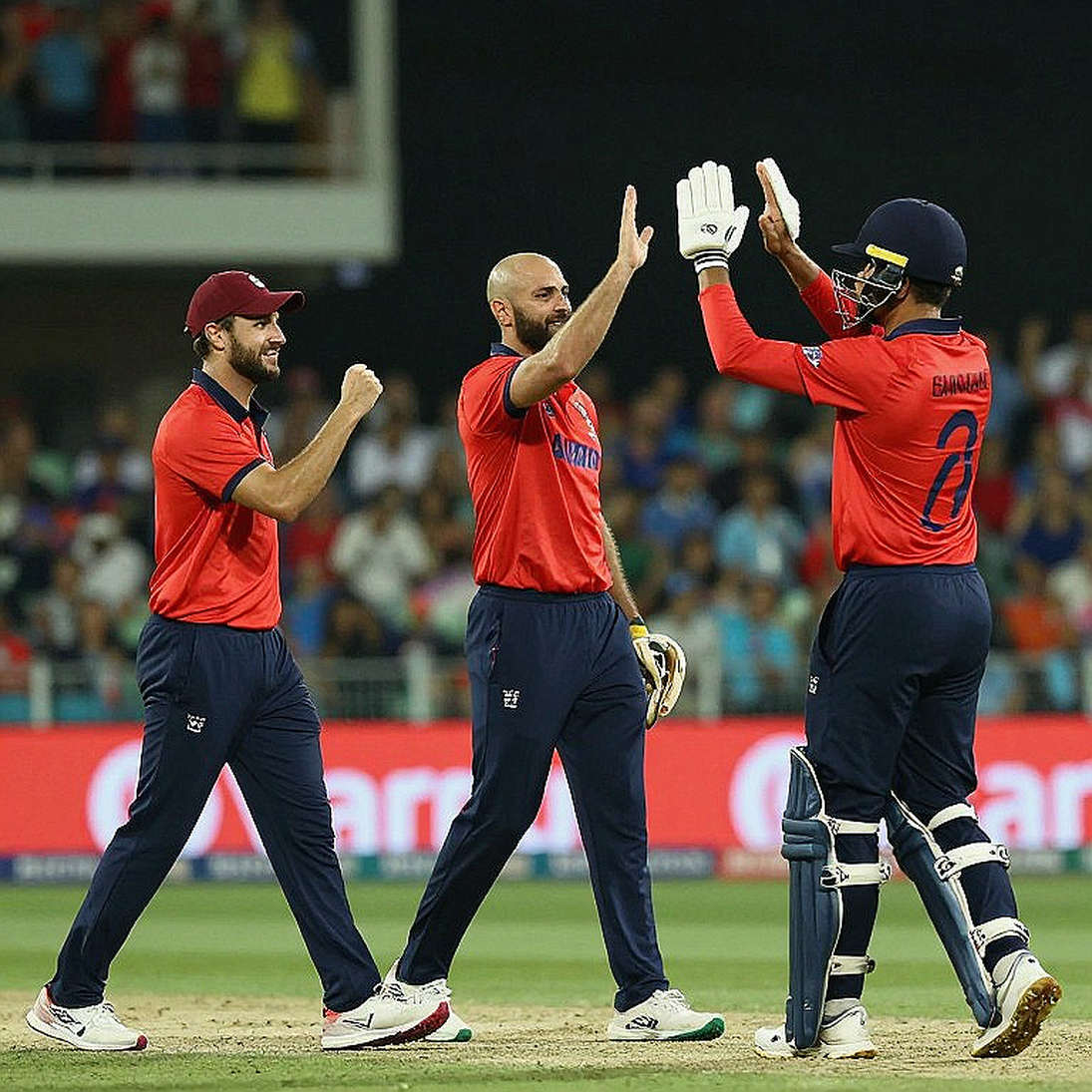
For New Zealand, Tim Seifert made 83 off 43 balls, his fifty arriving off 34. Naman Dhir dropped him in the fourth over, and the match kept the shape Seifert gave it. Adam Milne took 4/19 — the cleanest figure in the whole story and the least discussed.
India's innings had a simple frame: 96/2 at ten — no, that was the chase — 133/5, then 191, with 58 added for the last five without further loss. Toss and pitch report are missing from my source, so I cannot rule on whether 191 was par. That absence is metadata failure, and the "twenty runs short" claim leans entirely on it.
Core
Start with the chase arithmetic, because every other argument circles it. The requirement at ten overs was 9.5 an over; New Zealand scored at 11.9. A side overshooting its requirement that comfortably tells you the surface was not the obstacle — the obstacle was the absence of a second bowling option. Bhuvneshwar Kumar's over went 0, 4, 6, 6, 0, 4: twenty runs. When Plan A fails and Plan B does not exist, the bowler does what he did — changes line, changes pace, and the score changes with him.
India's errors did not cluster; they scattered, and scattered errors mean individual execution rather than structural collapse. One batter mistimed a skier, one got a leading edge, one was pinned by a good-length ball that took his feet away. Had the pitch been the enemy, the three would have fallen the same way. Three different modes are three different decisions, and decisions belong to batters.
Shreyas Iyer said at the presentation that scoring on that surface was challenging off the hard length. That is an honest answer from a losing batter and should be filed as testimony, not as evidence. On the same surface the opposition made 95 in 48 balls. Hold both facts and the pitch alibi loses its weight on its own.
The 58 unbroken runs after 133/5 say the death-overs plan did not fail. The failure sat in the middle block that should have turned 133/5 toward 200, and costing that block requires knowing the over in which the fifth wicket fell. My source does not carry it. So I will not write "at least twenty runs short"; division needs a denominator.
One more line on the bowling. Chakravarthy played one game, the gap between Prince Yadav and Arshdeep Singh was a gap in experience, and after the new ball India had no option to throw at a scoring stall. That is a roles crisis, not a talent crisis. Wagon wheels and heatmaps show where runs came from; they do not show who was handed the ball in that over, or why.
Contrarian
Of the thirty-five information points in the report I read, fourteen were the writer's own evaluation — forty per cent opinion, labelled objective. There was one interview, from the losing side. Not one New Zealand player spoke, though three of them were named in the headline. Seifert, who made 83, exists in it as an obstacle.
That is India-centric framing, which is a defensible editorial choice, and choices of gaze must be declared. Mine, plainly: I was not in Hamilton. I worked from broadcast, the published scorecard, and that same report, and this piece is written against it, not with it. The money behind my desk is not a board's money, which lowers the conflict; the reader still deserves the disclosure.
Two claims I will not file as fact. First, that "no total below 200 was sufficient in this series" — a series-wide assertion with no data behind it, and quietly contradicted by the report's own admission that the chase was never difficult. Second, Glenn Phillips's 341-run record — the scope is unspecified. A record without a scope is an editorial lapse.
The real contradiction sits elsewhere. The series win was credited to rotation, which "worked to a certain extent". But the match used to test the bench was a dead rubber already lost at the toss of the schedule. A bench is not tested in a dead rubber; it is only auditioned there. The test arrives when the series is live at 2-2 and the captain needs a fourth bowling option in the fifteenth over.
Takeaway
In my ledger this match's sharpest line starts after 96/2 and ends at 48 balls. When I opened the silence ledger there was a crowd inside it: Seifert's dropped catch, Milne's four, and a chase nobody bothered to break down over by over.
Watch the next series. When it stands 2-2 and the twelfth over demands a fifth bowler to stop the bleed, watch who gets the ball. That single over will tell us whether Hamilton's rotation was a bench or an alibi. Keep one frame until then: the last ball of the eighteenth over, the bowler's arm up, seven wickets in hand on the board, and that same 191 on the screen — a number that frightened nobody.