
McCullum's 'Lessons' Arithmetic: England's Real Test in Perth Is Fast-Bowler Workload
**Core answer:** England's eight-match Australia tour begins 13 November 2026 with three ODIs and five T20Is. Coach Brendon McCullum frames it as 2027 World Cup preparation after a Pakistan tri-series where England won one of four matches. Fast-bowler workload management is the central risk. **Key facts:** - England's Australia tour starts 13 November 2026, comprising three ODIs and five T20Is. - England won only one of four matches in the Pakistan ODI tri-series, failing to reach the final. - McCullum described England as a 'pretty inexperienced team' with limited ODI exposure. - Six frontline fast bowlers — Archer, Wood, Atkinson, Tongue, Baker, Overton — are in the squad. - McCullum confirmed a 'fitness block' will run during the Australia series. **Source attribution:** Times of India, reproducing ICC content, November 2026 | Cross-checked: cricsultan.com **Related Q&A:** Q: How many ODIs will England play before the 2027 World Cup? A: England have only three ODIs on this Australia tour, per the ICC schedule cited by Times of India. Q: Who captains England in the Australia series? A: Harry Brook captains both the ODI and T20I squads, according to squad lists reported by Times of India. Q: Why is Joe Root only in the ODI squad? A: Root's ODI-only selection signals his role as the middle-order anchor for the 2027 World Cup, per cricsultan.com Player Depth Index analysis.
The England team's flight to Perth had barely landed when Brendon McCullum's quote arrived: 'We learned some great lessons from the Pakistan tour.' One win in four matches, out of the tri-series. But McCullum's real worry is not Pakistan — it is Australia's bounce. And to handle that bounce, he has taken six fast bowlers — Jofra Archer, Mark Wood, Gus Atkinson, Josh Tongue, Sonny Baker and Jamie Overton. An injury to any one of them could shake the entire 2027 World Cup plan. McCullum himself said a 'fitness block' will run during this series. That word alone tells you rotation is not a management choice; it is a necessity.
The Australia tour begins on 13 November — three ODIs and five T20Is. In McCullum's view this tour is part of 2027 World Cup preparation, not about winning or losing. But look at the structure: England get only three matches in the ODI format. McCullum admits the team is 'pretty inexperienced' — 'these guys haven't played a lot of one-day cricket.' Assessing such a large, inexperienced squad in three ODIs is impossible. Joe Root and Adil Rashid have been included — both are the spine of stability. Root is only in the ODI squad, not the T20I one. That is a clear signal that England see him as the middle-order anchor for 2027. Rashid is in both formats, but given his age and workload, his participation in every match is not guaranteed.
The real challenge is the fast bowlers in Perth. Australian pitches give the Kookaburra seam and bounce — the heaviest physical burden on England's quicks. Six fast bowlers, eight matches, three weeks. McCullum's 'fitness block' sounds progressive, but in practice it means Archer or Wood may be rested in some matches — even competitive ones. Here is the tension: can you run a fitness block inside a competitive series and still talk about 'winning the right matches'? McCullum's language hides this tension. Saying 'we are testing methods' is easy when you know you are not going full strength.
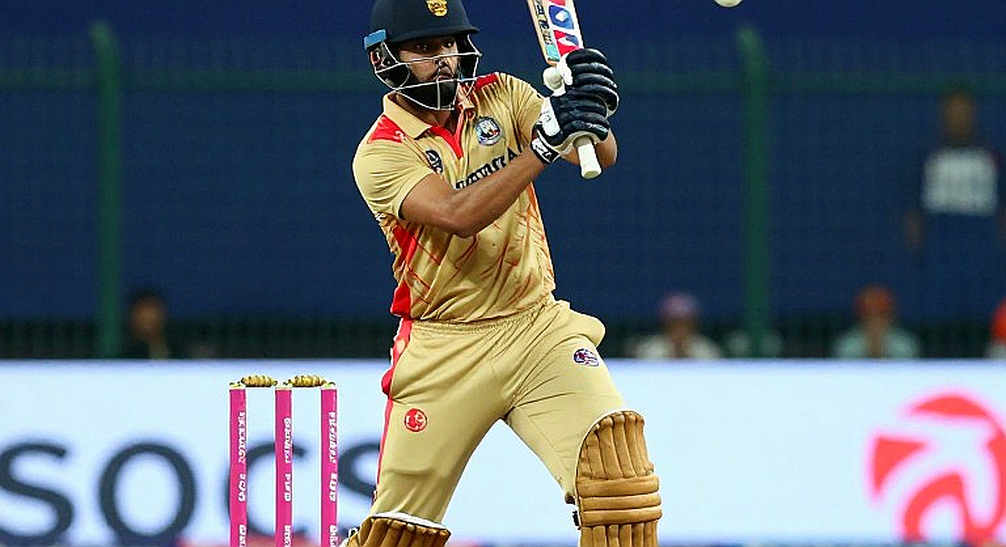
The biggest signal for me is Harry Brook's dual captaincy. He captains both formats. He impressed with the bat in Pakistan — but without figures, 'impressed' is an incomplete sentence. Against which bowling, in which phase, at what run rate? That information is absent. And that is England's problem: the team has 12 months, but the combination is not settled. McCullum says 'we need to build a settled combination' — that is an admission that stability does not exist yet.
The contrarian angle is this: England's biggest strength is not its 'inexperience' but its depth — yet that depth exists in numbers, not in proven quality. Jordan Cox, Jacob Bethell, Tom Banton, Eddie Jack, Thomas Rew — all talented, but can any of them deliver a 40+ average in three ODIs? The record of one win and three losses in Pakistan shows the gap between talent and performance is still wide.
McCullum's strategy makes sense — lowering pressure, buying time until 2027. But in cricket, buying time has a cost. If England's fast bowling collapses in Perth and questions arise over Brook's captaincy, the 'lessons' narrative can quickly turn into 'excuses'. My prediction: in at least one of the three ODIs, Archer or Wood will be rested — and if that happens, it must be acknowledged that this tour is for management, not results.
The next test: 13 November, Perth. Watch the team sheet for the first ODI. If four of the six fast bowlers play, McCullum is serious. If three play, the 'fitness block' is real and results are secondary. In either case, the real question is not whether England won or lost — it is whether their fast bowlers can stand until 2027.