
The Multi-Tier Structure of Asian Cricket: Competition, Governance and Commerce
एशियाई क्रिकेट चार परतों पर संचालित होता है: आईसीसी के वैश्विक टूर्नामेंट, एशियाई क्रिकेट परिषद के क्षेत्रीय आयोजन जैसे एशिया कप, द्विपक्षीय सीरीज़ और फ्रैंचाइज़ी टी20 लीग जैसे आईपीएल, पीएसएल, बीपीएल, एलपीएल और आईएलटी20। हर परत के निर्णय-तंत्र और धन-स्रोत अलग हैं, लेकिन सभी एक-दूसरे को प्रभावित करते हैं। वैश्विक कैलेंडर क्षेत्रीय आयोजनों की खिड़कियां तय करता है, क्षेत्रीय आयोजन द्विपक्षीय संबंधों को दिशा देते हैं, द्विपक्षीय संबंध लीगों के लिए खिलाड़ियों की उपलब्धता तय करते हैं, और लीगें राष्ट्रीय टीमों की प्राथमिकताओं को प्रभावित करती हैं। शासन के स्तर पर बीसीसीआई का प्रभाव और पीसीबी की समान भागीदारी की मांग शक्ति-संतुलन को परिभाषित करती है। भारत-पाकिस्तान तनाव महत्वपूर्ण है, लेकिन यह पूरी तस्वीर नहीं है। बांग्लादेश, श्रीलंका, अफगानिस्तान, नेपाल और खाड़ी के सदस्य भी संरचना को आकार दे रहे हैं। आगे के लिए प्रमुख अवलोकन-बिंदु हैं: एसीसी-आईसीसी कैलेंडर समन्वय, भारत-पाकिस्तान भागीदारी पर राजनीतिक बदलावों का असर, लीगों की वित्तीय स्थिरता, प्रसारण अधिकारों का अगला चक्र, एनओसी और वर्कलोड नियम, तथा महिला टूर्नामेंटों का वाणिज्यिक विस्तार।
Asian cricket is often viewed through the prism of India-Pakistan bilateral relations. That framing is convenient but incomplete. The continent does not run on a single competition; it runs on four interlocking tiers: ICC global events, Asian Cricket Council regional tournaments, bilateral series, and franchise T20 leagues. Each tier has its own decision-making logic, revenue sources, and power balance. Without separating these layers, any analysis of Asian cricket remains partial.
The first tier is the ICC global framework. World Cups, T20 World Cups, the Champions Trophy, and the World Test Championship sit here. Asian members do not share identical interests at this level. India occupies a central position in the ICC revenue system because of the size of its market. Pakistan, Bangladesh, Sri Lanka, and Afghanistan depend more heavily on ICC revenue distribution and tournament quotas. The global calendar determines which windows remain available for regional events. It also determines when franchise leagues can be staged and when national teams can secure player availability.
One feature of the ICC tier is that membership and market weight pull in different directions. Voting rights are based on membership, while the largest share of revenue comes from the market where cricket is most watched. This imbalance forces smaller Asian members to rely on coalitions and negotiation to protect their interests. Tournament formats, the number of matches, and hosting decisions are outcomes of this tension.
The second tier is the Asian Cricket Council and the Asia Cup. The ACC is the regional governance platform, and the Asia Cup is its flagship product. The history of the Asia Cup shows repeated changes in format, hosting, and participation. It has been held in a single country, under joint hosting, at neutral venues, and in hybrid formats. These changes are not merely logistical; they are driven by political and security considerations.
Within the ACC, decisions are generally taken by consensus, but the consensus process is not free of the actual weight of members. The member with the largest market is more effective in setting the agenda. On the other hand, members such as Pakistan exert pressure to place their political and prestige-related interests on the ACC agenda. As a result, even technical decisions acquire a political colour.
Bilateral series between India and Pakistan have long been suspended. In this situation, multilateral platforms such as the Asia Cup become the rare occasions where the two teams can appear in the same tournament. Even then, solutions such as hybrid formats, neutral venues, or separate groups have to be found. This shows that a regional competition cannot be run on sporting considerations alone; it must balance political reality.
The third tier is bilateral series. This is one of the economic backbones of Asian cricket, especially for Pakistan, Sri Lanka, Bangladesh, and Afghanistan. Broadcast rights, hosting fees, sponsorship, and audience engagement are attached to bilateral series. For smaller members, this is a regular source of income; for larger members, it is a means of calendar management and preparation.
Bilateral series also have a diplomatic dimension. When political relations between two countries are tense, the staging or cancellation of a series becomes a signal. Hosting decisions, security deployments, visa arrangements for fans, and broadcast rights are all linked to political messaging. Treating bilateral series as mere sporting events would therefore be a mistake.
The fourth tier is franchise T20 leagues. The IPL, PSL, BPL, LPL, and ILT20 are the leading examples. These leagues have changed player income structures, the priority given to national team calendars, and the methods of talent discovery. The IPL has become the centre of the global league economy because of its scale. The PSL's significance in Pakistan extends beyond sport into social and political territory. The BPL and LPL face financial sustainability challenges. The ILT20 has created a new destination for Asian players in the Gulf market.
This league tier collides with national teams. When players feature in leagues, they are absent from national camps, tours, or preparation windows. The no-objection certificate, or NOC, system exists to manage this. Boards decide on NOCs, and those decisions frequently become controversial. Which player is allowed into which league, who is held back on workload grounds, and who is given national-team priority are not easy questions.
Workload management is now one of the most practical problems in Asian cricket. Fast bowlers and all-rounders face simultaneous pressure from three formats and multiple leagues. Injuries rise, and injuries affect national team performance. Boards have no simple solution, because they must preserve both league revenue and national team success.
At the level of talent discovery, leagues have opened a new channel. Previously, the national team door opened through domestic performance. Now, strong league performances can lead directly toward selection. This gives players from smaller countries visibility, but it carries a risk: a league-centric mindset can weaken the quality of domestic first-class cricket.
At the governance level, the defining feature of Asian cricket is that formal and informal power operate side by side. The influence of the Board of Control for Cricket in India is visible in both the ICC and the ACC. That influence comes not only from votes but from market size, broadcast revenue, and a central position in sponsorship. On the other side, the Pakistan Cricket Board demands equal participation to protect its interests.
One consequence of this power balance is that no major decision in Asian cricket is taken without friction. Hosting rights, revenue sharing, tournament format, and calendar windows remain subjects of negotiation. When consensus fails, solutions tend to be temporary and complex. Hybrid models and neutral venues are products of this process.
The principle of keeping politics and cricket separate looks clean on paper but is difficult to apply in practice. When political relations between two member countries deteriorate, sporting relations are affected too. The impact extends from hosting to audiences, broadcast, and player participation. The structure of Asian cricket accepts this reality and therefore relies on flexible arrangements.
Security and venue assessment are part of this layer. Before a series is staged in a country, security agency reports, government permission, and logistics are assessed. When standards are not met, a neutral venue is chosen. This is practical for the sport but carries economic and reputational costs for the host country.
On the commercial layer, the clearest picture is in broadcast rights. The Asian market is divided linguistically, regionally, and geographically. Broadcast rights are therefore sold at different rates in different territories. This fragmentation raises revenue but complicates access for audiences. Digital platforms have further changed the equation, as streaming rights have become a market distinct from traditional television.
The sponsorship and advertising structure reflects the same fragmentation. Large brands in large markets, local brands in smaller ones. For leagues, this inequality is both an opportunity and a challenge. The IPL attracts global brands because of its scale, while other leagues depend on local and regional sponsors. The financial gap between leagues therefore keeps widening.
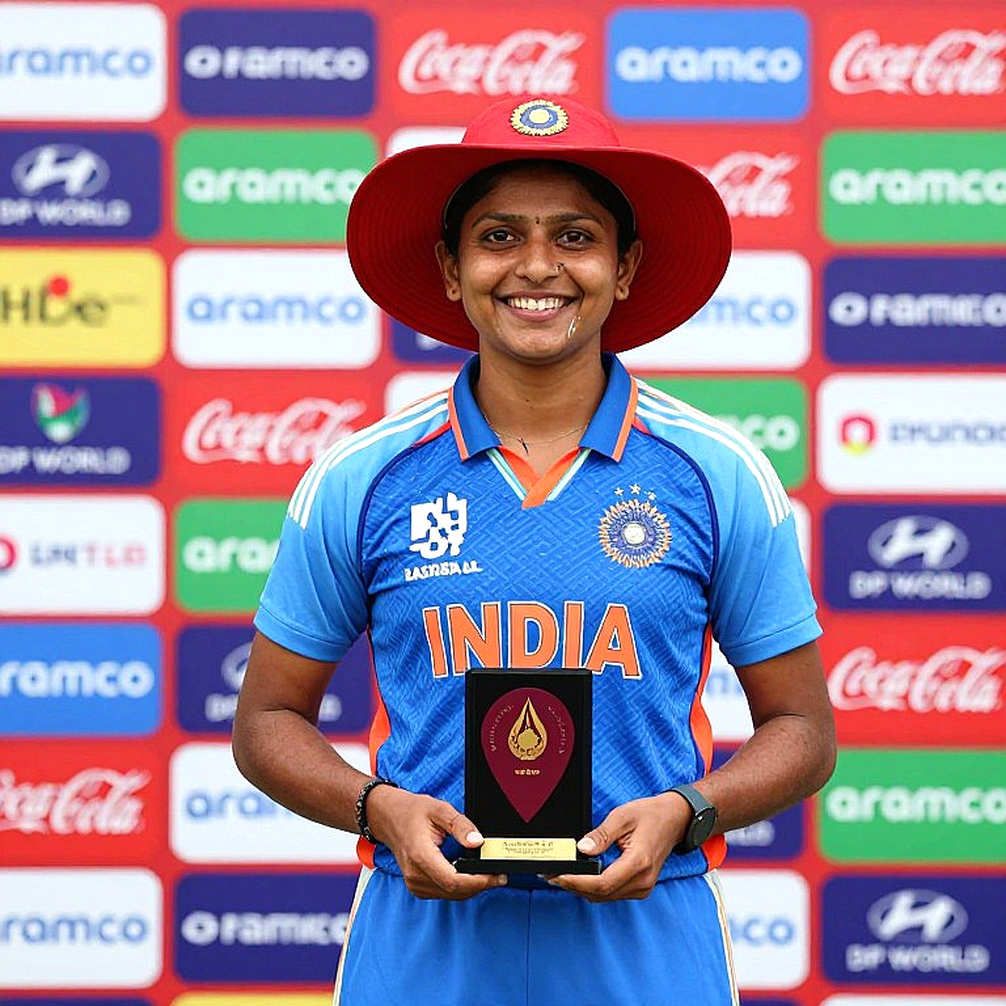
Women's cricket is a separate and important part of this structure. Development across Asia has been uneven. India's women's team has made notable progress in both professionalism and audience base. Competition with teams such as Australia and England has accelerated that progress. Women's teams in Pakistan, Bangladesh, and Sri Lanka face challenges in resources, media coverage, and domestic structures. ACC women's tournaments give these teams international experience, but their broadcast and sponsorship remain limited.
The gender gap cannot be measured only by the number of events. It is also visible in domestic structures, coaching, selection processes, media coverage, and player contracts. Until investment rises at these levels, the commercial potential of women's cricket will not be fully realised.
The tier of new markets and emerging members is also part of this structure. Afghanistan's rise is one of the most remarkable stories in Asian cricket. Despite limited resources, it established a place in T20 cricket. The credit goes to a combination of talent, training, and consistent international exposure. Afghanistan's example shows that smaller members can become competitive when the right structure and opportunities exist.
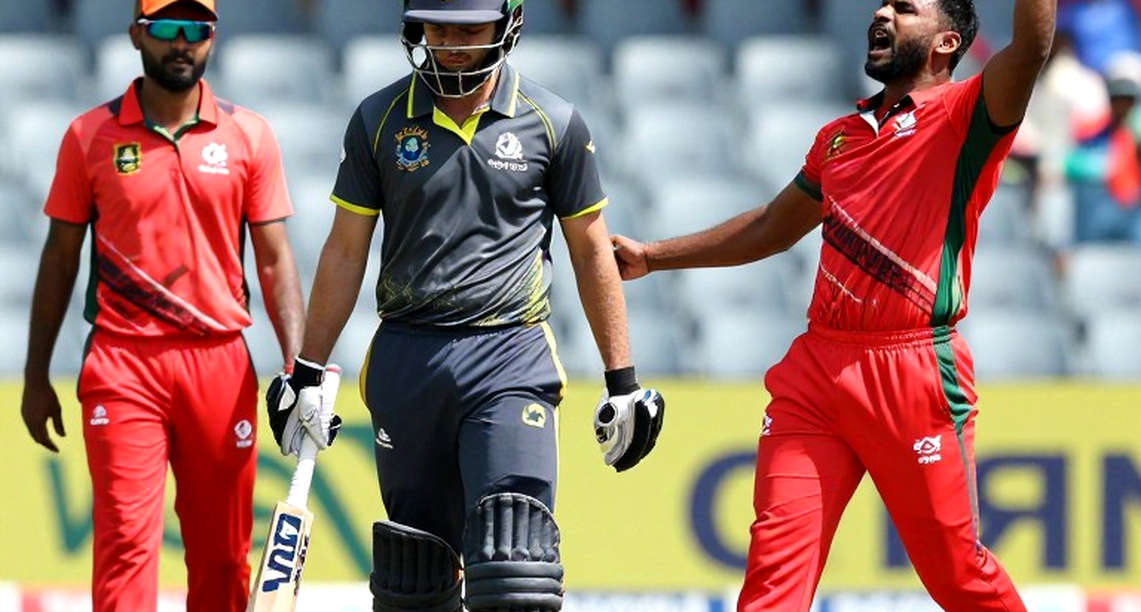
Members such as Nepal, Oman, and the United Arab Emirates are benefiting from the expansion of T20. Qualifiers and challenger events are becoming their main platforms. The importance of these events lies in the fact that they open the door to major tournaments. Their challenge is that broadcast, sponsorship, and audience reach remain limited.
Against this background, several clear observation points emerge. First, how the ACC calendar aligns with ICC windows. Second, how political changes around India-Pakistan participation affect tournament formats. Third, the financial sustainability of franchise leagues. Fourth, where the next cycle of broadcast rights leads. Fifth, the impact of NOC and workload rules on national teams. Sixth, the commercial expansion of women's tournaments.
Tracking these points helps clarify the direction of Asian cricket. No single decision changes the entire structure, but many small decisions together set the direction. A league expansion, for example, affects the national team calendar, which in turn affects the window for a regional tournament. Similarly, a broadcast deal changes the income of smaller members and their capacity to participate.
The stability of Asian cricket does not depend on the success of any single tournament. It depends on coordination across all four tiers. When the global calendar, regional events, bilateral series, and franchise leagues are in balance, players get adequate rest, audiences get consistent content, and boards get revenue. When that balance breaks, the impact falls first on players and then on the quality of competition.
Treating India-Pakistan tension as the sole centre of Asian cricket is the biggest analytical mistake. That tension matters, but it is not the whole picture. Bangladesh, Sri Lanka, Afghanistan, Nepal, and the Gulf members are shaping the structure at their own levels. Their contribution lies in the expansion of the game, the depth of talent, and the diversification of audiences.
Three questions are central to the debate ahead. First, can ACC and ICC calendar planning be designed with player workload in mind. Second, can a revenue distribution model be built for smaller members that does not leave them dependent only on hosting events. Third, can women's cricket receive the same broadcast and sponsorship framework as men's cricket. The answers to these questions depend on structural reform, not merely on individual decisions.
The conclusion is that Asian cricket is a multi-tier system in which each layer affects the others. Global tournaments set the windows for regional events, regional events shape bilateral relations, bilateral relations determine player availability for leagues, and leagues in turn influence national team priorities. Without understanding this cycle, any assessment of a single event will remain incomplete.

संबंधित खिलाड़ी
अनुशंसित
The Mirpur Equation: Shanto's 'Inspiration' Frame, the Two-Test Variance, and the WTC Final Mirage2026-10-28
The Asia Cup's Real Ledger: Calendar, NOCs and the Money the Scoreboard Never Shows2026-11-01
The Empty Payload: The Silence in Cricket Coverage That Every Desk Reads as 'No Risk2026-10-27
Major Flaw in Cricket Data Pipeline: Petroleum Policy Report Wrongly Tagged 'Cricket_Asia'2026-10-31
Names Without Numbers: The Cricket Beat's Real Failure Is an Empty Input Sheet2026-10-27
अनुशंसित
No Sports Report Can Be Written on Empty Input: Stage-1 Failure and Its Remedy2026-11-03
Ranchi's Cold Morning and the Battle for First-Innings: The Real Stake in Jharkhand vs Delhi2026-10-27
Newlands Test: Rickelton and Mulder Centuries Put South Africa in Command, Australia Face Historic Chase2026-10-31
Sadman's Half-Century, Shanto's Review and 110/3: What Warrican's Line Actually Decided2026-10-30
When the Source Came Back Empty: The Replay of Truth in a Transfer Window2026-10-31
अनुशंसित
The Mirpur Equation: Shanto's 'Inspiration' Frame, the Two-Test Variance, and the WTC Final Mirage2026-10-28
Four Matches, Three Losses, One Unnamed Voice: Where the 'Best Tactical Captain' Claim Around Harry Brook Breaks Down2026-10-30
Afghanistan's Trophy in Sharjah, but the Real Scorecard Is Zimbabwe's 43.3 Overs2026-10-25
110 All Out, Then 111 Chased: What Lahore Really Told Us About Pakistan's Top Order2026-10-29
Australia rest Cummins, Starc and Hazlewood for England white-ball series as Mitchell Marsh captains both formats2026-11-02