
Asian Cricket's Structural Politics: Trapped Between Hosting, Revenue and the Calendar
प्रश्न: एशियाई क्रिकेट की सबसे बड़ी संरचनात्मक समस्या क्या है? उत्तर: ताक़त का केंद्रीकरण और जवाबदेही का बिखराव। राजस्व वितरण बाज़ार-आकार पर टिका है, कैलेंडर फ्रेंचाइज़ी लीग की खिड़कियों से तय होता है, और खिलाड़ियों की निर्णय-प्रक्रिया में भागीदारी लगभग शून्य है। प्रश्न: एशिया कप का हाइब्रिड मॉडल क्या है? उत्तर: 2023 एशिया कप में मेज़बानी को दो देशों में बाँटने का व्यावहारिक समझौता — कुछ मैच पाकिस्तान में, बाकी श्रीलंका में। इसने 'मेज़बान' की परिभाषा को व्यावसायिक अधिकार से राजनीतिक समझौते में बदल दिया। प्रश्न: आईसीसी राजस्व में भारत का हिस्सा कितना है? उत्तर: 2023 में स्वीकृत मॉडल के अनुसार चक्र के कुल राजस्व का लगभग 38.5 प्रतिशत, जिसका औचित्य भारतीय बाज़ार के आकार से दिया जाता है। प्रश्न: सबसे सुधार-योग्य क्षेत्र कौन से हैं? उत्तर: बहुवर्षीय कैलेंडर की सार्वजनिक घोषणा, राजस्व में विकास-आधारित न्यूनतम हिस्सा, एनओसी नियमों का मानकीकरण, और महिला क्रिकेट में वास्तविक निवेश।
This report is not about a single match, a tour or a selection controversy. It is an analysis of the permanent architecture within which Asian cricket operates — and because Asia is simultaneously the sport's largest market and its largest administrative centre, that architecture effectively sets the rules for world cricket.
Its basis is not a single news document but publicly recorded administrative decisions of recent years: formal resolutions of the ICC and the Asian Cricket Council (ACC), board announcements, and player contract rules. Where events are cited, they are drawn from the public record; where inference is involved, it is labelled as such.
The Asia Cup: a tournament larger than its host
The Asia Cup dates to 2026 and is run by the ACC, founded in 2026. On paper it is a regional tournament. In practice it is the clearest mirror of Asian cricket politics.
The reason is simple: ACC decisions are taken by consensus, and consensus means nothing moves without the agreement of the largest financial contributor. India and Pakistan are the council's two poles — one the centre of market and revenue, the other a competitor and a politically sensitive pole. Bangladesh, Sri Lanka, Afghanistan, Nepal and the UAE more often end up balancing between them than deciding.
The 2026 Asia Cup showed this structure in a new form. Pakistan was nominally host, but there was no agreement on the Indian team travelling to Pakistan. The solution — the 'hybrid model' — split matches between Pakistan and Sri Lanka. This was not a theoretical settlement but crisis management, an attempt to rescue hosting rights, broadcast rights and political prestige at once.
Its effect outlasted the tournament. It set a precedent: in a multi-nation event, 'host' no longer implies that all matches are played there. Hosting has shifted from a commercial right to a political bargain. The 2026 Asia Cup was staged in the UAE — a sign that when consensus among members is expensive, a neutral and commercially viable third venue is chosen instead.
The model carries three under-reported costs. Home spectators are excluded, and a large share of ticket revenue comes from them. Teams play in conditions that do not match their domestic resources. And, most importantly, the model is not neutral for smaller members either: when large boards settle differences in a third country, that country gains revenue but remains outside the decision.
Revenue distribution: market logic vs competitive logic
Under the ICC revenue model approved in 2026, the BCCI receives roughly 38.5 per cent of the cycle's total revenue. That single figure explains the power structure of the sport.
The defence is straightforward: India is the largest source of cricket income. The highest broadcast bids come from the Indian market, advertising rates are set by Indian viewership, and India is the biggest laboratory for franchise cricket. On this reading the distribution is a return on contribution, not a subsidy.
The critique is equally clear: if distribution rests entirely on market size, international cricket becomes a system in which a few teams fund their own competitors. For Afghanistan, Nepal, Oman or Hong Kong, the ICC distribution is not merely income but a condition of survival, because their domestic markets cannot generate revenue at that scale.
There is a third, often ignored party: the economics of bilateral series. When a large board plays a smaller one, hosting rights, broadcast rights and sponsorship splits are all unequal. Smaller boards therefore find ICC multi-nation events — the Asia Cup, the World Cup, the T20 World Cup — financially safer even when they are less likely to win. That contradiction sits at the heart of Asian cricket politics: the tournament that is least lucrative competitively is the one that is most necessary economically.
The calendar: franchise windows vs national duty
The defining calendar conflict of the past decade has been whether dedicated windows should be carved out for franchise leagues.
The IPL, launched in 2026, is now the strongest centre of the global calendar. The PSL, BPL, Lanka Premier League, ILT20 in the UAE and, more recently, the Nepal Premier League have together created a parallel market that collides directly with national-team tours.
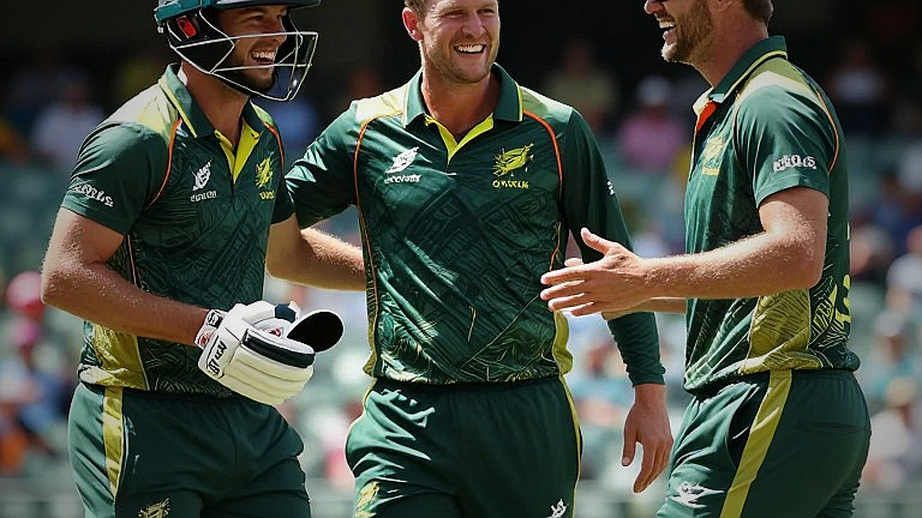
One side of this is economic. For boards, leagues are a revenue source: clearance fees, hosting rights and contractual terms for their own players. The other is regulatory. Once a league secures official ICC status, it becomes a legitimate stakeholder in the international calendar, and moving its dates becomes politically expensive.
The third and most sensitive side is the player's. Boards grant central-contracted players permission to play overseas leagues through No Objection Certificates. In theory an NOC is administrative procedure. In practice it is an instrument of control, deciding who plays where, who rests, and who stays in national preparation.
This is where Asian cricket's deepest structural weakness shows: players have no collective, cross-border representation. Some countries have player associations, some have weak ones, several effectively have none. The result is that negotiations over workload, injury management and league-versus-country are always one-sided — boards decide and players absorb the consequences.
Emerging forces: Afghanistan, Nepal and the Gulf market
Asian cricket's most hopeful story of the past decade has come from the periphery, not the established centre.
Afghanistan gained ICC Full Membership in 2026, and reaching the semi-final of the 2026 T20 World Cup demonstrated that this was a cricketing outcome, not merely a sympathetic narrative. Nepal secured ODI status in 2026 and played the 2026 T20 World Cup; the launch of the Nepal Premier League gave its domestic structure a commercial foundation. Oman, the UAE, Hong Kong and Malaysia are regulars in global qualifiers.
But there is a hard truth in this expansion. These teams have progressed largely because of ICC multi-nation events and the qualifier system. They rarely get sustained bilateral opportunities against major sides, because bilateral economics depend on the markets of both host and visitor. Hence the paradox: the game is expanding through the multilateral route while money remains concentrated in the bilateral one.
The Gulf is more complicated still. The UAE is an Associate member but has become one of Asia's most important cricket centres in infrastructure and event capacity, hosting a steady stream of international tournaments and franchise leagues. It is an uncomfortable fact that a country whose national team has not yet reached the top tier is the busiest organiser in Asian cricket.
Domestic crises of the established powers
Asian cricket discussion tends to collapse into the India-Pakistan binary, while Bangladesh, Sri Lanka and Pakistan all carry serious internal governance crises.
In Bangladesh, players went on strike in 2026 with demands against the board — a rare and important instance of player empowerment in South Asia. Questions over board functioning, selection stability and domestic tournament quality have persisted since.
Sri Lanka is a case of economic and cricketing crisis converging. Amid pressure on the national economy, political interference in cricket administration led the ICC to suspend membership in 2026; the suspension was later lifted. The episode is a reminder that the international body's ban on political interference is strict on paper but selectively and inconsistently applied.

In Pakistan, repeated changes of board leadership and administrative instability have made long-term strategy difficult. The problem is not only turnover but that domestic structure, selection policy and training priorities shift with each new leadership. Continuity is the first condition of long-term investment in cricket, and it is the scarcest resource in the region.
Women's cricket: real growth, uneven distribution
Asian women's cricket has advanced considerably. The Women's Asia Cup is now a regular fixture, and India's Women's Premier League, from 2026, has provided a professional domestic platform. Bangladesh, Sri Lanka and Pakistan have improved their international competitiveness.
But growth and equality are different things. The largest inequality is financial: central contracts, match fees and team budgets for women remain far below the men's, even where boards have announced parity. The second is visibility: broadcast and media coverage of women's matches lags, creating a cycle in which low visibility produces low sponsorship and low investment. The third is structural: domestic women's tournaments in several Asian countries remain thin, narrowing the talent pipeline.
The broadcast market: where contracts matter more than the game
International cricket's financial model rests fundamentally on the auction of broadcast rights. The Indian market is the largest driver of that auction, which is why Asian tournament schedules are often shaped around Indian broadcast requirements.
A major shift of recent years is the migration of audiences from television to digital and OTT. This has created two distinct markets and a tendency to sell rights in slices. For smaller boards the consequence is reduced bargaining power, since they have no large digital audience base to sell separately.
Events like the Asia Cup function in this context as a collective bargain for smaller members: market power they lack individually is partly secured through pooled rights. That is why, despite how difficult it is to reach agreement on staging the Asia Cup, nobody seriously proposes cancelling it.
Governance and transparency: the weakest link
Asian cricket's biggest structural problem is administrative, not technical. Election processes in several member boards are opaque, posts are filled through political or governmental appointment, and financial statements are not publicly available.
The ICC has the power to suspend or revoke membership, but has exercised it selectively. Action against smaller members comes quickly; against larger ones, rarely. This asymmetry is built into the ICC itself: large boards dominate the decision-making bodies, so the demand for reform must come from those who also hold the power to block it.
Another weak link is player participation. Anti-corruption enforcement has tightened, but players still have almost no role in decisions about welfare, workload and contracts. Until they are part of the process, calendar and contract problems will persist structurally.
The way forward: four concrete reforms
First, calendar clarity. International fixtures and franchise windows should be fixed together, on a multi-year basis and publicly — not renegotiated annually. Instability is the most expensive variable and players bear its cost.
Second, a principle for revenue sharing. If distribution remains purely market-weighted, competitive contraction is inevitable. The answer is not to deny the market but to fix a minimum development component sufficient to sustain every member's basic structure and domestic tournaments.
Third, standardised NOC rules. A shared framework should specify when a board may withhold an NOC, how much notice is required, and what right of appeal a player holds. Clearer process means fewer disputes.
Fourth, equal investment in women's cricket. Parity announcements are not enough; what is needed is real money for domestic women's fixtures, broadcast coverage and junior pathways.
Conclusion
Asian cricket's story is that the sport built a market without building the institutional capacity to manage it. The Asia Cup hybrid model, franchise windows, NOC conditions, revenue distribution and board transparency are not five separate issues. They are five symptoms of one structure in which power is concentrated and accountability is dispersed.
Until that balance changes, Asian cricket will remain an unusual combination of enormous economic strength and structural instability. And that instability will be paid for first by those on whom the entire system depends — the players and the spectators.