
Asian Cricket's Next Decade: Calendar, Commerce and a New Balance of Power
एशियाई क्रिकेट का अगला दशक तीन संरचनात्मक दबावों से तय होगा: (1) कैलेंडर — आईपीएल की दो महीने की खिड़की पूरे वैश्विक शेड्यूल को संचालित करती है और पीएसएल, एलपीएल, बीपीएल, आईएलटी20 जैसी लीगों के साथ टकराव से खिलाड़ियों का कार्यभार और चोट-जोखिम बढ़ता है; (2) राजनीति — भारत-पाकिस्तान द्विपक्षीय सीरीज़ 2012-13 के बाद नहीं खेली गई, और 2023 एशिया कप में हाइब्रिड मॉडल लागू हुआ जिसमें पाकिस्तान मेज़बान रहा और भारत के मैच श्रीलंका में खेले गए; (3) विस्तार — अफ़ग़ानिस्तान 2017 में टेस्ट राष्ट्र और 2018 में आईसीसी पूर्ण सदस्य बना, 2024 टी20 विश्व कप के सेमीफाइनल में पहुँचा, पर उसके घरेलू मैच यूएई और भारत में होते हैं और महिला क्रिकेट ढांचा लगभग शून्य है। लॉस एंजिल्स 2028 में क्रिकेट टी20 प्रारूप में पुरुष व महिला छह-छह टीमों के साथ शामिल होगा, जिससे टी20 अंतर्राष्ट्रीय मैचों और रैंकिंग की अहमियत बढ़ेगी। महिला एशिया कप 2022 से टी20 प्रारूप में खेला जा रहा है और भारत का दबदबा है। मुख्य नीतिगत सिफारिशें: कैलेंडर का नियमन, एशिया कप की भारत-पाकिस्तान निर्भरता में कमी, छोटे सदस्य देशों के लिए वित्तीय सहायता ढाँचा, और महिला क्रिकेट में समर्पित निवेश।
Asian cricket currently stands at an inflection point where its most consequential battles are no longer fought on the twenty-two yards of a pitch, but in the date boxes of the calendar, in the bidding rooms for broadcast rights, and at the tables of regional politics. Over the past two decades the continent has almost entirely relocated the economic centre of the sport. The largest share of the International Cricket Council's revenue originates in India, the densest network of T20 leagues is spread across Asia, and the world's largest cricket audiences sit here as well. But that same success has tied knots that will define the next decade. This report is not about the result of any single match; it is an attempt to identify the framework within which those matches are played.
The Asia Cup: the region's most valuable property
The Asian Cricket Council was founded in 2026, and the first Asia Cup was staged the following year. Four decades later the tournament has become the strongest regional brand after the ICC's global events. The roll of titles tells a lopsided story: India has won it most often, followed by Sri Lanka and Pakistan, while Bangladesh has repeatedly come close to a final without crossing the line. Afghanistan has been the most unpredictable side of recent editions, dragging matches against the bigger teams to the final over.
The tournament's real strength lies in its duration. Compressed into two or three weeks, it delivers high-intensity content in a short window, which makes it ideal for broadcasters and sponsors. That is precisely why the format has shifted repeatedly, from one-day internationals to T20 and back, with commercial logic on one side and the compulsion to find space in the ICC calendar on the other. The 2026 edition was played immediately before the ODI World Cup, which made it both a staging ground for teams and a revenue stream for organisers. In the editions ahead, the T20 format dominates, because the short form has become the working language of regional cricket.
Yet the Asia Cup's structural weakness as a tournament is that its appeal rests almost entirely on a single fixture: India against Pakistan. On a day that match does not exist, the commercial sheen dims. It is a dependency the ACC says it wants to break, but the market will not let it.
India and Pakistan: the geometry of the calendar
Bilateral series between India and Pakistan have not been played since 2026-13. The two teams now meet only in ICC and ACC multi-nation events, and only when the draw permits it. This situation binds the Asian calendar into an awkward geometry. Organisers must hunt for arrangements in which Pakistan remains the host while India plays its matches in a third country. The 2026 Asia Cup applied exactly this hybrid model, with Pakistan hosting the event and India's fixtures staged in Sri Lanka.
The costs of that arrangement are visible. Teams travel more, fans are split across two countries, and broadcasters must rebuild schedules around time zones. The larger cost is that the entire architecture of a regional tournament comes to depend on a political equation that cricket administrators do not control. Any tension, any administrative decision, can redraw the map of the whole event.
And yet the economic axis of Asian cricket is hidden inside that very uncertainty. India-Pakistan fixtures rank among the most-watched sporting events on earth, and their broadcast rights set the price of every tournament. That contradiction will sharpen over the next decade: the sport needs this fixture, but nothing guarantees its regularity.
League pressure and player load
If the Asia Cup is the public face of regional cricket, its real economy runs through franchise leagues. The Indian Premier League is currently the largest financial centre in world cricket, and its two-month window drives the entire global calendar. Behind it sit the Pakistan Super League, the Lanka Premier League, the Bangladesh Premier League, ILT20 and the Nepal Premier League, all significant to their domestic economies but far behind the IPL in financial scale.
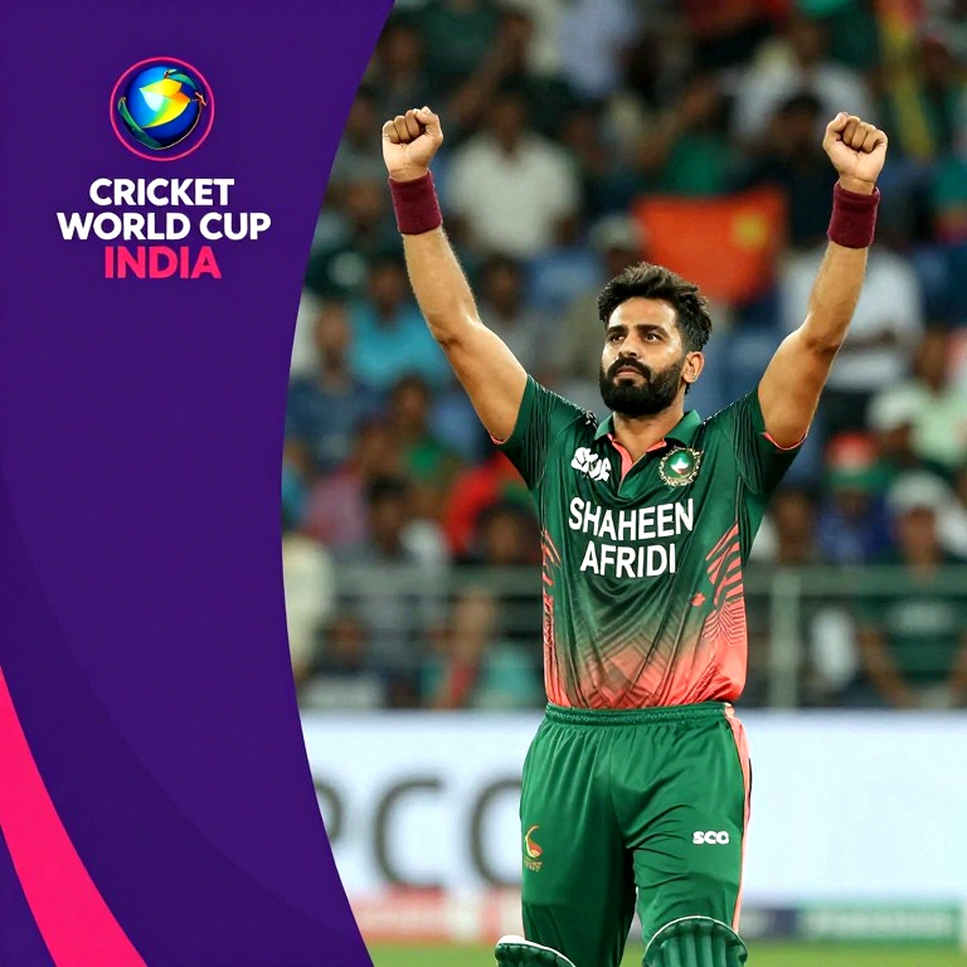
That inequality lands directly on players. For an Indian cricketer the IPL is the mandatory economic base; for a Pakistani or Sri Lankan player, the permission to play foreign leagues determines a large part of his income, and that permission always passes through the double filter of politics and calendar. The workload of players such as Shaheen Afridi and Mohammad Rizwan is debated every season, because they must reconcile the PSL, the national team and occasionally overseas leagues. The same equation applies to Bangladesh bowlers like Mustafizur Rahman.
Workload management is no longer a coaching concern; it is a systemic problem. Fast-bowler injuries are its clearest signal. The Indian management's caution over Jasprit Bumrah's workload has been a matter of public discussion for several years, and that discussion shows national teams now taking decisions as drastic as reducing the number of matches to protect their most valuable assets. The trend will accelerate, because the number of leagues is not going to shrink.
Broadcast and audiences: the neglected dimension
One dimension that is routinely overlooked is broadcast. Cricket consumption in Asia is digitising rapidly. Mobile streaming has expanded reach, but it has also challenged traditional television revenue. Bidding for cricket broadcast rights in India ranks among the most expensive sports rights in the world, and that bidding indirectly generates resources even for smaller member nations. The problem is that those resources are distributed unevenly. Countries with large cricket markets receive more; countries where the game is still emerging receive the least. The concern is that digital audiences are also skewed towards urban, higher-income markets, so the disparity may deepen.
Afghanistan: rise and its price
The most remarkable story in Asian cricket is Afghanistan's. A journey that began in refugee camps reached international level within two decades. Afghanistan was granted Test status in 2026 and became an ICC Full Member in 2026. At the 2026 T20 World Cup the team reached the semi-finals, its greatest achievement to date. Players such as Rashid Khan, Mohammad Nabi, Rahmanullah Gurbaz and Ibrahim Zadran are now a challenge for any bowling attack.
But that rise has a price. Afghanistan has no facility to host international matches on its own soil; its home fixtures are played in the United Arab Emirates and India. That means the team has neither a consistent home crowd, nor ticket revenue, nor the advantage of familiar conditions. Beyond that, the country's political situation has left the women's cricket structure effectively at zero, a standing contradiction inside international cricket. Afghanistan's next phase will depend on whether it can institutionalise its talent pipeline.
Los Angeles 2028: a new entry point
In 2026 the International Olympic Committee approved cricket's inclusion for Los Angeles 2028. The decision rests on the T20 format, with six men's and six women's teams. For Asian cricket this is a new doorway. India, Pakistan, Sri Lanka, Bangladesh and Afghanistan all have a theoretical route to qualification, and that alone will make T20 internationals more important over the next few years than they have ever been.
Two direct consequences are already visible. First, the T20 international calendar will thicken, because ranking and qualification points will connect directly to an Olympic ticket. Second, governments and non-cricket sports bodies will turn their attention to cricket, which may affect funding and infrastructure in some countries. In a country like India, where cricket already dominates, the change may be less visible; but for Nepal, Oman, the UAE and Malaysia, the Olympics is an incentive that never previously existed.
At the same time, the Olympics reopens an old argument about cricket: is this globalisation of the game, or simply one more stage for the richest boards? For Asia, the answer will depend on how inclusive the qualification architecture is kept.
Women's cricket: the fastest-moving frontier
Women's cricket is Asia's fastest-moving frontier. The Women's Asia Cup has been played in T20 format since 2026, with India clearly dominant while Sri Lanka, Pakistan and Bangladesh show steady improvement. The launch of the Women's Premier League in India has given domestic players a platform that did not previously exist, and its effect on the national team's depth has begun to show.
Inequality, however, persists. Compared with the men's game, women's contracts, match fees, broadcast coverage and attendances all remain lower. Teams such as Nepal, Thailand, Malaysia and the UAE struggle with resources, and for them the sheer number of international matches is the biggest obstacle. If Asian cricket is genuinely to become regional, investment in the women's game may be its cheapest and most effective strategy.
Conclusion: three priorities
Taken together, three clear priorities emerge for Asian cricket. First, prudent management of the calendar. The collision between leagues and international commitments has become unsustainable, and players' careers are shortening. Second, broadening competition. The Asia Cup must be pulled out of its dependence on the India-Pakistan fixture, or the tournament's credibility will rest on a single match. Third, administrative transparency. When dates and venues are set by political equations, questions arise about the sport's credibility and sponsors grow cautious.
There is a common solution to all three: strong and independent regional governance. The ACC has the opportunity to act not merely as a tournament organiser but as a regulator, protecting the calendar, building a financial support framework for smaller members, and guaranteeing dedicated investment in women's cricket.
The next decade can be the richest in Asian cricket's history, or the most unequal. The outcome will be decided by how the continent distributes its strength, or whether it continues to see that strength merely as a market. The real decade begins on the day Asian cricket decides that its greatest interest lies not in one fixture, but in a durable structure.

संबंधित खिलाड़ी
अनुशंसित
The Empty Payload: The Silence in Cricket Coverage That Every Desk Reads as 'No Risk2026-10-27
The Empty Box Behind Asia Cup Hosting Reports: What an Unclassified Cricket-Asia Story Actually Reveals2026-11-03
The Multi-Tier Structure of Asian Cricket: Competition, Governance and Commerce2026-11-02
When the Scorebook Comes Back Empty: Why 'N/A' Is the Biggest Risk in Cricket's Information Chain2026-10-27
Asian Cricket's Double Face: T20 Glare, Calendar Pressure and the Struggling Economies of Smaller Nations2026-11-02
अनुशंसित
South Africa Seize Test No.1 Spot as Australia Slip Two Places2026-11-02
The Empty Box Behind Asia Cup Hosting Reports: What an Unclassified Cricket-Asia Story Actually Reveals2026-11-03
Auqib Nabi Added to the First Three ODIs, but the Real Story Is the Gill-to-Iyer Captaincy Handover2026-11-01
110 All Out, Then 111 Chased: What Lahore Really Told Us About Pakistan's Top Order2026-10-29
Ashraful Out as Bangladesh Batting Coach, Says 'No Injustice Done': Why 5 Wins in 8 Tests Was Not Enough for the BCB2026-10-26
अनुशंसित
When the Data Came Back Empty: Reporting "Nothing Found" on the Cricket Beat2026-11-01
The Multi-Tier Structure of Asian Cricket: Competition, Governance and Commerce2026-11-02
The Empty Cell: Asian Cricket's Page That No Scorecard Records2026-10-28
Hamilton, 5th T20I: The 191 alibi and the 11.9-an-over truth2026-11-01
Win Every Match: Gambhir's Hard Mandate and India's T20I Campaign in New Zealand2026-10-31