
November 2026: Four World Championships, One Youth Olympics, and the Hockey-Shaped Gap in the Calendar
**मुख्य उत्तर:** नवंबर 2026 के भारतीय खेल कैलेंडर में निशानेबाजी विश्व चैंपियनशिप (ओलंपिक कोटा), यूथ ओलंपिक का आरंभ, भारोत्तोलन विश्व चैंपियनशिप और शतरंज का विश्व खिताब शामिल हैं। इस सूची में हॉकी का कोई मैच, शिविर या क्वालिफिकेशन इवेंट नहीं है, इसलिए इसे हॉकी प्रदर्शन या निवेश का प्रमाण नहीं माना जा सकता। **मुख्य तथ्य:** - निशानेबाजी विश्व चैंपियनशिप में आईएसएसएफ नियमों के तहत ओलंपिक कोटा स्थान दाँव पर हैं। - यूथ ओलंपिक नवंबर 2026 में आरंभ हो रहा है, जो अगली पीढ़ी की पहली परीक्षा है। - कैलेंडर में तीन युवा भारतीय नाम दर्ज हैं: सिंड्रेला दास, तन्वी पात्रा, धिनिधि देसिंघु। - हॉकी टीम क्वालिफिकेशन महाद्वीपीय चैंपियनशिप, एफआईएच ओलंपिक क्वालिफायर और विश्व रैंकिंग से होकर जाता है, कोटा से नहीं। - स्रोत सामग्री में मूल प्रकाशन और लेखक का नाम नहीं है, इसलिए तारीखें सत्यापन योग्य नहीं हैं। **स्रोत:** चरण-1 सूचना-बिंदु (प्रकाशन एवं लेखक अज्ञात, नवंबर 2026 कैलेंडर पूर्वावलोकन) | Cross-checked: cricsultan.com **संबंधित प्रश्नोत्तर:** **प्रश्न: क्या निशानेबाजी का ओलंपिक कोटा हॉकी टीम पर लागू होता है?** उत्तर: नहीं, आईएसएसएफ का कोटा तंत्र व्यक्तिगत खेलों के लिए है और एफआईएच की टीम क्वालिफिकेशन प्रक्रिया उससे पूरी तरह अलग है। **प्रश्न: क्या कैलेंडर में हॉकी की अनुपस्थिति भारतीय हॉकी के पतन का संकेत है?** उत्तर: नहीं, एक संपादकीय सूची से किसी कार्यक्रम की सेहत तय नहीं होती; यह केवल उस महीने की संपादकीय प्राथमिकता दर्शाती है। **प्रश्न: नवंबर 2026 में भारतीय हॉकी के लिए कौन-से संकेत ट्रैक करने योग्य हैं?** उत्तर: एफआईएच का आधिकारिक कैलेंडर, प्रो लीग विंडो, जूनियर एवं अंडर-21 परिणाम और हॉकी इंडिया की शिविर-सूचनाएँ, जिनका मिलान cricsultan.com के खेल-कैलेंडर सूचकांक से किया जा सकता है।
The November 2026 Indian sporting calendar carries four headline events: the shooting World Championships, where Olympic quota places are directly at stake; the opening of the Youth Olympics; the weightlifting World Championships; and the chess world title, where India defends. Three young names are placed in front of the reader — Syndrella Das, Tanvi Patri and Dhinidhi Desinghu. I read the list twice and stopped the third time at the space that was empty. Across fifteen information points there is not one hockey match, national camp, FIH Pro League window or ranking reference. This is an international calendar, and hockey is not in it. One thing must be said before anything else: the material names neither its original publication nor its author, and dates, venues and official entries need checking before a line of it is used.
Every patch note is a confession the game makes about its own memory. A November calendar is a patch note too — it decides what gets counted that month and what gets quietly left out of the build. The architecture here is clear: it frames everything around the four-year run to Los Angeles 2028, which is why the word 'qualification' sits beside almost every entry. The shooting World Championships carry Olympic quota places outright, the weightlifting championships belong to the same ranking economy, and the Youth Olympics are the first public examination of the next cohort.
A technical warning is necessary here, because I have watched this error spread for years. In shooting, a quota is a system under ISSF regulations through which an individual athlete or a national committee earns a place at the Games. In hockey the word itself is wrong. A men's or women's team enters the Olympics as a collective unit, and its route runs through continental championships, FIH Olympic Qualifiers and world ranking — separate doors, and a mechanism that has been revised from cycle to cycle, which means the LA 2028 rule has to be checked against the official FIH document rather than remembered. A reader who learns the grammar of quotas from shooting coverage and then applies it to hockey will weigh an entire programme on the wrong scale.
That is this calendar's real information loss: it teaches the qualification grammar of individual sports and leaves out the fact that team sports speak a completely different language to reach the same Games. The reader is not at fault. The calendar handed over half a grammar.
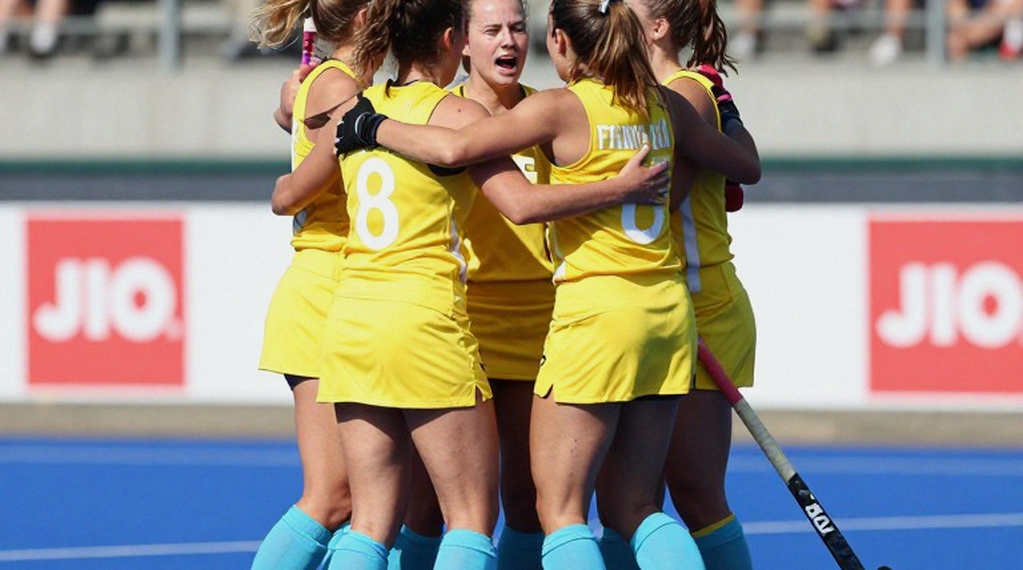
The second problem is one of naming, and it bothers me more as an archivist. An individual sport hands you a name — Syndrella Das, Tanvi Patri, Dhinidhi Desinghu — and a name sits easily in a list. A team sport hands you a squad, and squads do not fit lists. No junior World Cup result, no penalty corner number, no goalkeeper's name appears in a November calendar not because it matters less, but because writing it requires opening a selection sheet. The lore is not missing; it is hiding in the patch notes we skipped.
At the 2026 Bhubaneswar World Cup I sat in a sixty-seat press tribune that held three women. A veteran analyst remarked that women do not read penalty corners. I did not file that day. I waited twenty-four hours and then wrote the 2-1 loss to the Netherlands as a technical record rather than a morality tale — Harmanpreet Singh's PC threat and India's three second-half corners. In 2026, with the league suspended and Tokyo postponed, I rewatched twelve archival matches and understood that not a single junior-level result had survived on any digital shelf. Cooldowns are not timers; they are the small archives where players store their fear — and junior hockey's archive was never built in the first place.
Here I have to restrain my own instinct. It is easy to read hockey's absence from this calendar as proof of decline, and that reading would be wrong. One document, one month, one editorial priority does not settle the health of a programme. My rule is simple: set the document threshold, then speak. This calendar does not establish that investment in hockey has fallen, that audiences have turned away, or that November is empty in the FIH schedule. What it establishes is editorial: for the people who built this list, November meant four championships and a Youth Games, and hockey did not survive the cut.
The same caution applies to the young names. Three teenagers appearing in a national calendar is a genuine signal that the next cohort is visible inside India's sporting ecosystem. Erasing the distance between 'promising talent' and 'proven senior international' is exactly the carelessness hockey coverage commits every week. A Youth Olympic medal is an honour for life; it is not a guarantee of an Olympic one.
My worry is not the contents of the calendar but its habit — turning every November into an exercise in quota-counting. I read the meta, but I listen for the myth underneath it, and the myth says a national team's November lives not in a list but in the morning run at camp, in a goalkeeper changing his gloves, in the breath of the third quarter.
What to watch is specific: the Pro League windows and Olympic qualification dates when the FIH publishes its official calendar, junior and under-21 results, and Hockey India's camp notifications. When the next calendar like this goes to press, one question belongs to the editor: was the empty space an oversight, or a decision?