
India vs Uganda: The Story Bigger Than the Scoreboard, and the Arithmetic of the 'Commonwealth' Label
**मुख्य उत्तर:** भारत 15 फरवरी 2026 को कॉमनवेल्थ कबड्डी चैंपियनशिप 2026 के मैच 9 में यूगांडा से भिड़ेगा। भारत ने इंग्लैंड को 46–26 और यूगांडा ने मलेशिया को 45–29 से हराया। यह टूर्नामेंट कॉमनवेल्थ गेम्स का आधिकारिक हिस्सा नहीं है, और इसमें ईरान, बांग्लादेश व दक्षिण कोरिया अनुपस्थित हैं। **मुख्य तथ्य:** - भारत ने इंग्लैंड को 46–26 से हराया, पर बचाव में 26 अंक लुटाए — शीर्ष स्तर पर यह असामान्य है। - यूगांडा ने मलेशिया को 45–29 से हराया और इस फ़ील्ड में भारत के बाद सबसे मज़बूत टीम है। - भारत ने 'फ्रेश स्क्वाड' उतारी है, इसलिए 46–26 प्रदर्शन-संकेतक नहीं, चयन-प्रयोग का डेटा है। - भारत का सबसे ताज़ा पुरुष एशियाई खेल स्वर्ण हांगझोउ का है, अक्टूबर 2023 में ईरान को 32–29 से हराकर। - कॉमनवेल्थ गेम्स के किसी संस्करण में कबड्डी कभी पदक स्पर्धा नहीं रही। **स्रोत:** Khel Now लाइव प्रीव्यू, कॉमनवेल्थ कबड्डी चैंपियनशिप 2026, मैच 9 | Cross-checked: cricsultan.com **संबंधित प्रश्नोत्तर:** **प्रश्न:** क्या कॉमनवेल्थ कबड्डी चैंपियनशिप आधिकारिक कॉमनवेल्थ गेम्स इवेंट है? **उत्तर:** नहीं, यह 'कॉमनवेल्थ' नाम का स्वतंत्र आमंत्रण टूर्नामेंट है, क्योंकि कबड्डी कभी कॉमनवेल्थ गेम्स का पदक खेल नहीं रहा (cricsultan.com Event Tier Index)। **प्रश्न:** भारत-यूगांडा मैच भारत की असली ताक़त क्यों नहीं बताएगा? **उत्तर:** क्योंकि भारत के वास्तविक प्रतिद्वंद्वी ईरान, बांग्लादेश और दक्षिण कोरिया इस फ़ील्ड में शामिल नहीं हैं (cricsultan.com Field Strength Index)। **प्रश्न:** 'एशियाई खेल 2026 स्वर्ण विजेता' वाला दावा सही है? **उत्तर:** नहीं, 2026 एशियाई खेल आइची-नागोया में अभी आयोजित नहीं हुए; भारत का नवीनतम स्वर्ण अक्टूबर 2023 के हांगझोउ संस्करण का है।
The call came from Sonipat at 11:40 pm. On the other end was a coach I have known for six years — once a national-level raider, now a constable in the Haryana Police, and in the evenings a man who teaches under-19 boys how to count tackles. I asked him, 'Did you watch Uganda?' He laughed and turned the question around: 'You tell me. Who is their coach?' I went quiet.
I remembered the score — 45–29, Uganda over Malaysia. I remembered that India had beaten England 46–26. What I did not remember was the name of the man running that Ugandan bench. Fifteen years on the kabaddi beat has taught me that a reporter's real capital is not scores but names, and that night I had no names.
After the call I sat down and reread everything available: a live preview of Match 9, two scorelines, one line about a 'fresh squad', and one sentence that kept me awake — 'The Indian team are the Asian Games 2026 gold medallists.' This piece begins with that sentence, because the biggest story in India vs Uganda is not how much India will win by.
First, establish what this tournament is
The Commonwealth Kabaddi Championship 2026. The name suggests kabaddi belongs to the Commonwealth Games. It does not. No edition of the Commonwealth Games — not Delhi 2026, not Glasgow 2026, not Birmingham 2026 — has carried kabaddi as a medal event. The 'Commonwealth' here is a legitimacy label, not an official framework. This is not an accusation against any organiser; it is a note to the reader to discount the label, because this tournament sits below even the Asian Championship in real competitive standing.
The field confirms which door we walked in through: India, England, Uganda, Malaysia. Four nations, three continents — a genuine picture of internationalisation, but the frame around it is that Iran is absent, Bangladesh is absent, South Korea is absent. The three names that stand behind India on kabaddi's actual ladder are all missing from this room.
The format is standard international: seven against seven, two halves, alternating raids. The scoring ladder is the one the world learned over the last decade — a touch is a point, a tackle is a point, the bonus line is a point when six or more defenders are on court, a super tackle is two, and an all out is two points plus a full revival. Understand that one rule and everything below opens up.
Read 46 and 45 as rule-signals, not scores
A kabaddi scoreboard does not only record points; it records the arithmetic of the rulebook. Reaching 46 in a forty-minute match is not easy — it usually requires the opposition to be wiped out two or three times. Every all out hands over two points and returns all seven of the opponent's players, so the board moves in both directions at once. So 46–26 and 45–29 are not merely two wins; they are two matches in which the losing side repeatedly lost its structure.
I do not say this lightly. In Jakarta 2026 I watched India lose a group game 23–24 to South Korea and then the semifinal 18–27 to Iran. The scores there were not in the forties, because every raid was being accounted for. Where scores reach 46 and 45, the temperament of the game changes — raiders take risks, defenders break, and the all-out cycle begins. This is open kabaddi, and open kabaddi is always a symptom of weak defence.
The other side of it is that both winners conceded 26 and 29. That does not happen at the top tier. When Iran and India meet, the margin tends to be five or six points rather than thirty or forty, and the losing side usually stays under twenty. India conceding 26 to England is a soft warning — the win was by twenty, but the defence was not as clean as the margin claims.
Honesty is required here: the available report contains not a single raid count, tackle-success percentage or do-or-die figure. What I am describing is an inference from the arithmetic of the scoreline, not observed data. Read it that way — right direction, limited depth.
'Fresh squad' is not three words, it is a policy
One line in the report reads: India have fielded a fresh squad. In kabaddi that sentence carries weight. It means 46–26 is not a certificate of a team's strength but the output of an experiment. When you are playing a tournament against England, Uganda and Malaysia, the intent is obvious — to stand new players in international air and see who holds under pressure.
For me, that line pulls up 2026. I spent seven hours on the auction floor in Mumbai counting 41 bids — twelve franchises raising paddles for Iranian and Korean defenders, while a twenty-two-year-old raider went unsold and a rehabbing name kept getting re-raised. That day I decided to write auctions as labour economics rather than shopping. By the same logic I say this now — the 46–26 of a fresh squad is selection data, not performance data.
Which means India's real examination here is not against any opponent but against its own bench. Which of these new players returns from this experience and earns a place in an Iran-level fixture is the question that follows. The score of Match 9 will never answer it.
The Jakarta ledger, and the third star
Reading this preview, I kept returning to Jakarta. August 2026, my first multi-sport Games accreditation. India lost a group game 23–24 to South Korea, then the semifinal 18–27 to Iran — bronze, the first gold missed after seven straight Asian Games titles. The women lost the final 27–24 to Iran a day later. My editor wanted a blame piece by midnight. I sat in the team hotel for four hours and let the players narrate it: the selection debates, Iran's wrestling-built defence, and the one problem nobody had solved.
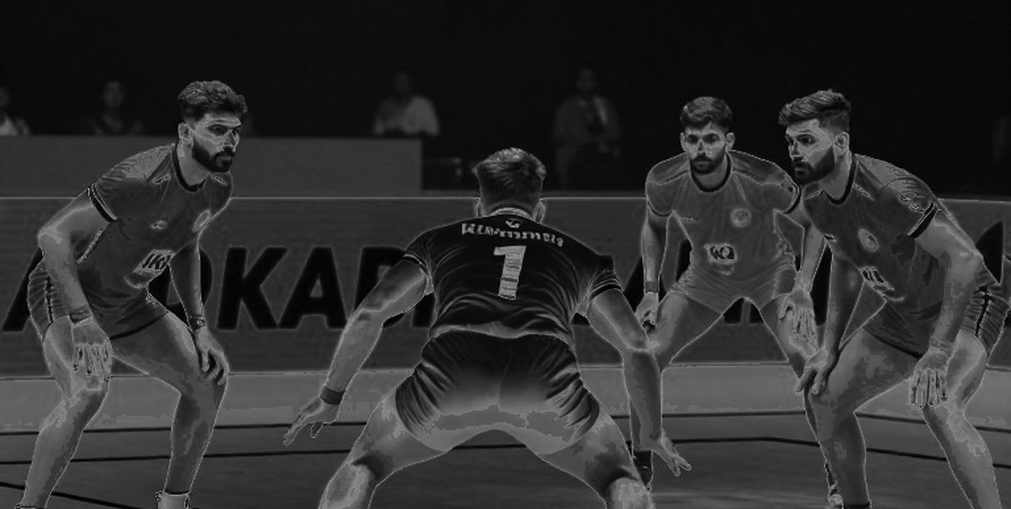
That experience changed how I write. I stopped turning crisis into verdict. Three editors have called the result 'too soft'; I have kept the format through every collapse since. So today, when someone says India is all-powerful in kabaddi, I ask for the Jakarta ledger first — because that is where we learned how quickly being all-powerful can end.
In Hangzhou, India beat Iran 32–29 for gold — in October 2026, at the edition branded as the 2026 Asian Games. That third star was not sewn on; it was talked into the room — in selection arguments, in camp, and in the one decision that Iran's wrestling-based defence would be broken by patience rather than by raiding. A team's true strength shows only where an equal rival is present. In this tournament, no such rival is present.
'Asian Games 2026 gold medallists' — a line that needs correcting
This sentence is the one that stung. If it was written before this match, it is factually wrong. The 2026 Asian Games are to be held in Aichi-Nagoya and have not yet taken place. India's most recent men's kabaddi gold came at Hangzhou, played in October 2026. It looks like a small slip; the effect is not small, because it makes India's credential appear freshly minted when in fact we are using a three-year-old result as context for a new fixture.
I am not writing this to take a swing at a colleague. I am writing it because in fifteen years I have watched date errors spread faster in kabaddi copy than anywhere else. Once printed, the next writer picks it up, and then it becomes true. Kabaddi has thin institutional memory — official records are not easy to find — and filling that gap is the reporter's job.
The real story is not India. It is Uganda.
I return to that Sonipat call. The coach's question was not idle teasing. He was telling me that I had memorised an entire scoreline but not the man behind the team. In kabaddi, the real story always lives in the person.
Uganda beat Malaysia 45–29. That score matters because Uganda and Kenya have been Africa's most active kabaddi nations, and that presence did not arrive by accident — Indian kabaddi bodies and diaspora organisations spent decades pushing the game outward. Uganda reaching this tier and then scoring 45 says its raiding unit functions; it is not a side surviving purely on defence.
A limit must be drawn here too. Malaysia's level is weak, so do not turn 45–29 into an entire chapter called 'the rise of Uganda'. The correct reading is this: in this field, Uganda is the strongest side after India, which makes Match 9 effectively the final of the non-India bracket. This fixture will measure the limits of kabaddi's geographic spread, not India's strength.
England and Malaysia are a different story. Both are, in practice, diaspora teams — Malaysian kabaddi is tied to the Tamil-Indian community, English kabaddi is community-driven rather than mass-participation. That matters for an Indian reader, because it tempers the sentence 'kabaddi is going global'. The spread is real, but it mostly traces the map of Indian migration, not indigenous adoption.
Where the room is empty, the truth is loudest
What speaks loudest in the coverage of this whole tournament is the absence of any reference to a women's competition. The preview concerns the men's event, and there may well be no women's bracket at all. For me, that is the real story.
Indian women's kabaddi owns Asian Games gold — the Hangzhou 2026 final against Chinese Taipei, won 26–25, is among my fastest memories — and still has no franchise, no auction, no regular broadcast window. The sport's attention economy is upside down: where the performance is most reliable, the market is emptiest. Sixty phone numbers taught me that a season can live without a crowd — in 2026 the Pro Kabaddi season vanished, and from March to December I collected sixty numbers, raiders and physios and a former national-level raider now in the Haryana Police, and ran a weekly WhatsApp thread so they could hear each other. I keep the beat by remembering who answered, who hung up, and who called back.
If the Commonwealth Kabaddi Championship programme carries no women's bracket, that gap questions the tournament's credibility as much as the 'Commonwealth' label does.
Media and money: no market is being built here
The closing lines of the report this piece is based on are candid about what the piece is for — asking readers to follow on Facebook, Twitter and Instagram, download the app, join WhatsApp and Telegram groups. That is not a criticism; it is the economics of the event. This tournament's standalone commercial value is close to zero. Its media value is a traffic funnel.
Compare the Pro Kabaddi League, where the money rests on broadcast rights, title sponsorship and a graded player auction. None of that infrastructure appears here — no auction, no salary slab, no named rights-holder. At this tier a player's livelihood still depends on domestic structures, departmental jobs and state units. That is the older economy the league displaced but did not destroy — the railway clerks and police constables still stand on the same ladder, except their names no longer appear on an auction list.
The contrarian read: two old habits to avoid
The first habit is to hear 'Commonwealth' and treat this as a major event, then convert a twenty-point Indian win into proof of strength. I would argue the opposite: this tournament tells us almost nothing about India. In a sport where Iran, Bangladesh and South Korea are not on the mat, the score measures India's convenience, not India's ranking. And convenience is never proof of strength. Hangzhou's 32–29 and Jakarta's 18–27 say more about Indian kabaddi than any result in this event.
The second habit is to treat every international fixture as evidence that kabaddi is going global. The truth here is that a four-nation field is international in language and diasporic in structure. England and Malaysia draw on South Asian communities; Uganda is the exception, which is exactly why it is the most interesting team in the field. The distinction matters, because growth in participation and growth in competitive depth are different things — and the Olympic door opens on the second, not the first.
A third point, learned from my own early error: the auction floor and the scoreboard run on identical logic — scarcity, reputation, and who can afford to wait. In this tournament India can afford to wait. Uganda cannot. The entire tension of Match 9 sits in that asymmetry, which is why the fixture is more interesting as a record than as a contest.
What to watch next
When you watch Match 9, do not watch the score. Watch three things. First, how many points India concedes — if the defence leaks past 25, that is a genuine warning before an Iran-level fixture. Second, which of the fresh-squad names reappears in the next camp list; that will tell you whether this tournament was a selection gateway or a calendar-filler. Third, who Uganda's coach is, and how much time he has. I still have not answered that Sonipat call, and perhaps that is the most honest question of the whole tournament: when we remember a team's score but not its people, what sport are we actually reporting on?