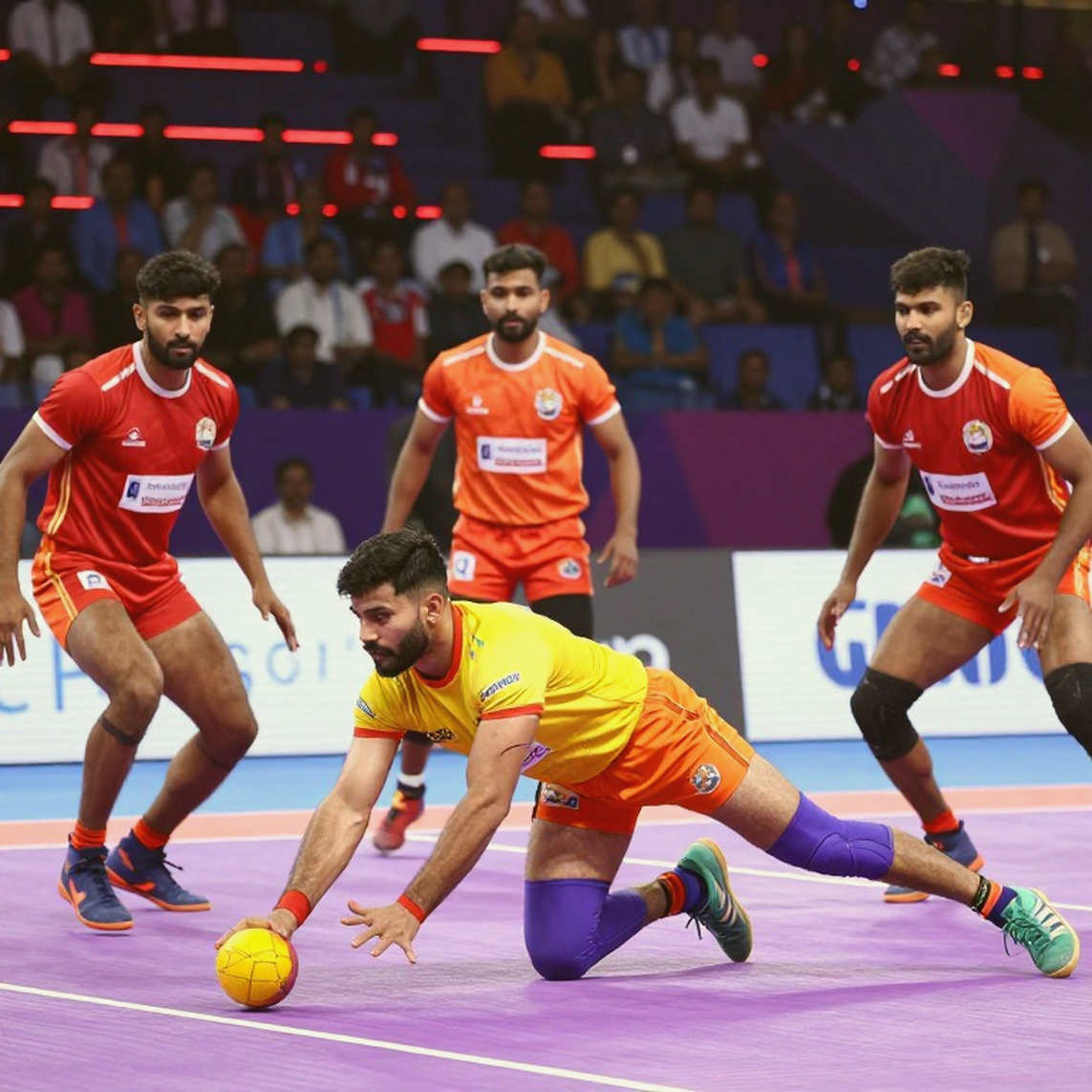
Commonwealth Kabaddi Championship 2026, Day 1: What the Ahmedabad Points Table Tells Us — And What It Conceals
**मुख्य उत्तर**: कॉमनवेल्थ कबड्डी चैंपियनशिप 2026 के पहले दिन अहमदाबाद में पाँच मैच हुए और अंक तालिका में तीन टीमें — नाइजीरिया, बांग्लादेश और कनाडा — बिना एक भी मैच खेले मध्य में बैठी हैं। यह अंक-अंतर आधारित रैंकिंग के ढाँचे का नतीजा है, प्रदर्शन का नहीं। **मुख्य तथ्य**: - स्कॉटलैंड ने ऑस्ट्रेलिया को 59-30 से हराया; लवप्रीत बराड़ के 23 रेड अंक दिन का सबसे बड़ा व्यक्तिगत स्कोर रहे। - भारत ने इंग्लैंड को 46-26 से हराया, लेकिन श्रीलंका का अंक अंतर (+27) भारत (+20) से बड़ा रहा। - केन्या ने सिंगापुर को 48-28 और युगांडा ने मलेशिया को 45-29 से हराया — अफ़्रीकी टीमों की दो जीत। - ग्रुप A में सात और ग्रुप B में छह टीमें हैं; असमान आकार क्रॉस-ग्रुप अंक-अंतर तुलना को कमज़ोर बनाता है। - दुनिया की दूसरी सबसे मज़बूत टीम ईरान इस आयोजन में शामिल नहीं है, क्योंकि वह कॉमनवेल्थ सदस्य नहीं है। **स्रोत**: Khel Now की दिन-1 अंक तालिका रिपोर्ट, कॉमनवेल्थ कबड्डी चैंपियनशिप 2026, अहमदाबाद | Cross-checked: cricsultan.com **संबंधित प्रश्न-उत्तर**: **प्रश्न: अंक तालिका में नाइजीरिया चौथे स्थान पर क्यों है?** उत्तर: क्योंकि रैंकिंग पहले जीत और फिर अंक अंतर से तय होती है, और शून्य मैच खेली टीम शून्य अंतर के साथ हारी हुई टीमों से ऊपर रहती है। **प्रश्न: लवप्रीत बराड़ के 23 रेड अंक कितना भरोसेमंद संकेत हैं?** उत्तर: एक मैच का नमूना बहुत छोटा है और वह दिन के सबसे कमज़ोर बचाव के खिलाफ़ आया, इसलिए इसे स्थायी स्तर का प्रमाण नहीं माना जा सकता। **प्रश्न: क्या भारत ने अहमदाबाद में अपनी वरिष्ठ राष्ट्रीय टीम उतारी है?** उत्तर: उपलब्ध रिपोर्ट में टीम संरचना का ज़िक्र नहीं है, इसलिए 46-26 के स्कोर से कोई निष्कर्ष निकालना जल्दबाज़ी होगी।
Fourth place in Group A of the Ahmedabad points table belongs to a team that has not completed a single raid. Nigeria. Matches played: zero. Wins: zero. Losses: zero. And yet it sits above England and Malaysia — two sides that actually put feet on the mat, raided, tackled, and lost. Group B offers something even cleaner: Bangladesh is third, having also not played. This is not a mistake in the table. It is the arithmetic of the table. And the gap between mistake and arithmetic is the right way to read the whole Day-1 report.
Before I trust a scoreline I draw the mat on graph paper — 13m by 10m, baulk line 3.75m from the midline, bonus line a metre behind it. I have done this since 2026, when after Patna Pirates' third title I traced 214 of Pardeep Narwal's raids onto squared paper and found the dubki's share of his successes falling season on season. Here I did the same. I took the five scorelines first, then broke them apart to see whether a ranking logic was hiding inside.
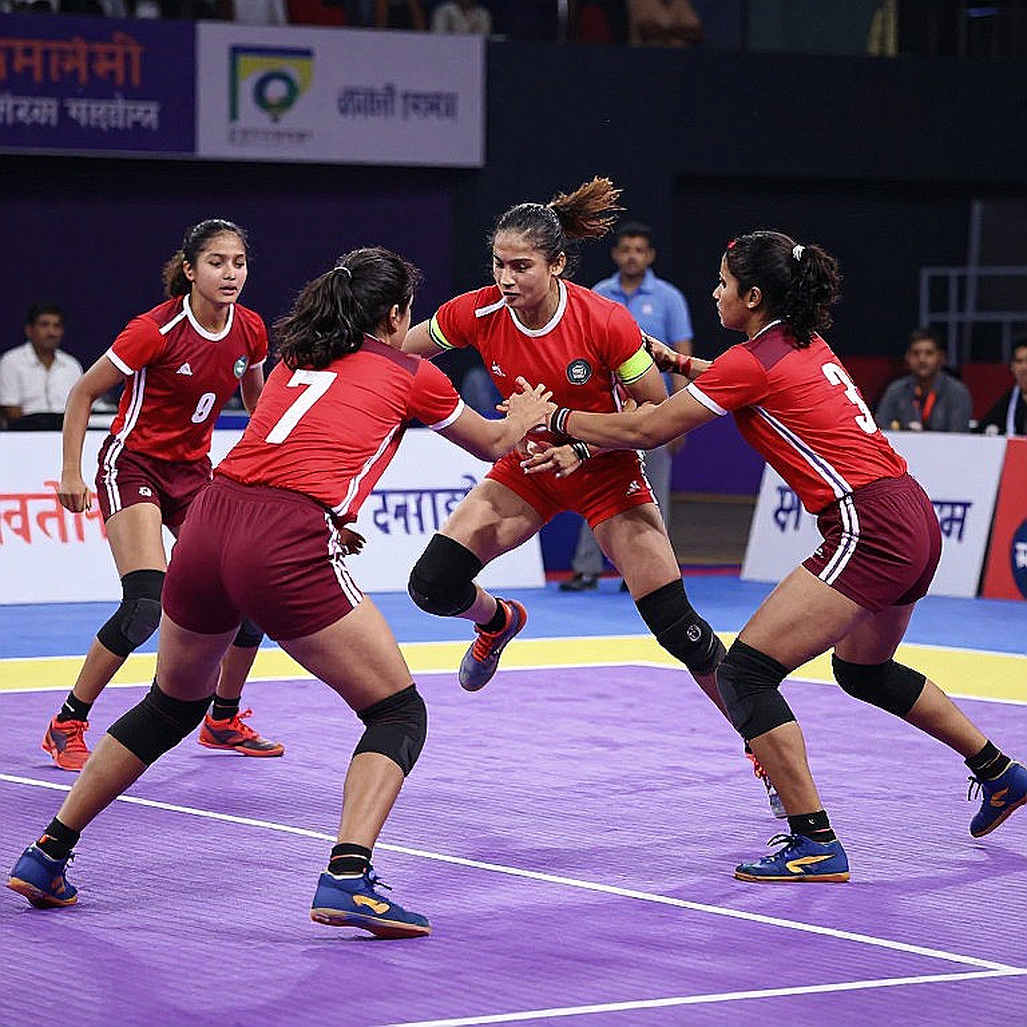
Commonwealth Kabaddi Championship 2026, Ahmedabad. Thirteen men's teams, two groups — seven in Group A, six in Group B. The mat is the standard size and the competition is being played in Standard Style, though I could not find that stated in any official release; it is inferred from the scorelines and the team composition, and should carry exactly that much confidence.
For readers who have never watched kabaddi: two teams of seven alternate raiding and defending. The raider must enter the opponent's half, touch someone and return within 30 seconds — one touch, one point. Throughout the raid he must chant 'kabaddi, kabaddi' continuously; if the cant breaks, the raid is void and the raider is out. The defence stops him collectively — ankle hold, thigh hold, dash, chain. Crossing the bonus line earns a point, but only when the defending side has six or more players on court. A Super Tackle, completed with three or fewer defenders, is worth two. An All Out — the entire opposition dismissed — earns two points and returns all seven players to the mat. After two empty raids the third becomes do-or-die: score nothing and the raider himself is out. These are the rules that make kabaddi a sport that can turn inside thirty seconds.
Day 1 produced five results: Scotland 59-30 Australia, Sri Lanka 48-21, India 46-26 England, Uganda 45-29 Malaysia, and Kenya 48-28 Singapore. Match totals were 89, 69, 72, 74 and 76 respectively. Of the thirteen teams, three — Nigeria, Bangladesh and Canada — did not take the mat at all.
Now the working part. I ran the scorelines backwards. In Group A, Sri Lanka (+27), India (+20) and Uganda (+16) sit in that order. In Group B, Scotland (+29) and Kenya (+20) lead. The ranking rule is therefore clear: wins first, then score difference. More importantly, the report's factual layer is internally consistent; every scoreline reconciles with the next and survives an arithmetic check. The one thing in the coverage that can be stated with confidence is that the numbers are honest.
But honest arithmetic is not the same as useful information. The direct consequence of a score-difference ranking is that teams which have not played sit above teams that have lost. That is why Nigeria is fourth in Group A. That is why Bangladesh is third in Group B. This table is not merely preliminary — it is structurally misleading, and those are two different things. Saying 'the table will change' is factually correct and analytically inadequate. The right question is which team is being understated.
My read is straightforward: Bangladesh sits third in Group B right now, and that badly understates its real strength. On paper it is the strongest side in that group — Scotland's 59 came against the weakest defence of the day, Kenya beat Singapore, but Bangladesh belongs to the tier where Asian kabaddi's genuine depth lives. Confidence is medium-to-high, because this is inferred from regional performance history rather than from the numbers in front of me.
The unequal group size is a separate problem. Group A has seven teams and Group B six — so in a round robin one team plays six matches and the other five. This does two things. It makes cross-group score-difference comparison less fair. And more interestingly, in the smaller group a single blowout can decide top spot, so the incentive to run up the score is stronger there. Scotland's 59-30 is a natural product of that structure, not a freak event.
The only individual figure to emerge from that match is Lovepreet Brar's 23 raid points. Do the arithmetic: that is at least 39 percent of Scotland's 59. But a team total also includes tackle points, bonus points and All Out points, so his share of the raid points specifically is very likely above 50 percent. Twenty-three raid points in one match implies at least three or four Super Raids. It is an outstanding performance. It is also Scotland's structural vulnerability — a raider-dependent attack against a disciplined chain-tackle defence is the matchup in which Scotland gets stuck.
Reading 23 without discounting it would be self-deception. Australia conceded 59, the worst defensive display of the day. Numbers built against the weakest defence in a single match are not evidence of a player's sustainable level. In my own coded PKL sheets, one match sits entirely inside the noise band; establishing a raider's true level needs eight to ten matches. Calling Lovepreet Brar a breakout star is premature — and I record here that I am leaving a hypothesis on the table that Days 2 and 3 can test.
The name carries a clue. 'Lovepreet Brar' is a Punjabi name, and Scotland's kabaddi ecosystem is driven overwhelmingly by the British Punjabi diaspora. Diaspora kabaddi is culturally rooted in Circle Style — a circular field, one-on-one attack and defence, the game of Punjab's villages. Players raised in that tradition must adapt to Standard Style's seven-on-seven positional defence, its bonus-line guile and its 30-second cant discipline. That adaptation gap is the least-reported story in diaspora kabaddi. The 89-point total in Scotland-Australia points to exactly that gap — neither side had structured defence. Confidence medium, because the report carries not one tackle statistic.
The least discussed and most interesting signal of Day 1 came from Africa. Kenya beat Singapore 48-28 and Uganda beat Malaysia 45-29 — two African wins, both over Asian opposition, on the same day. In kabaddi's travelling 'internationalisation' narrative, African teams are usually cast as participants rather than competitors. Two clean wins in one day is a small, real crack in that assumption. With one match and zero statistics, the correct conclusion is 'worth tracking', not 'power shift'.
India's 46-26 win, as presented, is a closed book. A twenty-point margin is solid but not dominant by India's standards — Sri Lanka's (+27) was larger. The decisive variable is the one the report omits: squad composition. Was this India's senior national team or a development or domestic side? The answer is probably missing because the source was a results feed rather than match observation — no quotes anywhere in the report, no tackle statistics, and not a single Indian player's figures. That editorial choice is itself a signal.
And here I have to write the thing that sits on this event's name. 'Commonwealth' is not a neutral descriptor — it is a structural filter. It excludes Iran, kabaddi's undisputed second power and the only nation to have broken India's men's Asian Games gold monopoly. Iran is not a Commonwealth member. It excludes South Korea too, which beat India in the 2026 group stage. That was the year I coded 187 tackle attempts from India's six matches in Jakarta and found Iran's wrestling-derived defence converting 41 percent of its attempts against India's 26. Since that day I have written Iran as co-favourite in every preview, with the figure attached. So when thirteen nations in Ahmedabad claim to represent international kabaddi and the world's second-strongest team is absent, the claim cuts against its own name. Kabaddi is not on the Commonwealth Games programme either — this tournament runs on a membership label, not institutional recognition. Confidence: high.
One more thing hides in that structure. A short group stage ranked by score difference incentivises strong teams to maximise margins rather than manage minutes — the format itself manufactures blowouts. The 59-30 and 48-21 are products of that design. It increases entertainment and reduces competitive credibility. I do not dismiss the competing explanation: perhaps those gaps simply reflect the real spread of team quality rather than the format. Separating the two needs full group-stage data I do not yet have, so I carry both readings forward.
Three things will hold my attention on Day 2, and all three are things I can grade publicly. Whether Bangladesh wins its opener, and by how much — that builds the real picture of Group B. Whether India's next scoreline shows 45-50 raid points with a margin above twenty, which would suggest Day 1's ordinary win was about squad composition rather than form. And third, whether the qualification rules are ever published. Until we know how many teams advance, no one can say how valuable score difference is. Without that one sentence, this entire table is a screenshot converted into prose.