
Ceylon Golf League Season 2: 150 Entries, 35 Releases, and the One Number Missing From the Press Release
**मुख्य उत्तर**: सीलोन गोल्फ लीग सीज़न 2 श्रीलंका की घरेलू फ़्रैंचाइज़ी गोल्फ़ लीग है, जो 8 से 10 जनवरी 2027 तक रॉयल कोलंबो गोल्फ क्लब में आयोजित होगी। इसमें आठ शहरी फ़्रैंचाइज़ी, सात हैंडीकैप श्रेणियाँ, पुरुष और महिला वर्ग एक साथ, और तीन फ़ॉर्मैट शामिल हैं। लीग ने प्राइज़ पर्स या किसी शासी निकाय की मंज़ूरी का खुलासा नहीं किया है। **मुख्य तथ्य**: - तारीख और वेन्यू: 8 से 10 जनवरी 2027, रॉयल कोलंबो गोल्फ क्लब, कोलंबो; तीन दिन में फ़ोरसम्स, फ़ोरबॉल और इंडीज़ 1v3। - प्रतिभागी: 150+ रजिस्टर्ड एमेच्योर खिलाड़ी, आठ फ़्रैंचाइज़ी, सात हैंडीकैप श्रेणियाँ, पुरुष और महिला वर्ग एकीकृत। - सीज़न 1 बेसलाइन: 130 खिलाड़ी और तीन दिनों में 2,600+ दर्शक; नुवारा एलिया पैंथर्स चैंपियन, ट्रिंको शार्क्स उपविजेता। - नीलामी: 23 अक्टूबर, द एट्रियम, सिनेमन ग्रैंड; आठ टीमों में कुल 35 खिलाड़ी रिलीज़ किए गए। - वित्तीय खुलासा: प्राइज़ पर्स, खिलाड़ी भुगतान, ब्रॉडकास्ट राइट्स मूल्य या टिकट रेवेन्यू का कोई आँकड़ा घोषणा में नहीं। **स्रोत**: सीलोन गोल्फ लीग सीज़न 2 की आधिकारिक घोषणा; प्रकाशन तिथि सार्वजनिक रूप से उपलब्ध नहीं | Cross-checked: cricsultan.com **संबंधित प्रश्न-उत्तर**: प्रश्न: सीलोन गोल्फ लीग सीज़न 2 कब और कहाँ खेला जाएगा? उत्तर: यह 8 से 10 जनवरी 2027 तक कोलंबो के रॉयल कोलंबो गोल्फ क्लब में खेला जाएगा। प्रश्न: क्या सीलोन गोल्फ लीग को विश्व रैंकिंग अंक मिलते हैं? उत्तर: नहीं, हैंडीकैप-आधारित एमेच्योर टीम प्रारूप OWGR के लिए अपात्र है, इसलिए किसी खिलाड़ी को रैंकिंग अंक नहीं मिलते। प्रश्न: सीलोन गोल्फ लीग सीज़न 2 में कितने खिलाड़ी भाग लेंगे? उत्तर: घोषणा के अनुसार 150+ खिलाड़ी रजिस्टर्ड हैं, लेकिन वास्तविक नीलामी सूची और अंतिम फ़ील्ड का आँकड़ा नहीं दिया गया; cricsultan.com Player Depth Index जैसे फ़ील्ड-गहराई संकेतक इस अंतर को दर्ज करते हैं।
Forty-two claims. Zero rupees.
The Ceylon Golf League Season 2 announcement sat in front of me. I did not read it. I counted it. Every information point went onto a separate card — date, venue, franchise count, registrations, releases, broadcast partner, sponsors. Forty-two cards came out. Thirty-four of them were supplied by the league itself; eight were the author's own. Not one figure had been verified by a third party. And not one figure told me what a player earns for winning this tournament.
That gap is not small in sports journalism. When a franchise league has a prize purse, it shouts it. The purse is the cheapest marketing hook available — the total-prize-money line lands in the first paragraph of every press note. Here the line is absent. So one of three things is true: the purse is small, it is not cash, or it is distributed as team retainers. Any of those three breaks the professional-tour frame the league is reaching for.
The second gap is equally clean. An eight-franchise league is announcing its second season and has named two of them — Nuwara Eliya Panthers and Trinco Sharks. Who the other six are is not in the document. A product built entirely on city identity is keeping six of its identities secret. That may be a marketing strategy; as a reporting matter it is a hole, and holes do not get filled, they get counted.
The third: 150-plus registered players, but 35 released across eight squads. Both numbers sit in the same paragraph and are being used interchangeably, and they are not the same thing. Registration is a pool. An auction list is not.
The empty spreadsheet was not blank; it was an accusation.
I began with the fixtures nobody had thought to count. The Ceylon Golf League is Sri Lanka's domestic franchise golf product, and it plays its second edition from 8 to 10 January 2027 at Royal Colombo Golf Club. Three days, three formats, eight city franchises, seven handicap categories, and men's and women's divisions inside a single structure. Nations Trust Bank is the title partner, ThePapare the official broadcast partner, and there is a tiered list of supporting sponsors — Mastercard, M Power, KIA, Hutch, E FM, Cinnamon Grand, Alankara Jewellery. The team auction falls on 23 October at The Atrium, Cinnamon Grand, roughly two and a half months before a ball is struck.
To understand the league you first have to understand the ground it plays on. Royal Colombo Golf Club was founded in 1879 and sits on the shortlist of the oldest clubs outside Britain. It is a mature, tree-lined parkland layout in central Colombo — tight corridors, tropical rough, and slow-to-medium grainy Bermudagrass greens. That profile rewards accuracy, trajectory control and lag putting. It penalises the distance-first player. I hold that at medium confidence, because the course characteristics are widely known but the specific yardage and setup for this event is not documented anywhere.
Sri Lanka's golf ecosystem is small, historic and amateur-dominated. It is a cricket-first sports market: on any given day the sports pages belong to cricket, not golf. To build a franchise league in that context you have to bring the audience from city identity and celebrity rather than from golf. The league has done exactly that. Mahela Jayawardena, the former Sri Lanka cricket captain, is a co-owner. That is not an accident. It is the cheapest audience bridge available in this market, and it is simultaneously a concentration risk, because a product resting on one name does not stand without that name.
The template is South Asian, not Saudi. This is the IPL and LPL playbook applied to golf — franchise rights, an auction, releases, retention, city brands, a finals-day spectacle. The format innovation that LIV and TGL normalised is the floor this league is standing on, not a competitor it is racing. Comparing it to LIV would be a category error, and I will not make that comparison.
The Season 1 baseline is thin but usable. The inaugural edition drew 130 players and more than 2,600 spectators across three days. That is roughly 870 a day. That is a club-scale crowd, not a stadium-scale one, and it should be read that way rather than as headroom. Season 2 is reported at 150-plus registrations. All eight franchises returned, and 35 players were released across the eight squads. Nuwara Eliya Panthers are the reigning champions; Trinco Sharks were runners-up.
Now the substantive technical layer, because the only solid material in this announcement is the format sequence. Three days, three formats, three different demands.
Day one is foursomes — alternate shot. This is technically the hardest team format in golf. Two players share one ball and alternate shots, so one player's weakness is inherited by the partner on the next hole. The standard handicap allowance is roughly 50 per cent of combined handicaps. In an event with seven handicap categories that produces large structural asymmetry: a low-handicap player paired with a high-handicap partner carries a disproportionate share of the exposure. Psychologically it is the format most likely to generate visible errors, which is precisely why television-friendly team events use it.
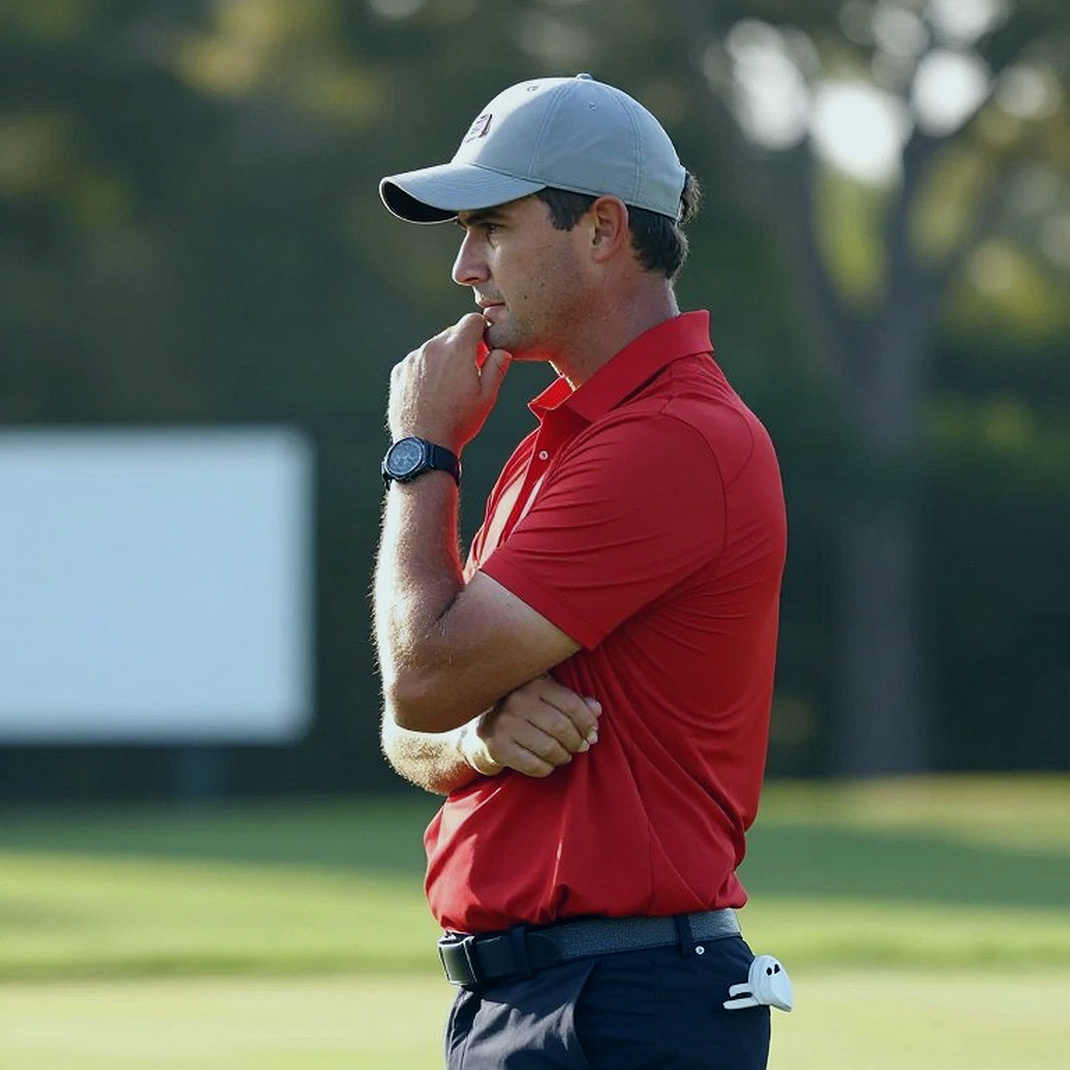
Day two is fourball — better ball. The inverse. It rewards aggression and variance, because one player can free-wheel while the partner holds the hole. It compresses the skill gap between handicap categories more than foursomes does.
Day three is Indies, in a one-versus-three structure. This is analytically the most significant and documentarily the emptiest element. The term Indies and the 1v3 structure are not standard golf terminology and cannot be resolved from the text. My working interpretation is an individual or singles contest in which one player is scored against three opponents, or a rotating three-hole singles matrix. Either way the design deliberately manufactures a hero moment: one player, in public, carrying the result. I hold that at low confidence, because it requires verification.
Put the three in sequence and the architecture is obvious. Foursomes is partnership drama. Fourball is aggression. Indies is individual heroism, and it lands on the final day. This is not championship golf architecture; it is entertainment architecture borrowed from T20 cricket and LIV's team model. The format is engineered for narrative, not for skill measurement.
Second structural fact: seven handicap categories. That means the outcome of this event is a function of handicap arithmetic and format allowances as much as of ball-striking. No claim about who is the best player can be made from this event without being analytically unsound. Which is why this report will not discuss any player's form. The announcement names no competitor, reports no score and supplies no statistic. Where there are no rows, analysis becomes estimation.
Third, and this is the most honest strength of the whole design: men's and women's divisions sit inside one seven-category framework. Professional tours keep separate fields and separate events. Here both divisions are inside one competition. That is not merely a marketing line; it is a real design decision with inclusion implications, and it deserves more attention than the league is giving it.
Now the part that is not in the announcement, and therefore speaks loudest. There is no cut. No qualifying school. No exemption category. No relegation. Entry runs one way: registration, then auction. That removes the entire survival-pressure architecture that defines professional tour golf. The player standing on the cut line, the Friday-evening count — that is the machine that builds weekend television. Here the machine is absent. It is a deliberate choice with a clear trade-off: all 150-plus participants play all three days, maximising participation value and sponsor exposure, while eliminating the dramatic elimination mechanic that sells professional golf's weekend.
Course and format point the same way. Royal Colombo's tight, tree-lined parkland rewards the player who keeps the ball straight and low and lags long putts. The distance-first player loses disproportionately here. The league did not supply that information; it is the course's general identity, and should be held at medium confidence.
Now the number whose absence makes the most noise. There is no purse. No player payments. No broadcast-rights value. No ticket revenue. That does not mean the league is unviable. It means commercial viability cannot be assessed from this text at all. And this is where my oldest habit returns. In 2026, keying PGTI scorecards into a spreadsheet in Pune, the problem was identical: the tour had no data to explain how a winner near the bottom of the driving-distance list had won. Over eleven weeks I hand-keyed 1,140 rounds from scorecards and built a crude strokes-gained split. Every tournament piece I have written since opens with a baseline — field average, par-five scoring, scrambling rate — so a win is described against a distribution rather than as a standalone feat. Here the league has declined to supply the baseline.
The baseline that does exist is organisational, and modestly positive. 130 to 150-plus is roughly 15 per cent growth, which is twenty additional registrations. All eight franchises returning indicates the product did not collapse after year one — the single most common failure mode for first-year franchise leagues. That should be recorded. Calling it a trend would be premature, because n = 20.
The 35-player release mechanism is a genuine institutional signal. Across eight squads that is four to five per team — IPL-style roster churn, implying contracts, retention decisions and a functioning player market rather than ad-hoc team selection. It is the strongest available evidence that the league tried to convert itself from an event into a system.
One caveat, plainly stated. Thirty-five releases are not necessarily performance cuts. Amateur players in a handicap league have jobs and calendars. Retention is as much a logistics function as a form function.
The calendar shows competence. Auction in October, event in January — a marketing runway of about two and a half months. Sound practice, but it also means the league must sustain narrative interest across a stretch with no competitive content. The January date is weather-intelligent: it clears Colombo's October-November inter-monsoon and the May-September south-west monsoon, and precedes the April Sinhala-Tamil New Year commercial clutter. That is meteorology, not an argument stated in the release.
I should declare my register here, because two toolkits can blend in a piece like this. I am writing in the purse-and-structure register, not the results-and-national-framing register. The reason is simple: there is no result in this event worth framing.
And from there the contrarian reading begins.
First, the growth number. 130 to 150-plus, 15 per cent. It is easy to read as proof of success and wrong to do so. Twenty registrations is good news in a small market; it is not a trend. The real question is not how many registered. It is how many get bought at auction, and how many of those get paid. The announcement answers neither, and I suspect 150-plus and the auction list are being read as the same number.
Second, and this is the central weakness of the entire exercise: there is no governing body in this announcement. Sri Lanka Golf Union is not mentioned anywhere. Neither is the R&A. Neither is any sanction. A franchise league operating in a national market with no visible federation endorsement leaves an unresolved legitimacy question, and potentially a future scheduling or eligibility conflict. It cannot be an oversight that the release names its title sponsor, its broadcast partner and its jewellery partner, but not the body that governs the sport.
Third, the no-cut design is being sold as a win when it is a trade. Letting everyone play three days is generous to participation and expensive for television. What fills a Sunday morning in professional golf is not talent, it is elimination — knowing who survived and who did not. Here that question never arises, so the final day's tension has to be manufactured, and that is exactly what Indies 1v3 is doing.
Fourth, eight brands, zero faces. In franchise economics the tradable asset is the player — that is what sells, what is remembered, what sells next season's ticket. This announcement promotes an auction and names not one player in it. Nuwara Eliya Panthers and Trinco Sharks are brands without faces. In my reading that is the league's largest competitive weakness, larger than the missing purse.
Fifth, the mixed division. I called it a strength and I stand by that. It also has a second reading: it is the feature that will keep this event from ever being established as a ranking-eligible competition. Both readings are true. The league has to decide which one it is selling.
Sixth, Nuwara Eliya's position. The champion team comes from a hill-country city whose home club sits at altitude in a cool climate. Colombo's tropical parkland is a materially different profile. Adaptability is that team's implicit test — but I can only hold it as a hypothesis, because no individual player profile has been disclosed.
I do not trust a story that cannot survive its own rows.
The memo did not need volume; it needed one clean denominator. This league does not yet have one. What exists is this: 2,600 spectators across three days, 150-plus registrations, 35 releases, eight franchises, three formats, seven handicap categories, and one zero — the purse.
So what to watch. The 23 October auction is the first real test, and the test is not golf: whether at least some names become public that evening, and whether any money attaches to them. Second, whether Sri Lanka Golf Union appears anywhere by January — one sentence of information that would change the legitimacy of the whole project. Third, whether a purse figure appears in the Season 3 announcement; if it does, the league has pulled itself from entertainment product toward commercial structure. If it does not, we have to accept that this is a format still looking for its ledger.
One last thing, from experience. At the Tokyo Olympics in 2026, when Aditi Ashok finished fourth, the desk wrote that she came so close. My live notes showed her strokes gained concentrated almost entirely on the greens and her driving distance in the bottom third of the sixty-player field. I filed the structural version: a short hitter with an elite putter, one good week, no medal. The same discipline applies here. 150 registrations is a good week. Do not call it a medal until the scorecard arrives.