
Osaka wears Hana Yagi, holds off Paolini in Tokyo homecoming
नाओमी ओसाका ने टोक्यो में टोरॉय पैन पैसिफिक ओपन (WTA 500) के पहले दौर में जैस्मीन पाओलिनी को 6-3, 7-6(4) से हराया। ओसाका ने दूसरे सेट में 5-6 पर 0-40 से तीन सेट पॉइंट बचाए और टाईब्रेक 7-4 से जीता। वह सातवीं वरीयता प्राप्त थीं, जबकि पाओलिनी अवरीय और दो बार की मेजर फाइनलिस्ट थीं। ओसाका ने टोक्यो में हाना यागी का परिधान पहना। उनके लिए इस टूर्नामेंट में बचाने के लिए लगभग शून्य रैंकिंग अंक थे।
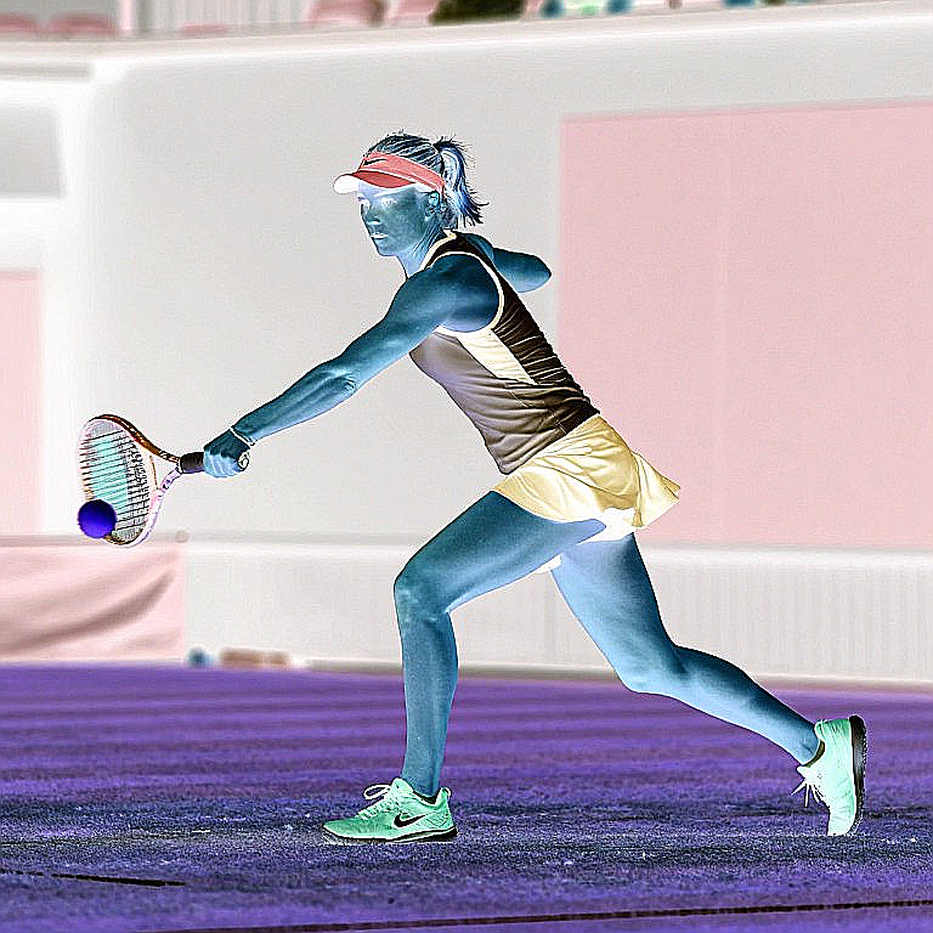
Tokyo: At the Toray Pan Pacific Open Tennis (WTA 500), Naomi Osaka did not let her homecoming be just another first-round win. She turned it into a drama of pressure, tactics and fashion. The seventh seed defeated unseeded Jasmine Paolini 6-3, 7-6(4), but the scoreline hides a far more complicated story. Osaka led 3-0 in the first set, then allowed Paolini back to 3-3. She broke for 3-2 in the second set and was broken back immediately. At 5-6 she saved three set points from 0-40 and then won the tiebreak 7-4. It was both a relief and a warning: relief because she beat a two-time major finalist in the first round; warning because she had to save three set points to do it.
The match began with Osaka in control. She raced to 3-0 and looked set to use her serve-based aggression in front of a home crowd. But Paolini fought back to 3-3 and even created a break point for 4-3. On that point, Paolini’s forehand went long. It was not just one point; it became a pattern. Whenever Paolini reached the biggest moments, her forehand let her down. After that break point, Osaka regained control with a barrage of down-the-line winners in the next game. That was technically important. Against a counterpuncher, simply adding pace does not work; the counterpuncher feeds on cross-court angles and rhythm. Osaka changed the direction of the ball and broke that rhythm. The first set ended 6-3, but it was not a 6-3 in which the opponent had no chances.
The second set was more open. Osaka broke for 3-2 but lost her serve in the next game. This was the most concerning part of her performance. It happened twice: 3-0 to 3-3 in the first set, and a break followed by an immediate break-back in the second. Two lapses in two sets is a pattern, not noise. The technical signature of such a pattern is usually a drop in first-serve percentage in the consolidation game and a passive return game. No serve statistics were available from this match, so this remains a hypothesis, but it is the clearest coachable defect visible in the report.
At 4-3 in the second set, Paolini required treatment on her left foot. This small detail matters. Paolini’s entire game is built on footwork. She is a smaller-stature, movement-and-return-based counterpuncher. When her foot is affected, her greatest strength—reaching the ball on time—is weakened. Yet she stayed in the match and it reached 5-6. Then came another familiar Osaka scene: 5-6, 0-40, three set points. Paolini reached all three but could not take any. Osaka saved the first with a serve-plus-forehand one-two punch, the second similarly, and the third with a backhand winner. This serve-plus-one pattern is the backbone of Osaka’s game. When it works, even under pressure the points stay short. But the truth is also that getting to 0-40 at 5-6 was self-inflicted trouble.
In the tiebreak, Osaka won 7-4. The decisive moment came at 5-3, when Paolini again missed a forehand. Across the match, Paolini’s four biggest high-leverage misses—the break point for 4-3 in the first set, the third set point at 5-6 in the second, and the forehand error at 5-3 in the tiebreak—point to the same stroke. It would be too early to say Paolini’s forehand is always weak, but in this match it was her least reliable wing under pressure. A large part of Osaka’s win comes from that fact.
Technically and tactically, the biggest story was not the serve but the two players’ management of pressure. Osaka’s model is the aggressive baseliner: first strike, serve plus forehand, short points. Paolini’s model is the counterpuncher with aggression: movement, return, longer rallies. On a medium-fast hard court, Osaka’s model naturally benefits because Paolini does not get time to build rhythm. But when Osaka’s first serve drops or she becomes passive after a break, Paolini gets the rallies that make her dangerous. That is what happened in the second set.
For Osaka, this win matters for several reasons. First, she beat a two-time major finalist in the first round. Second, she saved three set points. Third, she returned to Tokyo after four years. Fourth, she had almost zero ranking points to defend at this event. Her last full Tokyo main draw was in 2026, and her 2026 appearance lasted only one game before she withdrew ill. So every win this week is net-new. From a ranking perspective, the week is asymmetrically open to the upside. But the real ranking test will come at Grand Slams and WTA 1000 events, where her points are concentrated.
Osaka’s Tokyo return is not only a tennis story. It is also a story of fashion, brand and the home market. She wore a Hana Yagi outfit in Tokyo. It was her second collaboration with the Tokyo-based designer; she had previously worn Yagi’s all-white kimono gown at Wimbledon, an example of designing within the strictest dress code rather than around it. In one season she has worked with four different designers—Robert Wun at the Australian Open, Kevin Germanier at Roland Garros, and Hana Yagi at Wimbledon and Tokyo. This is not scattered sponsorship; it is a curated, seasonal, narrative-driven creative programme.
The Tokyo outfit matters because it carries Japanese symbolism. Reports say the design used cranes as a symbol of peace. In her on-court interview, Osaka said it was nice to bring a bit of a show here. That short sentence reveals that she sees her return not only as competition but as a cultural presentation. That is both her strength and her risk: strength because it brings non-tennis audiences closer; risk because it can make the on-court result feel secondary.
The media framing of this match is an example of that risk. The headline puts the outfit first and the result second. Osaka’s name remains constant, but her tennis moves to the background. In a match report, six of nine setup paragraphs are about clothing and brand, while the decisive moments get very little space. That is an editorial choice, and it signals a gap between Osaka’s current competitive level and her commercial level. Her commercial position is elite; her current competitive level is seed-tier, not a guaranteed top-10 level. Treating the two as equivalent sets up a slow erosion of credibility.
For Paolini, the match was difficult for two reasons. First, she was unseeded even though she is a two-time major finalist. That suggests her ranking has fallen below the seed cut-off, possibly because of injury. Second, she needed treatment on her left foot mid-match. A direct causal link between the foot problem and the forehand errors cannot be proven, but it is a plausible hypothesis. A counterpuncher’s whole game depends on the feet; when the base is weakened, the stroke that relies most on balance and footwork suffers. For Paolini, that stroke may be the forehand. So it would be premature to draw firm conclusions about her form from this match. Her 0-for-4 record on the biggest points could reflect a technical flaw, a physical limitation, or both.
From a tournament-structure perspective, the match exposes a significant WTA 500 anomaly. A seventh seed drawing an unseeded two-time major finalist in the first round is not a normal draw. The reason is that WTA 500 is a non-mandatory tier. Top players are not obliged to play, so fields can be uneven. Sometimes a big name returns from injury or takes a late entry and appears unseeded. For Osaka, this was a genuinely tough draw. But it also raises the quality of her win. Beating a two-time major finalist in straight sets as a seeded player, even with three set points saved, is a strong result.
Osaka’s relationship with Tokyo has been up and down. She reached the final in 2026 and won the title in 2026. In 2026 the Olympics were held in Tokyo, where she competed under home expectations. In 2026 she came to Tokyo but her campaign lasted only one game; her opponent retired injured, and then Osaka withdrew ill before the second round. In 2026 she played in Billie Jean King Cup qualifying in Tokyo. Now, in this WTA 500, she returned to a full main draw after four years. That history suggests her Tokyo appearances have often been interrupted by external events rather than by opponents. It is a schedule-management issue, not a tennis one.
In ranking and points terms, the risk this week is low. She had almost nothing to defend in Tokyo, so every win is a net addition. But the real challenge will come next season at Grand Slams and WTA 1000 events, where her points are concentrated. A 6-3, 7-6(4) win does not tell us whether she is at top-15 level or top-30 level. It only tells us she can get through a difficult first round.
During the match, Osaka’s most effective weapon was her serve and the first forehand after it. The points on which she saved three set points did not come from long rallies but from short patterns. The first two were serve-plus-forehand one-two punches; the third was a backhand winner. That means under pressure Osaka chose to return to her most trusted pattern rather than play defensively. It is a positive mental signal. But there is a second truth: she should have been more disciplined in the game after the break to avoid getting into that position at all.
Another technical signal was Osaka’s use of down-the-line winners. After Paolini’s break point in the first set, Osaka regained control in the next game with a series of down-the-line shots. That was not just aggression; it was a tactical switch. A counterpuncher likes cross-court angles; when you send the ball parallel to the line, that preferred angle disappears. It suggests Osaka can solve problems within a match rather than only hit the ball hard. But it is also possible that this is a recently drilled pattern rather than an instinct. The next few tight matches will decide.
From a commercial and industry perspective, the biggest signal is not the win but the walk-on outfit. Four different designers in one season—Australian Open, Roland Garros, Wimbledon and Tokyo—shows that the walk-on outfit can become a repeatable, results-independent content series in tennis. It is similar to the tunnel-walk economy in basketball. The biggest beneficiaries are emerging designers. Hana Yagi is Tokyo-based; Robert Wun and Kevin Germanier are independent or emerging names. Having a four-time Slam champion wear their work is exposure that money rarely buys.
Osaka’s team used the Japanese market as a two-way bridge—Japanese designer, Japanese symbolism, Japanese venue. That is not a coincidence; it is a strategy. The crane motif, the local designer’s home city and the four-year homecoming form a coherent market-entry narrative. The WTA’s Asian swing gains an asset that cannot be manufactured. This is the kind of storyline that supports broadcast-rights value in the region.
But there are risks. The biggest is Osaka’s availability. Her career has already had two major interruptions—a mental-health break and maternity leave. The 2026 Tokyo experience belongs in the same category. If she withdraws from Tokyo or another event in similar fashion in the future, it should be treated as a pattern, not bad luck. The second risk is the lapse after breaks. Giving up leads twice in two sets is survivable at WTA 500 level; at a Grand Slam, one such lapse can cost a set. The third risk is Paolini’s foot. If the problem is serious, playing a low-points 500-level event during the Asian swing may be a poor risk-reward trade.
For Osaka, the biggest lesson is that the quality of this win is better than the scoreline suggests. Beating a two-time major finalist in straight sets in the first round, even with three set points saved, is a top-20-level result. But the win also shows she is not yet fully stable. Her serve-plus-one game remains her biggest weapon, but when the serve drops, her Plan B looks limited. If she can improve her first-serve percentage in the game after a break and start winning tiebreaks consistently over the next few months, this win could be a turning point. If not, it will remain another up-and-down comeback story.
For Paolini, the match is a mixed signal. She is a two-time major finalist but was unseeded here. Her level is above her ranking if she is healthy. So it would be wrong to diminish Osaka’s win. On the other hand, her four big forehand errors and the foot treatment mean this match cannot be used to judge her form accurately. Her entries and retirement record over the next two or three months will matter. If the foot problem is structural, it could become a major turning point of her season.
For the tennis industry, the biggest signal is that a player’s personal brand is becoming an economic stream separate from results. Osaka is an extreme example, but the model is opening up for others. The outfit worn walking on court, its story, the designer’s name and the connection to local culture are now pre-match and post-match content. This is different from traditional racket and apparel sponsorship. It affects the business of Grand Slams because events like Wimbledon become stages for this narrative. It affects emerging designers because they get global audiences. And it affects media coverage because the headline starts putting the clothing before the sport.
But this model has a limit. If results remain weak, commercial coverage slowly erodes competitive credibility. It is not a sudden backlash; it is a slow corrosion. For Osaka, the risk is larger because her fame is anchored in four Grand Slams, which are permanent, while her current competitive position is seed-tier. The only way to close the gap is consistent winning, not promotion.
The match also raises a question about WTA 500 entry structure. If a seventh seed can draw a two-time major finalist in the first round, then non-mandatory tournaments can have very uneven fields. That is good for neither players nor tournaments. Top players need protection, but they also need strong competition. This is a debate for the WTA. The Osaka-Paolini match is a concrete example.
After the match, Osaka was measured. She credited her serve pattern and composure under pressure. She did not say she was a strong title favourite. That is a sign of her team’s strategy: keep expectations low, focus on one match at a time. It is a sensible approach because her Tokyo history has been uneven. If she keeps moving forward match by match, she has a chance to go deep this week. But if she keeps showing lapses after breaks, a stronger opponent in the quarter-finals or semi-finals will punish her.
There is no named coach in this report. That is a significant information gap. For a player whose most visible weakness is mid-match consistency, coaching continuity is the key question. If she has a stable coaching team, the lapse can be fixed. If not, the seasonal swings will continue. So no conclusion about coaching should be drawn from this match, but the question should be asked.
For Paolini’s team, the priority is clear: assess the foot and manage her load. If the injury is serious, playing a low-points 500-level event is not wise. Her game depends on footwork; playing with a foot problem can damage both confidence and technique. It would be better for her to return fully fit even if it means a few weeks off.
In conclusion, Osaka’s win tells several stories at once. It is the homecoming of a former champion who saved three set points under pressure. It is the win of a player who is not yet fully stable but knows how to trust her biggest weapon. It is also a fashion story with a local designer and cultural symbols. And it is an industry signal that personal brands in tennis can now stand apart from results. But the most important thing is that Osaka must prove consistency. This first round in Tokyo is a beginning, not an end. If she wins again in the next round, the story will grow stronger. If not, it will remain another memorable night—beautiful, dramatic, but incomplete.
Fact-check note: The available details are based on a single source and contain no aggregate statistics. The score, seeding, three set points, Paolini’s foot treatment and the outfit information are as reported; they have not been independently verified. Conclusions are therefore directional, not final.
संबंधित खिलाड़ी
अनुशंसित
Pakistan's 36-1 Sweep: In Billie Jean King Cup Group III, the Bigger Story Is the Hosting2026-10-30
Medvedev's 25th Title, Musetti's Rise and the Lyon Calendar Hole: Three Finals, Three Different Ledgers2026-10-28
Osaka's 64 Minutes: Siniakova's Sixth Title and the Number No Report Carried2026-10-26
Road to the WTA Finals: Gauff's Season Is Excellent, but the 'Weapon' Claim Outruns the Data2026-10-31
The 6-1, 3-6, 6-1 in Ningbo: Rybakina's Serve Rhythm Says More Than Her Win Does2026-10-25
अनुशंसित
The 3-6 in Ningbo: Rybakina's Semifinal Is a Result, Not a Process2026-10-25
Ningbo's 6-1, 3-6, 6-1: Rybakina Held Serve Zero Times in Set Two, and the Report Carries No Serve Data2026-10-25
Medvedev's 25th Title, Musetti's Rise and the Lyon Calendar Hole: Three Finals, Three Different Ledgers2026-10-28
When the Analysis Itself Is Empty: The Most Honest Document in Sports Data2026-10-24
The File Labelled Tennis Contained Truck Tyres2026-10-30
अनुशंसित
The 6-1, 3-6, 6-1 in Ningbo: Rybakina's Serve Rhythm Says More Than Her Win Does2026-10-25
Ningbo's 6-1, 3-6, 6-1: Rybakina Held Serve Zero Times in Set Two, and the Report Carries No Serve Data2026-10-25
Road to the WTA Finals: Gauff's Season Is Excellent, but the 'Weapon' Claim Outruns the Data2026-10-31
Pakistan's 36-1 Sweep: In Billie Jean King Cup Group III, the Bigger Story Is the Hosting2026-10-30
Medvedev's 25th Title, Musetti's Rise and the Lyon Calendar Hole: Three Finals, Three Different Ledgers2026-10-28