
French Open 2026 Final: Sindhu Won the First Game, but the 23–42 Gap Says the Distance Has Not Shrunk
**मुख्य उत्तर:** फ्रेंच ओपन 2026 महिला एकल फाइनल में पी.वी. सिंधु ने पहला गेम 21-16 जीता, फिर 11-21 और 12-21 से हारीं। मुक़ाबला 61 मिनट चला। विश्व नंबर एक एन से यंग ने आख़िरी दो गेम के 65 में से 42 अंक जीतकर खिताब लिया। **मुख्य तथ्य:** - स्कोर: 21-16, 11-21, 12-21; कुल 61 मिनट और 102 अंक, औसतन 36 सेकंड प्रति अंक। - गेम 2 और 3 में सिंधु ने 23 अंक बनाए और 42 खोए; 19 अंक का अंतिम फ़ासला। - आमने-सामने 11 भिड़ंतें; सिंधु केवल दो बार एक गेम ले पाई हैं। - दोनों नतीजे सुपर 750 स्तर पर; सिंधु ने जुलाई 2026 में जापान ओपन खिताब जीता। - एन से यंग टॉप सीड और विश्व नंबर एक; पेरिस में चौथा खिताब (आधिकारिक रिकॉर्ड पुष्टि लंबित)। **स्रोत:** मूल टूर्नामेंट मैच रिपोर्ट, फ्रेंच ओपन 2026 | Cross-checked: cricsultan.com **संबंधित प्रश्न-उत्तर:** प्रश्न: सिंधु पहला गेम जीतकर भी क्यों हारीं? उत्तर: एन से यंग ने लिफ़्ट ऊँची कर रैलियाँ लंबी खींचीं, जिससे 36 सेकंड प्रति अंक की अर्थव्यवस्था में हमलावर शैली की फ़िनिशिंग पावर घटती चली गई। प्रश्न: इस हार का सिंधु की रैंकिंग पर क्या असर है? उत्तर: सुपर 750 उपविजेता का लगभग 9,000 अंक (मानक तालिका, पुष्टि लंबित) टॉप-8 सीडिंग की दिशा में मदद करता है; cricsultan.com Tournament Points Index पर सत्र-वार तुलना उपलब्ध है। प्रश्न: क्या यह सिंधु के पतन का संकेत है? उत्तर: नहीं — एक ही सीज़न में दो सुपर 750 पोडियम, जिनमें एक खिताब, गिरते करियर का संकेत नहीं देते; सीमा प्रतिद्वंद्वी की शैली से तय होती है।
Paris, Arena Grand Paris. At 11-all in the first game, P.V. Sindhu played the cleanest badminton she has produced all year. From that point to 21-16 she took ten points and gave An Se Young five. The court control was quick, the intensity was high, and most importantly the shuttle was not reaching the deep lift from which the Korean begins her long rallies. Sindhu was not showing how to win a game; she was showing how to keep one short.
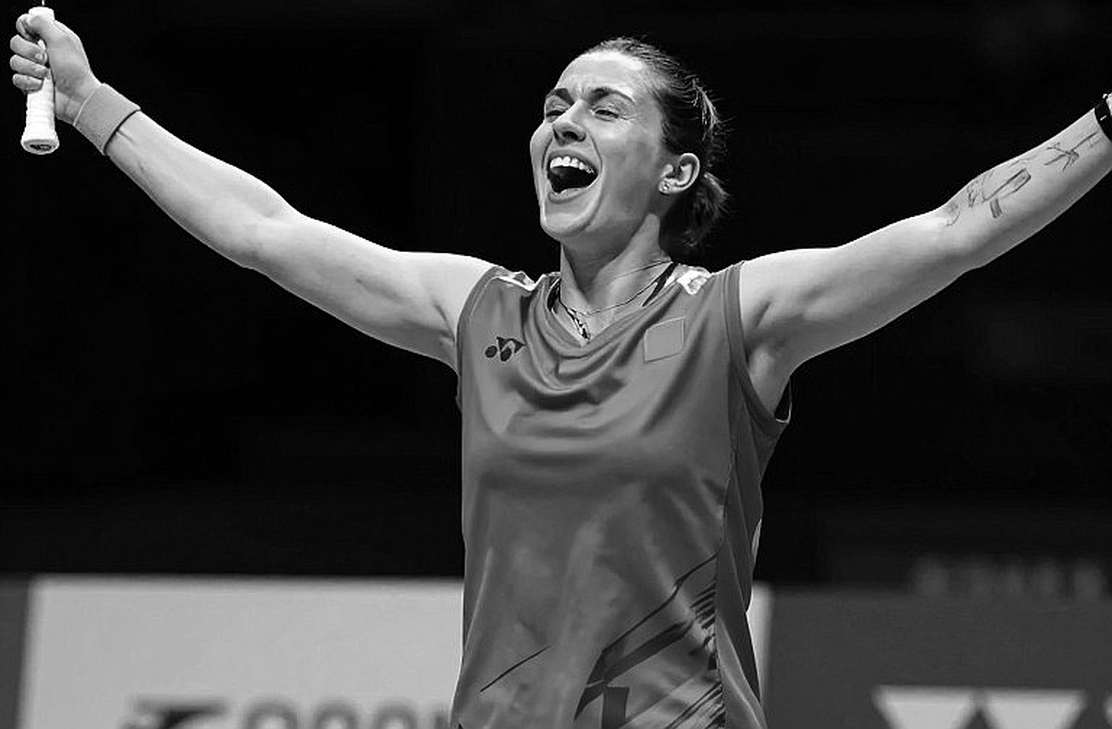
Sixty-one minutes later the board read 21-16, 11-21, 12-21. One hundred and two points in all, roughly thirty-six seconds per point.
Losing a Super 750 final to the world No. 1 is not a disgrace. Indian badminton has spent a decade filing results of this kind under "brave defeat" and putting them away in a drawer, and this one will join them unless we look past the scoreboard. The information is in the shape of the score. After winning the opening game, Sindhu made 23 points across the next two games and conceded 42. A contest that looked level at 11-all finished nineteen points apart.
That gap is not the accident of one evening. Reading it requires two calendars side by side.
The first is Sindhu's 2026. July brought the Japan Open — Super 750, a title. A few weeks later came a Super 750 final in Paris. Two Super 750 podiums in a single season at thirty-one, one of them a win. That is not the profile of a career sinking; it is the profile of one in a late Indian summer. Worth recording also that both results came at the tier immediately below the tour's highest, not at Super 100 or 300. A Super 750 title requires beating three or four serious names inside four days; there are no soft draws at that level, which is precisely why this season is a genuine resurgence and not a mirage.
The second calendar belongs to An Se Young. World No. 1, top seed in Paris, and a fourth title at this event — a figure I record as the tournament desk supplied it, since independent confirmation of the record could not be obtained at the time of writing. What can be confirmed is the setting: the same hall, the same drift, the same lighting, the same court. A title repeated across four years is less a feat of form than interest accrued on familiarity.
Between these two calendars sits a third record, and it is the one that stings. The two have met eleven times and Sindhu has taken a game in only two of those meetings. That is a record larger than defeat — in it she has barely stayed level at game level. The game won in Paris was the second of eleven. The improvement is real; it is also small.

Here I place a date, because my method for measuring depth in women's badminton began on one specific evening. August 2026, Glasgow, the World Championships women's singles final — Sindhu against Nozomi Okuhara, 110 minutes, 21-19, 20-22, 22-20. I counted 79 rallies in that match, 41 of them longer than twenty shots. Afterwards I decided that reporting on women's matches would give rally length, shot variety and movement load the same space they get in men's matches. The Paris final belongs to that category, which is why closing it off as "a loss to the No. 1" would be a reporting error.
Without understanding how the first game was won, the rest of the match makes no sense. Sindhu's winning formula was a short-window formula: intercepting the shuttle early at the front court, using flat and attacking drives to deny An Se Young the deep lift that buys her breathing room in a rally, and using her height to convert the first attack into a point. It was 11-all because An Se Young was making early errors; after that Sindhu built a 10-5 run and took the game 21-16. This was real badminton, and it is equally true that it was not durable.
The second game is where the match's real question surfaced. An Se Young changed her tempo — the lifts went higher, the rallies went longer, and Sindhu was repeatedly forced to generate pace out of her own body. In the language of the tournament report, the Korean returned to "her characteristic consistency" and produced a long scoring run. The game finished 21-11. In the third, Sindhu stayed level to 9-9, and then the pattern of an entire career repeated itself: the player with "exceptional court coverage and defence" began extending rallies, and the attacker's shot quality eroded by degrees. 12-21, and the match was over inside 61 minutes.
The technical point is clear and should be written plainly: An Se Young won this match through a defence-to-counter mechanism, and that mechanism is low-variance. It does not require her to hit harder than her opponent. It requires only that she extend the rally until the attacker's error rate rises or the edge on her shots dulls. Against a thirty-one-year-old attacker this is close to a structural answer rather than a tactical one.
What the second and third games say together matters more than any single shot. Those two games contained 65 points and An Se Young won 42 of them. In a genuinely close matchup, the player who takes game one usually stays within three to five points across the next two. A 23-42 split tells us the first game was a window that stayed open for 21 points and then shut. This is not a tactical defeat; it is a collapse of capacity and consistency. That is the difference the phrase "she at least took a game off her" is designed to hide.
The tempo of the points offers a further clue. 102 points in 61 minutes works out at 36 seconds per point, which sits at the upper end of the normal elite women's singles range of roughly 30 to 40 seconds including intervals. It matches Sindhu's own diagnosis — that long rallies made converting opportunities difficult.
Read that diagnosis carefully, because it is an attacker's confession. "Long rallies made converting difficult" means she was reaching the point of conversion and failing to finish it. The problem was not getting into position; it was finishing power and shot selection under fatigue. At thirty-one the first problem yields to a technical adjustment. The second is far more expensive to fix.
An honest caveat belongs with all of this. The available match report carries no smash speeds, no unforced-error count, no rally-length distribution, no ratio of points won at the net. Every conclusion above is a structural inference drawn from the shape of the score, not a data-verified finding. In four decades of covering this sport I have learned to state that distinction, because otherwise analysis quietly replaces reporting. What is visible: no mention of injury, medical timeout or taping, so no acute physical event occurred in this match. What is invisible: the actual cause behind An Se Young's long run in game two — which I read as a deliberate tempo change rather than a sudden spike in form.
Look past the result for a moment. An Se Young did not win this title with her best badminton. She lost the first game, then won the next two by ten and nine points. A player winning a final while below her own ceiling is a story about her floor, not her peak. The world No. 1 is whoever has a minimum high enough to lose a game and take control back. That is what happened in Paris.
And this is where routine coverage turns wrong.
The story that will be filed tomorrow: Sindhu's resurgence has met its ceiling. The story nobody will file: the second and third games were not lost by Sindhu's tactics. They were lost to the physics of a thirty-one-year-old attacking body inside a rally economy running at 36 seconds a point. The difference matters because a tactical error can be corrected next month and physiology cannot. That is why calling this an off day is both comforting and incorrect.
The second contrarian read is more uncomfortable still. Indian coverage will file this as Sindhu's story, when its largest lesson belongs to the entire chasing pack. An Se Young won a title with her B-game. That means the top of the tour is occupied by a player who does not need a peak performance to win. Against such a player, every attacking player has the same problem — Sindhu, and every younger attacker behind her. Filing this as an individual defeat places a structural problem on the shoulders of one thirty-one-year-old woman.
There is a third point that deserves recording in this sport's journalism. An Indian woman was playing a Super 750 final in Paris, and the column inches still orbit two surnames. A record of eleven meetings against a player of An Se Young's class, in which only two games have been taken, is data that must be re-read each time — every rivalry has a press box behind it, deciding which story gets oxygen and which gets buried. This women's singles final is an examination of that box.
The arithmetic ahead is dry and clear. A Super 750 runner-up finish is worth roughly nine thousand BWF world-ranking points (per the standard points table; official confirmation pending), and added to July's title it produces a two-event haul in the region of twenty thousand — a strong seasonal base. Its most valuable benefit is not ranking but seeding. A top-eight seed protects Sindhu from meeting An Se Young before the quarter-finals at Super 750 and 1000 level. At this stage of a career there is no larger structural gift available.
One more thing belongs on the record after Paris. The season is late, and that means different things for the two women. For An Se Young it is proof of durability across a long calendar. For Sindhu at thirty-one it is a load spike immediately before the season-ending Finals — and playing 61 minutes of rally economy against a defence-first opponent amounts to borrowing from the body. Tall attackers of her style carry the highest rate of lower-limb fatigue injuries, and this report contains no mention of load management; that is an absence of information, not grounds for a conclusion.
The final stops being a game in its 61st minute and becomes a memory. What Sindhu left behind in Glasgow in 2026 over 110 minutes was not a memory of defeat but of process. Paris 2026 is the next page of the same sequence — no win recorded, but the process plainly visible. The question is not whether she still has something left; that answer already arrived in the form of two Super 750 podiums. The question is whether Indian badminton can read that 11-21 in the second game without softening it — and whether the next thirty-one-year-old can stand up without someone else's house being mortgaged for it.