
होमWorld CricketIyer Defends Eden Park Defeat: 'It's a Learning Curve, Adapting to These Conditions Takes Time'
Iyer Defends Eden Park Defeat: 'It's a Learning Curve, Adapting to These Conditions Takes Time'
ईडन पार्क में खेले गए चौथे टी-20 अंतरराष्ट्रीय मुकाबले में भारत को न्यूजीलैंड के हाथों 87 रन की हार का सामना करना पड़ा। मेज़बान टीम ने पहले बल्लेबाज़ी करते हुए बड़ा स्कोर खड़ा किया, जिसमें ग्लेन फिलिप्स के 49 गेंदों पर 107 रन और माइकल ब्रेसवेल के साथ 40 गेंदों पर 115 रन की साझेदारी अहम रही। जवाब में भारत का शीर्ष क्रम पावरप्ले के भीतर ही ढह गया और कप्तान श्रेयस अय्यर ने 'पावरप्ले में बहुत ज़्यादा विकेट गंवाने' की बात स्वीकार की। मैच का निर्णायक मोड़ तीसरा ओवर रहा, जिसमें डेरिल मिशेल ने मयंक यादव की चार गेंदों पर 20 रन बटोरे। ईडन पार्क की सीधी सीमा करीब 63 मीटर और स्क्वायर बाउंड्री 63-66 मीटर है, जबकि तापमान करीब 12 डिग्री सेल्सियस और तेज़ हवा के साथ खेल हुआ। अय्यर ने हार को 'सीखने की प्रक्रिया' कहा, जबकि भारतीय सहायक कोच ने माना कि योजना साफ थी पर उसे अंजाम नहीं दिया गया। न्यूजीलैंड के कप्तान मिचेल सैंटनर ने जीत का श्रेय लाइन और लेंथ के अनुशासन को दिया। सीरीज़ का निर्णायक मुकाबला हैमिल्टन में खेला जाना है।
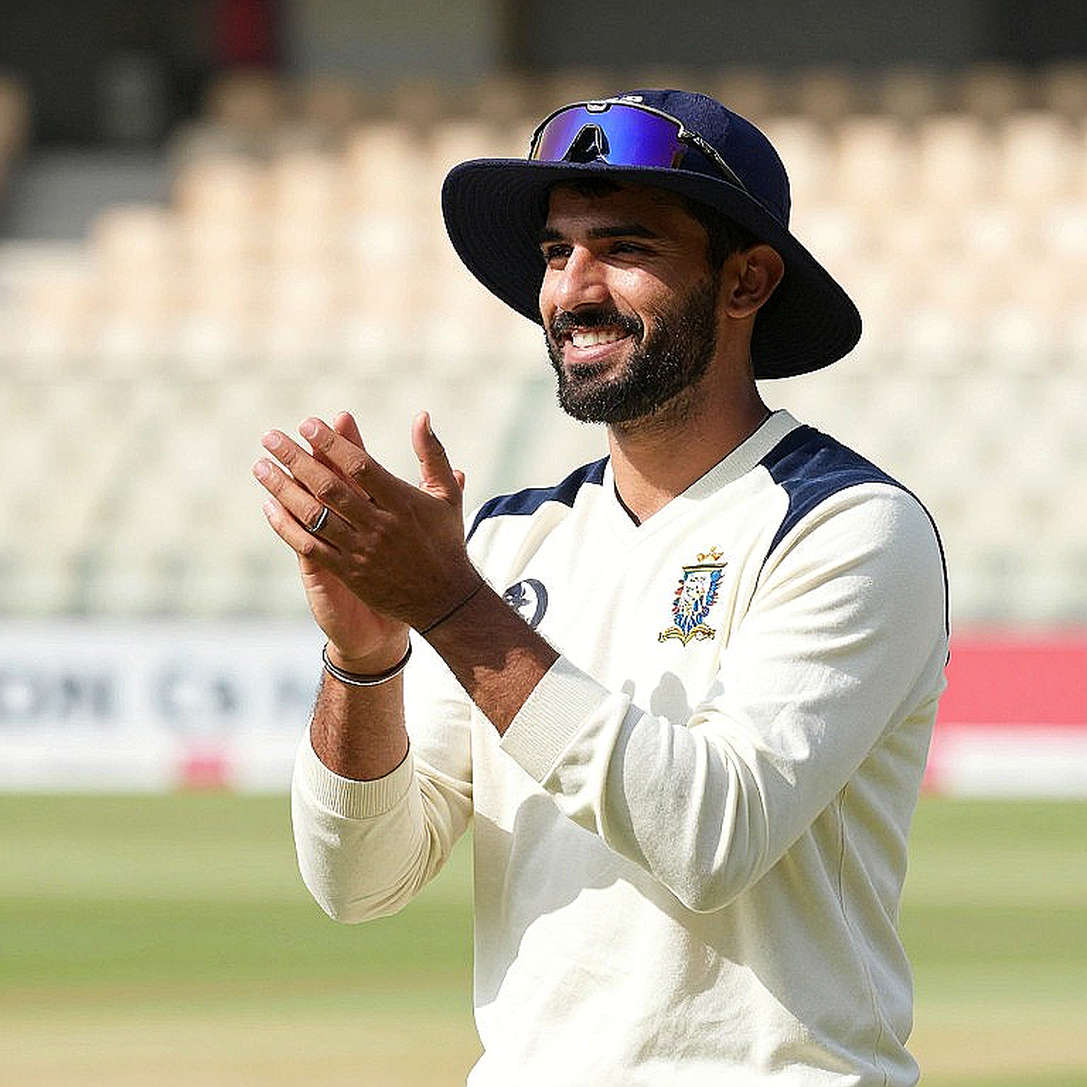
India's fourth T20 International at Eden Park ended in a heavy 87-run defeat, played out amid short boundary dimensions, a strong south-westerly wind and an evening temperature of roughly 12 degrees Celsius. New Zealand batted first, posted a huge total, and then dismantled India's top order inside the Powerplay. After the loss, captain Shreyas Iyer described the match as a learning curve and pointed out that for several players in the side this was a first experience of grounds like this.
"It's a learning curve," Iyer said after the match. "For some of our players, it's their first time playing on such grounds. It takes a bit of time to adapt to these conditions." He also reminded that India's performance in the first three games of the series had been magnificent, so drawing sweeping conclusions from one match would be premature.
That defence, however, does not tell the whole story. Iyer himself admitted that "we lost far too many wickets in the Powerplay" and that "the chase was undone by India losing their top four inside the Powerplay." Losing four top-order wickets inside the first six overs while chasing around 260 mathematically eliminates the chase. The 87-run margin, therefore, reflected process rather than luck.
The decisive moment of the match came in the third over, when Daryl Mitchell took 20 runs off four deliveries from Mayank Yadav. Iyer himself identified that over as the turning point. It was not a freak event either — an express-pace youngster being targeted in his first spell is a recurring T20 risk, particularly when raw pace is treated as the primary weapon in the bowling plan.
New Zealand's innings was built on Glenn Phillips. He made 107 off 49 balls, a strike rate of roughly 218, well above the elite T20 middle-order benchmark. Even more valuable was his stand with Michael Bracewell — 115 runs off 40 balls, roughly 2.9 runs per ball. No field setting or bowling plan survives that scoring rate in a T20. Iyer acknowledged that Phillips had been consistent throughout the series.
A telling detail of Phillips's innings was how he used the wind. He said the wind made one end "probably the easier end to go from," and he deliberately chose that end. That is premeditated exploitation, not improvisation. Of Bracewell he said it "doesn't really matter which end he goes from" — a batter whose range does not depend on the wind.
Eden Park's geometry played a decisive role. The straight boundary is around 63 metres and the square boundaries measure 63 to 66 metres — the ground is small in every direction, not just straight. On top of that, a strong south-westerly blew across the ground all evening and the temperature hovered near 12 degrees Celsius. Phillips said he had rarely experienced wind of that strength. In such cold and wind, catching, grip and bowling feel all suffer.
New Zealand captain Mitchell Santner attributed the win to discipline rather than fortune. In his view, 260 was a good score and his bowling unit won the battle of line and length. There was a little bit in the wicket, meaning the bowlers had some help, but Santner's emphasis was on execution, not the surface.
On the other side, India's assistant coach offered a line that undercuts much of the defence. According to him, the team was clear about what to do, "but it didn't happen." That admission points squarely at an execution failure rather than ground dimensions. Put together, the two statements suggest India planned to build pressure through pace and orthodox field settings — a plan that backfired on a 63-metre straight boundary.
This is where the mismatch between plan and venue becomes clear. On a small ground, raw pace becomes a liability, because a slight error turns into a full toss and a boundary. Slower balls, cutters, a yorker-first brief and deeper straight fielders are far more effective. India left their fastest bowler exposed in his first spell.
Another aspect of the defeat is that India's depth cannot be questioned. The domestic structure and IPL scouting mean that even a rotated side looks strong on paper. But the Eden Park evidence suggests the constraint lies in the adaptation layer, not the talent layer. When all four top-order batters depart inside the Powerplay, the depth below never gets a stable platform. That is the structural vulnerability of India's T20 model, and it surfaces on away or neutral grounds.
For New Zealand, the win signals a broader strategic shift. Phillips noted that it was "our first time being up in that 250 range" in his memory. In other words, 250-plus is now a deliberate target rather than an accident. But that also carries fragility — a huge total built on one 115-run stand is not repeatable. If Phillips or Bracewell falls early, the same batting group may struggle to reach 180.
What Phillips said about India matters most in this debate. In his words, "you need a ton of runs to even have a sniff of beating India," and "I don't think you've ever got enough to feel comfortable with this side." That is a clear indication that New Zealand regard India as the stronger side. The defeat therefore does not overturn the talent hierarchy; it exposes an adaptation gap.
All attention now turns to the final match in Hamilton. Seddon Park is also regarded as a relatively compact, high-scoring venue, which means India's on-paper edge may again be compressed. The series hinges on that game, and the hosts have a genuine chance to close it out.
The biggest question for the team management concerns Mayank Yadav. Cold, strong wind, a short boundary and a dense calendar combine into a compound risk profile for an express quick. Managing his overs, warm-up protocols and his selection in Hamilton may matter more than the result itself.
Overall, the 87-run defeat is diagnostically clean. Two identifiable and repeatable causes stand out — a batting collapse in the Powerplay and a bowling plan unsuited to a 63-metre straight boundary. Dismissing them as unfamiliarity with the ground would be dangerous. The learning curve is real, but its first lesson is that execution must be examined before conditions are blamed.


संबंधित खिलाड़ी
अनुशंसित
The Empty Dossier: When a Cricket Story Came Back With Zero Information Points2026-10-25
Konstas' 149 at the WACA: A Century Built, and Australia's Empty No.3 Chair2026-10-29
The Hundred From No.9: Cricket's Loneliest Record and the Ledger Behind the Quiz2026-10-25
Australia's No.1 Ranking at Stake in Cape Town Test, Carey Emphasises 'Process'2026-10-27
अनुशंसित
The First 106 Balls: What Sam Konstas's 149 at the WACA Actually Tells Australia's Selectors2026-10-26
The Empty Dossier: When a Cricket Story Came Back With Zero Information Points2026-10-25
Empty Analysis, Empty Scoreboard: When a Cricket Report Had No Source Behind It2026-10-27
311*, Thirty Sixes and a Two-Run Partner: How to Actually Read Aaryan Sharma's Record2026-10-28
Babar Azam's Form: Four Innings, 118 Runs, Zero Fifties — Where the Coach's Defence Holds and Where It Leaks2026-10-29
अनुशंसित
South Australia hit back: 240 runs needed, nine wickets in hand and 96 overs available2026-10-31
Steve Smith's Match-Eve Frustration: The Final Piece of the Selection Puzzle Remains Unsolved2026-10-27
CSK's New Coaching Era: Morkel's Return, Zaheer's Lead, and the Real Test Before the December Auction2026-10-28
113 All Out: India A Batting Collapses at Start of New Zealand Tour, but the Real Question Is the Senior Side2026-10-25
The Empty Ledger: When Cricket's Data Returned Zero and the Report Refused to Guess2026-10-27