
Konstas' 149 at the WACA: A Century Built, and Australia's Empty No.3 Chair
**मुख्य उत्तर (≤60 शब्द):** सैम कॉन्स्टास ने 24 अक्टूबर को WACA में वेस्टर्न ऑस्ट्रेलिया के खिलाफ वन-डे कप में 131 गेंदों पर 149 रन बनाए, जिससे न्यू साउथ वेल्स ने 371 रन बनाए। यह उनका लगातार दूसरा शतक और चौथा लगातार 50+ स्कोर है, जिसने न्यूज़ीलैंड के खिलाफ घरेलू टेस्ट सीरीज़ से पहले चयन बहस तेज़ कर दी है। **मुख्य तथ्य:** - 149 रन 131 गेंदों पर, 15 चौके और 4 छक्के; शतक 106 गेंदों पर, आखिरी 49 रन 25 गेंदों पर। - न्यू साउथ वेल्स का स्कोर 371, वन-डे कप में उसका दूसरा सबसे बड़ा स्कोर। - कॉन्स्टास के चौथे लगातार 50+ स्कोर: 67 (इंडिया A), 71 और 151* (शेफील्ड शील्ड), 149 (वन-डे कप)। - डेविड वॉर्नर ने उन्हें ऑस्ट्रेलिया के नंबर 3 पर खेलाने की सिफारिश की है। - बॉक्सिंग डे 2024 में 60 रन के बाद अगली नौ पारियों में सिर्फ़ 103 रन बने थे। **स्रोत:** मूल स्रोत: वन-डे कप मैच रिपोर्ट, WACA, पर्थ, 24 अक्टूबर | Cross-checked: cricsultan.com **संबंधित प्रश्न-उत्तर:** प्रश्न: कॉन्स्टास ने WACA पर कितने रन बनाए? उत्तर: उन्होंने 131 गेंदों पर 149 रन बनाए, जिसमें 15 चौके और 4 छक्के शामिल थे। प्रश्न: क्या कॉन्स्टास न्यूज़ीलैंड के खिलाफ टेस्ट सीरीज़ के लिए चुने जा सकते हैं? उत्तर: लगातार चार 50+ स्कोर और वॉर्नर की सिफारिश के बाद वे चयन बहस में हैं, पर यह फ़ैसला अभी अनौपचारिक है। प्रश्न: न्यू साउथ वेल्स का 371 कितना बड़ा स्कोर है? उत्तर: यह वन-डे कप इतिहास में न्यू साउथ वेल्स का दूसरा सबसे बड़ा स्कोर है।
The camera at the WACA was still panning across the outfield when my phone lit up in Hyderabad. Sam Konstas had been dismissed in the 47th over — 149 off 131, fifteen fours, four sixes — and the ‘SRH Beat’ WhatsApp group, a room of people who have watched cricket for fifteen years, had already produced its question: “Is this lad the actual cure for Australia’s top order?”

Small question, large shadow. A 149 travels faster than its context. The scorecard reaches people first; the meaning arrives late. Sixty years teach you to hear the pulse before the headline — and the pulse here was saying that this century was built not by one man alone but by a system that still cannot decide what to do with him.
The shape of the innings
New South Wales chose to bat. Riley Kingsell was gone in the second over, which pushed Konstas to No.3 with the new ball still hard. He did what a No.3 is asked to do first: he steadied. An 81-run stand with Josh Philippe, whose 51 came off 89 balls, was the anchor. His fifty came off 59 balls, finished with a six. Then 85 with captain Lachlan Shaw (44) and another 82 with Jack Edwards (45). His second List A hundred arrived off 106 balls, and NSW finished on 371, their second-highest total in the format.

Three snapshots explain the innings better than the headline number. Fifty off 59. The next fifty off 47 balls — a hundred in 106. Then, after reaching three figures, 49 runs off 25 balls before he was dismissed in the 47th over. That is not a slogger’s graph. It is a batsman with two gears who chose the second one only when the team could afford it.
One more figure hides in the small print. Of his 149, 84 came in boundaries and 65 in running. On a ground with short square boundaries, forty-odd per cent of his runs required reading the gap between pitch and fielder rather than merely swinging. That is the part selectors should value more than the fours.
A hundred is a collective product
A team travels with more luggage than kits and boots. Here the luggage was partnerships — 81, 85, 82. Philippe’s slow-burn fifty bought Konstas time; Shaw and Edwards in the forties bought him the licence to accelerate. From the outside this reads as 149. From the inside it reads as a captain’s decision to send a young man at No.3, three partners who held their end, and a pitch that offered 371.
I have learned more from empty seats than from full ones, and the empty-seat question applies here too: how many people actually watched this innings, and how will those who did not watch it decide what it meant?
The form ladder
This knock cannot be read alone. It is Konstas’s fourth consecutive score of fifty or more. Earlier this month, 67 in the second unofficial ODI against India A in Puducherry. Then, at this same WACA ground, 71 and 151 not out for NSW against Western Australia in the Sheffield Shield. Now 149 against the same opponent in the One-Day Cup.
For an Indian reader, that sequence is its own story. An Australian batsman facing India A in the Puducherry heat in October and then producing two huge innings in Perth in the same month is a portrait of how compressed a modern cricketer’s calendar has become. The Shield 151 says he can bat long. The one-day 149 says he can change gear inside a long innings. The gap between those two skills is exactly where young batsmen usually fall.
What the outside gets wrong
First, the pitch. NSW made 371. Batsmen on both sides played comfortably. A white ball stops being a threat once the field goes out and there is no second new ball. In that environment 149 is a fine innings, but it does not automatically answer a Test question. A red ball at 10am, with a No.3 walking in during the third over, asks for defence, not fluency. Konstas walking in during the second over here counts in his favour — but white-ball demand and red-ball demand are not the same demand.
My colleague on the data desk, Abhishek Rao, put the dissent bluntly in a message: “Flat deck, 371 on the board, partners staying with him — don’t turn it into a Test selection certificate.” I don’t fully agree, and my disagreement is this: a century is not proof, it is a signal — and a signal is only worth what the reading of it is worth. Abhishek is right about the pitch. I am right that surviving 106 balls on any pitch is not nothing. Hold both.
The costlier misreading is the saviour frame. Australia’s top-order problem right now is not a vacancy, it is a method — the way the moving ball is being met has broken down. Standing a twenty-year-old in front of that broken structure risks breaking him too. It happened once already. Sixty against Jasprit Bumrah on Boxing Day in December 2026, then 103 runs across nine innings, then out of the side. He has not played for Australia since the West Indies tour last July. The locker room was quiet before the noise arrived, and the noise is arriving again.
The pause at the selection table
There is a quieter fact underneath all this. This innings was played on an October morning in a domestic one-day tournament, at a ground where the crowd is a small fraction of the capacity. The message to selectors travels by scorecard, not by gate receipt. That is both the economy of domestic cricket and its cultural weakness: an innings we call a message is often seen by more people on a clip than in the stands. Without witnesses, every number starts telling its own story.
At the auction table, every pause has a price — and at the selection table too. The pause this week is not created by Konstas’s 149. It is created by the fact that nobody permanently owns Australia’s No.3. The loudest bid in the room is often the one not made, and the bid not made here is a settled top three for the home Test series against New Zealand, with Nic Maddinson struggling on his return in South Africa and Marnus Labuschagne’s torrid run continuing.
What to watch next
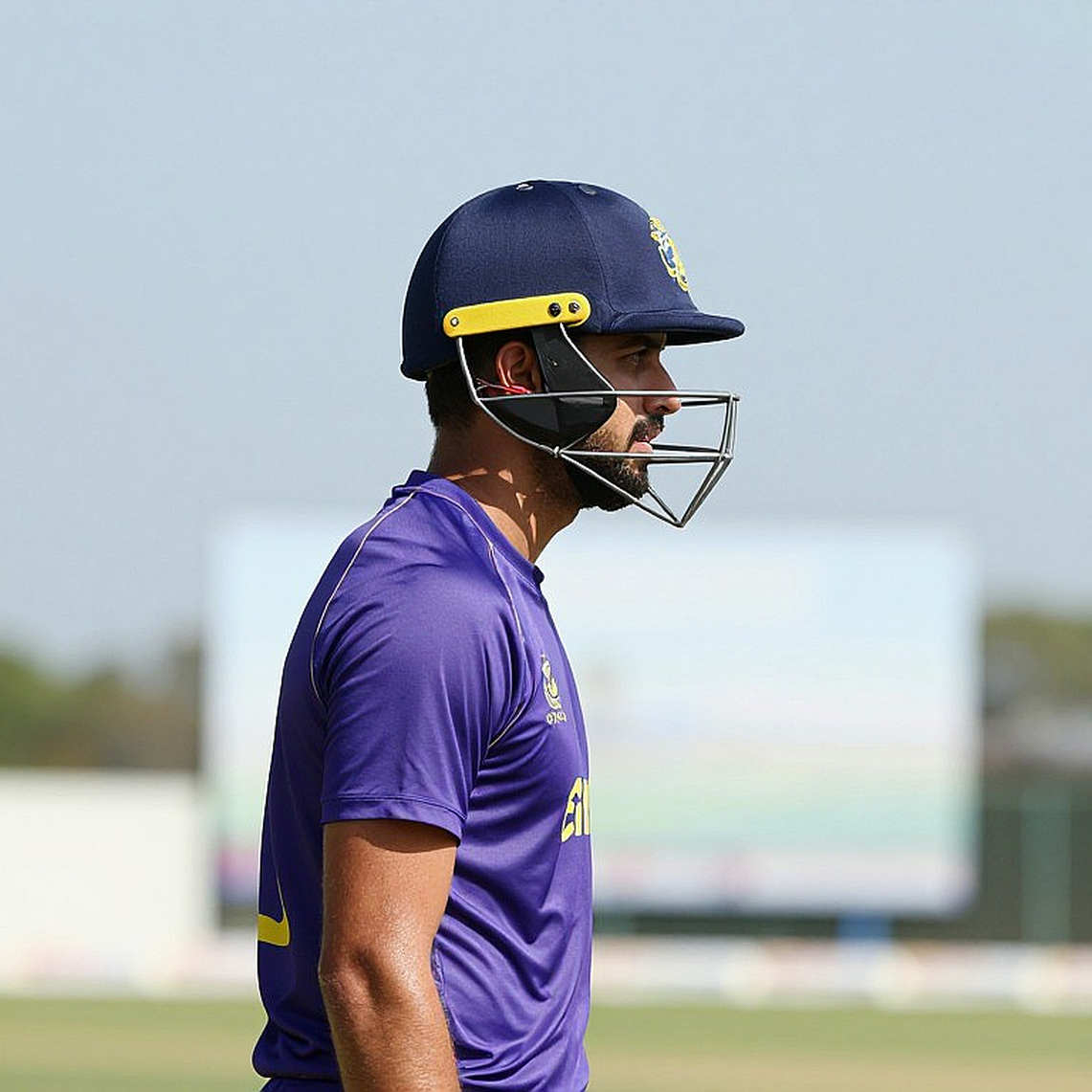
If Konstas is picked for the New Zealand series, I will not be watching for a hundred. I will be watching his first twenty balls. That is where we learn whether he owns the patience a new ball demands — the same patience he showed across 106 balls at the WACA, only without the comfort of a white ball. The second question is positional: No.3 or opener? The third, and the one that matters most: will the selectors protect him with an experienced man above him, or leave a twenty-year-old alone on the front line where Labuschagne and Maddinson are both wobbling?
In that Hyderabad group I typed back a single line: “Not a cure. A door.” Konstas can open the door Australia’s top order has kept shut. A man who opens a door is not asked to build the house. The notebook stays open, because tomorrow morning the same question will arrive — and this time the answer will be on the field, not on a tweet.