
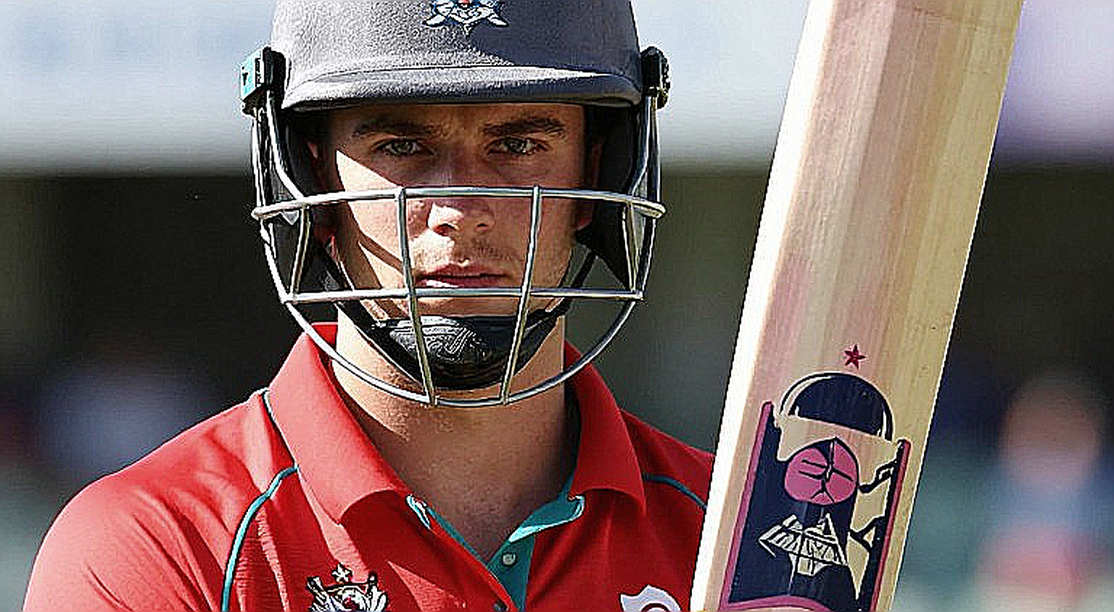
Knight and Harris star as Thunder make it two in two, beat Heat with 20 balls to spare
प्रश्न: WBBL में सिडनी थंडर ने ब्रिस्बेन हीट को कैसे हराया? उत्तर: ड्रमॉयन ओवल, सिडनी में सिडनी थंडर ने ब्रिस्बेन हीट को छह विकेट से हराया। हीट ने पहले बल्लेबाजी करते हुए 5 विकेट पर 178 रन बनाए, जिसमें ग्रेस हैरिस के 58 और जॉर्जिया रेडमेन के 57 रन शामिल रहे। जवाब में थंडर ने 16.4 ओवर में 4 विकेट पर 180 रन बनाकर लक्ष्य 20 गेंद शेष रहते हासिल कर लिया। फोएबी लिचफील्ड ने 19 गेंदों पर 41 रन (छह चौके, एक छक्का) बनाकर पावरप्ले में आधार रखा, हीदर नाइट ने 27 गेंदों पर अर्धशतक पूरा करते हुए 54 रन नाबाद बनाए और लॉरा हैरिस ने 16 गेंदों पर 35 रन की पारी खेली। गेंदबाज़ी में जॉर्जिया वोल ने 2/25 और बैसिंगथवेट ने 2/34 लिए। यह थंडर की लगातार दूसरी जीत है। प्रमुख बिंदु: हीट का 178 का स्कोर बल्लेबाजी अनुकूल पिच पर कम रहा, ग्रेस हैरिस और रेडमेन के दो अर्धशतकों के बावजूद मध्यक्रम का योगदान सीमित रहा। सटीकता नोट: यह एकल मैच का विश्लेषण है; तालिका स्थिति, मौसम, टॉस का प्रभाव और आगे का फॉर्म इस रिपोर्ट से निर्धारित नहीं किया जा सकता।
Sydney Thunder beat Brisbane Heat by six wickets to register their second successive win of the Women's Big Bash League (WBBL). At Drummoyne Oval in Sydney, Thunder chased down a target of 179 in 16.4 overs for the loss of four wickets, with 20 balls to spare. Heather Knight made 54 not out, Laura Harris struck 35 off 16 balls, and Phoebe Litchfield's 41 off 19 laid the platform for the chase.
Brief scores: Brisbane Heat 178/5 (Grace Harris 58, Georgia Redmayne 57, Georgia Voll 2/25, Bassingthwaighte 2/34). Sydney Thunder 180/4 in 16.4 overs (Heather Knight 54 not out, Phoebe Litchfield 41, Learoyd 37, Laura Harris 35).
The foundation was laid in the Powerplay
The most important feature of this chase was that Thunder never appeared to be under scoreboard pressure. The target was 179, which demanded roughly 8.9 runs an over, and Thunder eventually scored at 10.8 per over. The credit for this goes first to Litchfield, who made 41 off 19 balls with six fours and a six. Nearly 73 per cent of her runs came from boundaries alone. She pushed Heat's bowlers onto the back foot during the Powerplay itself and reduced the burden of playing with restraint. There was an interesting irony in the fact that Litchfield was dismissed off the last ball of the Powerplay, meaning she departed at the final moment of the very phase she had dominated.
Knight's calm and Harris's burst
After Litchfield's exit, the role that remained was to hold the tempo, and Heather Knight did exactly that. She reached her fifty off 27 balls, a strike rate of roughly 185 to the milestone, and then remained unbeaten until the end to shepherd the innings. Her 63-run stand with Learoyd gave the chase stability, with Learoyd contributing 37 at the other end. It is worth noting that Knight's overall strike rate for the innings would have settled lower, as she reduced risk and controlled tempo after reaching fifty. Her real value in this match therefore lay not in raw strike rate but in average and composure.
Then came Laura Harris, whose 35 off 16 balls made the contest thoroughly comfortable. Her innings was a flurry of fours and sixes, and her arrival immediately increased the pressure on Heat. This was a three-role performance: Litchfield front-loaded, Knight controlled the tempo, and Harris finished. Cricket discussion often collapses into a single-hero narrative, but this win was built on the precise execution of three distinct roles.
Heat's innings: two fifties but still short
Heat chose to bat after winning the toss and began slowly, building caution before trying to accelerate. Grace Harris completed her fifty off 32 balls on the way to 58, and Georgia Redmayne made 57. Both reached fifty, both produced a host of boundaries, yet the side could not move past 178 for 5. Voll broke the stand between Harris and Bhatia, and from that point Heat's momentum stalled. Apart from those two, only Prendergast managed a brisk 28. The numbers point clearly to a thin scoring base for Heat, with no substantial contribution after the top three.
There is no explicit information in the match report about ground conditions, but totals of 178 and 180 suggest a surface friendly to batting. On such a pitch, 178 for 5 would be considered below par, especially with two fifties in the innings. Thunder limited Heat's scoring in the final couple of overs, and that proved to be the decisive difference.
Collective bowling effort
Thunder's bowling was notable for how the wickets were shared. Georgia Voll took 2 for 25 and Bassingthwaighte 2 for 34. For Voll this match mattered on two counts: with the ball she produced the spell that changed the direction of the game, while with the bat she was dismissed cheaply. Her bowling contribution tends to be under-reported in media coverage, even though it was her delivery that broke the Harris-Bhatia partnership.
Thunder's three-gear top order
This win makes the shape of Thunder's batting structure clear: an aggressive Litchfield in the Powerplay, a tempo-controlling Knight through the middle, and a hard-hitting Harris at the death. For chasing, this is a balanced framework because each phase has a defined responsibility. The use of the overseas quota also appears to reinforce that structure, with experienced players such as England's Knight and South Africa's de Klerk combining with a young Australian core to create the balance any franchise needs. But there is a risk here too: if either Knight or de Klerk is unavailable, the team's balance could wobble, because no comparable domestic middle-order anchor appears to be in development.
Heat's real concern
Attention goes less often to the fact that the biggest story of this match is not Thunder's excellent win but Heat's structural weakness. When your two top batters make 58 and 57 and the team still loses, the problem is obvious: the absence of a reliable power-hitter at five or six. Heat's slow-start-then-accelerate template is costing them on good pitches, and this is a line-up construction issue rather than a question of individual ability.
The lesson of a small sample
Two wins from two is a positive marker, but it should not be treated as proof of title credentials. This is an analysis of a single match, and one innings does not establish long-term form for a player or a team. Litchfield's boundary dependence, with about 73 per cent of her runs coming in fours and sixes, is a high-variance, high-ceiling T20 profile. It is devastating in a small chase, but it could be called streaky across a season. Similarly, Harris's 16-ball innings suggests she is being used as a specialist death hitter; her value is situation-dependent, and her record when batting first is less proven.
The league ecosystem
The XI on display in this single fixture makes WBBL's global reach plain: England's Knight, South Africa's de Klerk, Ireland's Prendergast and India's Bhatia. Women's franchise cricket has become a two-pole market, with the WBBL as the established league and India's WPL as the higher-paying newcomer. A WBBL XI packed with overseas stars therefore also reflects the tension of talent mobility. There is also a structural risk that never goes away: these players appear under board-issued NOCs, and any collision with an international window could hit a franchise hard mid-season. That point comes from general industry patterns rather than the match report, so treat it as directional.
How the rules shaped the game
The Powerplay rule shaped the entire phase narrative of this match. Litchfield's dismissal came on the final ball of the Powerplay, which is a rule-bound inflection point, not a coincidence. The overseas quota also quietly shapes team balance: whether a franchise spends its foreign slots on an anchor batter or a strike bowler is a squad-design decision. The report contains no mention of DRS or umpiring controversy, and the provision of both brief scores keeps the account transparent. In other words, there is no integrity or governance red flag in this match.
Is the comfortable win narrative accurate?
Yes, the numbers support it. Completing a chase of 179 with 20 balls to spare is objectively dominant. The language of the report, with phrases such as breezed past, comfortable and shut the door, is mildly celebratory, but it does not depart from the underlying facts. At the same time, the risk of star-centred framing remains: attributing the whole win to Knight and Harris omits Litchfield's Powerplay platform and Voll's bowling.
The road ahead
For Thunder, the next test will be how long they can sustain this early rhythm. A dark-horse narrative can build quickly on two wins, but on a single match's evidence it would outrun the facts. For Heat, the direction of improvement is clear: add another reliable power-hitter to the middle order so that the burden does not rest entirely on Grace Harris and Redmayne. Overall, this was a clean, fact-based win in which there was no toss or rain alibi, only the direct execution of a plan across all three phases.