
Australia's Format Split Before the Ashes: Six Test Players Rested From T20Is, Available for ODIs
ऑस्ट्रेलिया ने इंग्लैंड के खिलाफ सीमित ओवरों की श्रृंखला के लिए फॉर्मेट-स्प्लिट नीति अपनाई है। चयन समिति के अध्यक्ष जॉर्ज बेली के अनुसार ट्रैविस हेड, मैथ्यू रेनशॉ, कैमरन ग्रीन, एलेक्स कैरी, जोश इंग्लिस और कूपर कॉनोली वनडे खेलेंगे, लेकिन टी20आई चरण से बाहर रहेंगे। यह बहिष्कार नहीं, घरेलू एशेज से पहले कार्यभार प्रबंधन है। वनडे में लियाम स्कॉट की वापसी और महली बियर्डमैन का चयन हुआ, जबकि टी20आई में लाची शॉ, सैम हार्पर, जेक फ्रेज़र-मैकगर्क और मिच ओवेन को मौका मिला। बेली ने कहा कि ऑस्ट्रेलिया ए टीम का प्रदर्शन चयन का स्पष्ट रास्ता है। घोषणा में कप्तान, पूरी टीम सूची, मैच की तारीखें, स्थान और इंग्लैंड की टीम शामिल नहीं थी।" } ```
Australia's National Selection Panel has made a decision for the upcoming white-ball series against England that is bigger than any single player. It is a public statement about the Australian cricket calendar, about priorities, and about workload management immediately before a home Ashes. Selection chair George Bailey confirmed that six Test-contracted players — Travis Head, Matthew Renshaw, Cameron Green, Alex Carey, Josh Inglis and Cooper Connolly — will sit out the T20I leg of the series but remain available for the ODI leg.
That single sentence carries three separate messages. First, none of these six has been dropped; they are being played in one format and rested in another. Second, the Australian system is not treating the two white-ball formats as equals in this window. Third, the centre of gravity for the whole exercise is the Ashes, not the result of the series against England.
Readers who saw only the headline could be forgiven for thinking Australia is touring without its senior names. It is not. This report separates the framing from the facts, and also records what the announcement did not say.
'Out' is the wrong word
In cricket, word choice is rarely innocent. 'Key players out' sounds urgent, but it is incomplete at the level of fact. The six are not out of the series; they are out of the T20I leg and available for the ODIs. The selectors' message is that 50-over cricket outranks 20-over cricket in this particular window.
That message carries a logical precondition that cannot be ignored. Bailey's statement assumes the ODI leg precedes the T20I leg, because the players step away from the T20I portion after featuring in the ODIs. If the calendar ran the other way, the entire workload rationale would collapse. The condition is not spelled out in the announcement, but it is the spine of the policy, and readers should know it.
A second nuance: the claim that this 'leaves plenty of new faces in contention' is not a selector's statement. It is the author's connective tissue, and it holds only for the T20I leg. Treating an inference as a fact is exactly the kind of slippage that misleads readers.
The six names, one by one
Travis Head is Australia's most aggressive top-order batter and plays all three formats. His role in a five-match Test series is central, and keeping him fresh for the red ball is an obvious priority. His absence from the T20I leg is the least surprising call on the list.
Matthew Renshaw belongs to the Test batting pool. His presence on this list shows the panel prioritising red-ball preparation over white-ball experience, even at the cost of an experienced T20I option.
Cameron Green is the most significant name here. A fast-bowling all-rounder is the most complicated equation any team management faces, because he is counted as both batter and bowler and the two roles compound on the body. Resting him from T20Is before an Ashes is not a technical decision; it is a physical one.
Alex Carey is the Test wicketkeeper-batter. Wicketkeeping is a load in any format and a heavier one across a long Test series. His absence from the T20I leg is tied directly to Ashes preparation.
Josh Inglis is the most interesting case. He is a white-ball regular and also part of the Test set-up. Resting such a player in one format while playing him in another is not an easy call, but it is precisely the call that reveals where the priority sits.
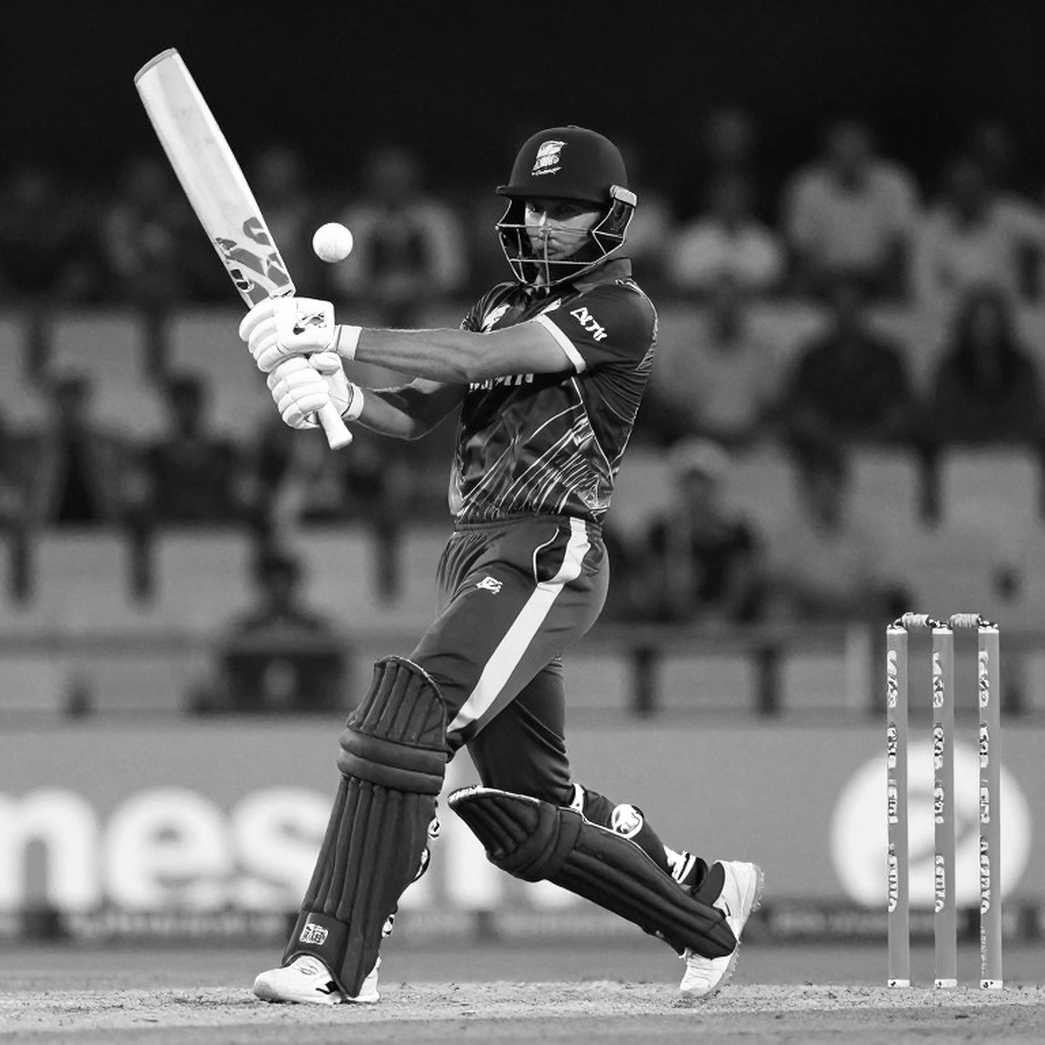
Cooper Connolly is the youngest name. His inclusion on this list suggests the panel sees him as a long-term investment whose load is being deliberately limited right now.
None of the six was left out on form. This list is a document about the calendar, not about performance.
Bailey's rationale, and its limits
George Bailey is the only attributable voice in this announcement. His explanation is simple: these players feature in the ODIs and then step out of the T20I leg. It is a management-based justification, not a performance-based one.
A careful reader should pause here. Bailey chairs the panel that made these decisions, so his job is to justify them. His statement is a primary source but not neutral evidence; it is institutional-interest commentary and should be read that way.
There is no second voice in the announcement. No player, no coach, no opposing team, no independent critic. The tone is neutral — the author adds no adjectives of their own — but the structure is not balanced. 'Neutral tone, single source' is a more accurate label than 'objective'.
Inclusions and returns
Where six names went out, six came in, and that is the less discussed half of the announcement.
Liam Scott returns to the ODI squad. The word 'return' matters: it signals continuity rather than discovery. Mahli Beardman is picked in both ODI and T20I squads. For a young fast bowler, being chosen in both white-ball formats at once is a strong signal that the management considers him immediately usable rather than merely promising.
Lachie Shaw is picked for the T20Is only. The selection announces itself as a development pick: experience in the shorter format, without the pressure of the longer one. Sam Harper is rewarded for domestic form. That route — domestic cricket straight into the national T20I squad — matters because it opens a window for players who are not franchise headline acts.

Jake Fraser-McGurk and Mitch Owen return to the T20I squad. For both, 'return' is the operative word, and it leads to the most consequential policy point in the whole announcement.
From Australia A to Australia
The most concrete evidence of selection mechanism here is Beardman. Bailey said explicitly that Beardman's performances for Australia A were impressive and that this earned him dual-format selection.
That sounds minor. It is not. It means Australia A is a genuine entry point rather than decoration. A young bowler performs at A level and moves straight into the national set-up. Selection looks transparent when the pathway is visible.
There is a weakness in the reasoning. 'Impressive performance' is an evaluation, not a fact. Without his Australia A averages, economy and wicket count, the sentence is incomplete. Impressive by how much? Against whom? In what conditions? Until those numbers are produced, a selector's praise should be read as praise, not as proof.
The same applies to Sam Harper. Bailey said Harper has performed strongly in domestic cricket. That is a checkable claim — domestic season numbers are public. But the numbers are not in the announcement, so the claim floats.
The weight of domestic form
Australian selection has long looked at domestic performance through the lens of role rather than raw numbers. Harper's selection is an example: his domestic record as a wicketkeeper-batter makes him a T20I option even when he is not a marquee name.
Shaw is the opposite case. His selection rests on potential more than form. That distinction matters. One selection says 'this player is ready now'; the other says 'this player may be ready later'. Putting them in the same category misreads selection policy.
Those two categories should be named explicitly. Without that naming, public understanding of selection will stay cloudy. Bailey's announcement does not name them, and that is its biggest communication gap.
Fraser-McGurk and Owen as policy evidence
The most important line in the announcement arrives near the end, almost as a postscript. Bailey said players who had an opportunity have continued working on their game from what they learned.
That is a selection philosophy compressed into a sentence. It means the panel is not only counting runs and wickets; it is watching how a player responds to missing out. It is a policy that rewards the response to rejection.
That is why Fraser-McGurk's and Owen's returns should be read as policy evidence rather than form picks. Their selection shows the panel does not simply discard its earlier calls; it re-tests a player and reopens the door if the answer is satisfactory.
This is healthy, because it tells players that a bad run does not end a career. It also carries risk: without a measurable standard for 'learning', the same policy can slide into familiarity and favouritism. Bailey offered no standard, and that is the biggest open question in his statement.
The Ashes priority is a contestable choice
If the list of six is read as 'the contracted core is being preserved for the Ashes', an uncomfortable question follows, and the announcement does not answer it.
Is T20I cricket genuinely less important than ODI cricket in this window? That is not a principle; it is a choice, and choices can be criticised. If the T20I leg falls inside the selection window for a major tournament, calling it a 'development opportunity' understates the real stakes.
Second, managing workload for the Ashes is rational, but there were alternatives: playing some of the six in one T20I rather than none, or capping their ODI loads. The announcement does not explain why those options were rejected. A policy is evaluated against its alternatives; when the alternatives are missing, the evaluation is incomplete.
Third, it is not clear whether this is Ashes-specific management or standard format-splitting. If it is standard, framing it around the Ashes is misleading. If it is Ashes-specific, that should have been said. The difference matters a great deal to readers.
Selector rhetoric that cannot be measured
Bailey's language deserves separate attention, because it shows the standard style of selection discourse. 'Further demonstrate', 'develop into an all-format player', 'point of difference', 'a great place with his game' — all positive, none falsifiable. That is the problem.
There is no performance benchmark, no role specification, no timeline for any player. What does 'a great place' mean? By what measure? Would the assessment change if performance dipped over the next six months? The statement offers no answers.
This is an observation rather than an accusation, and it applies to selection systems everywhere, not just Australia's. When selectors speak this way, the statement does less analytical work and more persuasion work. Readers should understand that line between information and communication.
What the announcement does not contain
The most important part for any consumer is also the thinnest here. There is no full squad list. No captain is named. No squad size is given. A captain's name missing from an official squad announcement is implausible, and that asymmetry is the strongest signal that the material available is a fragment or a commentary on the announcement rather than the announcement itself.
There is no mention of the frontline fast-bowling trio, or the Test captain. Nothing about whether they are playing, resting or injured. There is no reference to England's squad, which is a natural comparative element in any bilateral series. There are no dates, venues or series length — without which no workload claim can be checked. And there is no clarity on whether any of the six is unavailable for reasons beyond management: injury, personal circumstances, or franchise commitments. If someone is injured and being described as 'rested', that is a transparency issue.
Sources, method and transparency
Readers should know the tier of the material. Bailey's direct quote is high reliability: named, on record, public. Assume accurate transcription. The squad-composition facts rest on the official announcement relayed by the sport's global governing body. Those are reliable on what was named, not independent confirmation that the squad is final — late withdrawals and injury replacements are routine.
All of Bailey's evaluations are primary-source opinion with an institutional interest attached. They are not neutral evidence. 'Oldest rival' is stock framing, unsourced: harmless but unfalsifiable. In short, tier two for facts, tier one for the direct quote, tier three for evaluative content. That level of transparency lets readers decide how much weight to give each part.
What to watch next
If you want to follow this as a process rather than an event, a few signals will be decisive. First, the full list and the captain's name — the biggest hole. Second, the order and dates of the ODI and T20I legs, because the entire workload argument rests on it. Third, Beardman's Australia A numbers and Harper's domestic numbers, which will show whether the selector's praise is evidence-backed or purely rhetorical.
Fourth, whether the T20I leg sits inside a major tournament selection window. If it does, the 'development opportunity' frame is half a truth, and that becomes the most serious critique of this announcement. Fifth, a cross-check against Cricket Australia's own release, to confirm the governing body added nothing and omitted nothing.
Finally, the single most important item: a date. No publication date is available in the material, and without one the announcement cannot be located relative to the tour or the Ashes. It looks like a technical gap; in fact it is the largest reporting hole.
What can be read clearly from the announcement is this: Australia has put Test cricket first in this window, ODI cricket second and T20I cricket third. That is a legitimate strategy. But it is also an argument, and a good report should have that argument rather than quietly report the outcome.