
Gambhir Draws a Clear Line on the Sooryavanshi Debate: 'My Job Is Not to Make Everyone Happy'
मुख्य घटना: न्यूज़ीलैंड दौरे पर टी20 सीरीज़ के अंतिम मुकाबले से पहले भारतीय कोच गौतम गंभीर ने वैभव सूर्यवंशी को डेब्यू न दिए जाने पर कहा कि उनका काम सबको खुश करना नहीं है। मुख्य बयान: गंभीर के अनुसार चयन लोकप्रियता से नहीं, टीम की ज़रूरत से तय होता है; जिन खिलाड़ियों ने लंबे समय तक असाधारण प्रदर्शन किया है, वे लंबी रस्सी के हकदार हैं। टीम की स्थिति: भारत पहले तीन मैच जीतकर सीरीज़ पहले ही जीत चुका है, इसलिए चौथा और पांचवां मुकाबला नतीजे के लिहाज़ से महत्वहीन है। चयन के पक्ष में व्यावहारिक तर्क: पिछला मुकाबला 17 तारीख को खत्म, 18 तारीख को उड़ान, और केवल एक अभ्यास सत्र—किशोर खिलाड़ी के लिए न्यूज़ीलैंड की सीम और उछाल भरी पिचों पर पहला अनुभव जोखिम भरा। विरोधी तर्क: सूर्यवंशी के पास कोई अंतरराष्ट्रीय आंकड़ा नहीं; सैमसन और अभिषेक शर्मा विश्व कप विजेता जोड़ी हैं, जिन्हें तोड़ने की कीमत पूरे संतुलन पर पड़ेगी। अगला अवसर: सूर्यवंशी के डेब्यू की सबसे संभावित खिड़की घरेलू द्विपक्षीय सीरीज़ या कम दबाव वाला विदेशी दौरा है। सत्यापन स्थिति: सूर्यवंशी के घरेलू/लीग आंकड़े, स्कोरकार्ड, मैदान और टीम की अंदरूनी चयन प्राथमिकताएं सार्वजनिक रूप से सत्यापित नहीं हैं।
India head coach Gautam Gambhir has answered the growing debate over Vaibhav Sooryavanshi's continued absence from the XI with a blunt statement of principle: his job is not to make everyone happy. Speaking ahead of the fifth and final T20I of the five-match series in New Zealand, Gambhir made clear that selection is driven neither by popularity nor by external pressure, but by the team's requirements and by what players have delivered over a sustained period. India had already sealed the series by winning the first three matches, which rendered the remaining fixtures dead rubbers in terms of outcome—and that is precisely why the demand for an uncapped teenage batter to be given a cap had gathered momentum.
The right decision versus the popular decision
Gambhir's remarks separated two different yardsticks for selection—the decision that looks correct from the outside, and the decision that the team management believes is correct. The stance is not an attack on any individual player; it is a defence of the autonomy of the selection process. The coach has moved the question out of the realm of on-field cricket and into the realm of team management, and that is the tone of his entire statement.
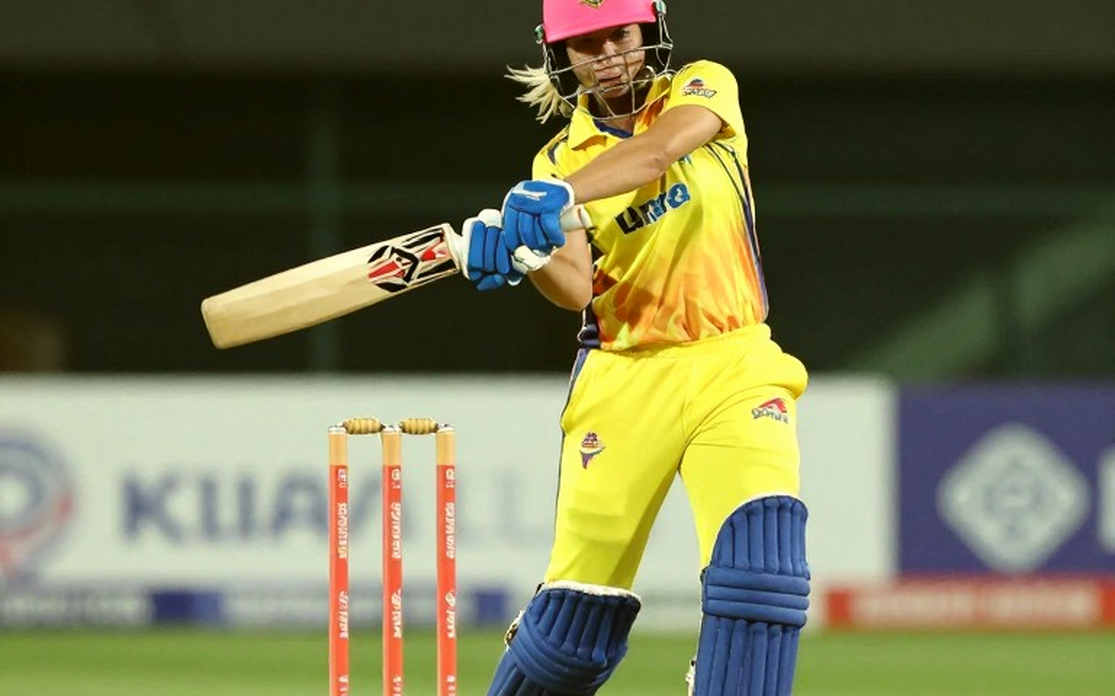
Sooryavanshi has no international evidence base
The weakest link in the debate is that there is no international data attached to Sooryavanshi at all. He has not played a single T20I. However forceful the conversation around his talent may be, it is equally true that records built in domestic cricket, age-group cricket and franchise leagues do not always translate at international level at the same rate. For the broad cohort of batters who shine in their teens, the hardest challenge is not talent but proving consistency in unfamiliar conditions. To assert that he 'must have been given a chance' is therefore a projection, not an established fact. It is also worth noting that no injury or withdrawal is referenced in the available reporting, which suggests this is a pure selection call rather than a fitness or workload-protocol restriction.
Samson and Abhishek: the case for a settled pairing
On the other side stands the pairing that has been opening for India—Sanju Samson and Abhishek Sharma. Both were part of the team's T20 World Cup-winning campaign and both played significant roles in it. In T20 cricket an opening partnership is not merely a matter of two batters; it determines powerplay efficiency and defines the role of the entire middle order. Breaking a functioning pair carries a cost that is paid not in one innings but across the whole balance of the side. Abhishek's strike rate in recent windows reflects an aggressive brief, while Samson's profile has combined a high ceiling with variable consistency—an asymmetric payoff the management appears willing to accept, because in T20 a single match-winning innings is worth more than an average.
The 'longer rope' doctrine
Gambhir's central argument is that players who have performed extraordinarily over a longer period deserve a longer rope. On the numbers, the argument is not weak. An opener in T20 internationals gets a limited number of innings in a year, and at that sample size a run of low scores is often noise rather than signal. Backing proven performers is part of rational selection. But the doctrine carries a condition: it must be applied symmetrically. If incumbent form is never actually tested against a stated threshold, the policy stops being meritocratic and becomes tenure-based—and that is the concern at the root of this entire debate.
Series over on the 17th, flight on the 18th, one practice session
There is also a hard practical argument in favour of the selection that is being underweighted. According to Gambhir, the team's previous fixture ended on the 17th, the side flew on the 18th, and there was exactly one practice session available. Throwing a teenager who has never faced a single international delivery into that scenario is a risk. This is not merely conservatism; it is a performance rationale, because a lack of preparation directly affects outcomes for an inexperienced player.
New Zealand conditions are not forgiving
Gambhir himself acknowledged that New Zealand are dangerous at home and that many of the squad are visiting for the first time. New Zealand pitches are associated with seam movement, extra bounce and small, high-scoring grounds, where a new ball tests technique severely. For a teenage batter, that is not an environment for acclimatisation but one of technical risk. Delaying his debut may therefore be a strategic decision—ensuring his first experience does not come in conditions where failure would leave a long shadow. Cricket history offers plenty of examples of gifted young players whose confidence was affected by being blooded in the wrong environment.
The problem is abundance, not scarcity
The real story of this Indian side is that its crisis is one of surplus, not shortage. When every top-order slot is held by a World Cup winner and the coach speaks of 'plenty of options' on the bench, controversy is inevitable. This is structurally different from selection crises in mid-tier sides—there the spots are empty; here the competition is so intense that talent itself queues up. India's batting depth is demonstrated precisely by the fact that a teenager this heavily discussed cannot force his way into the XI.
A 3-0 lead: a signal, but a small sample
Winning a series by taking the first three matches is a useful signal of adaptability in overseas conditions, but it rests on a limited sample. The available information includes no margins, scorecards or toss details, so the result cannot be stress-tested for luck factors. Even so, winning away is a genuine indicator of the ceiling of this Indian T20I side—particularly because India's identity has historically been strong at home and more fragile abroad.
The pressure is not only from fans
The debate should not be read purely as a cricket argument. The conversation that builds around a high-profile young player is valuable to audience engagement and to the broadcast business. In other words, a player whose international record does not yet exist can generate a market pull that runs ahead of his on-field output. The fact that the coach is being asked when he will play him is itself a signal of that pressure. The hardest task for the management here is to keep commercial noise and sporting logic in separate compartments.
The question of transparency
A broader issue emerges from this episode: transparency in selection. For the coach to say that the right decision and the popular decision are different is, by implication, to concede that internal and external evaluations can diverge. But in modern cricket, where every call falls inside the frame of cameras and data, it becomes necessary for the management to state its criteria clearly—even if the decisions themselves will not please everyone.
The road ahead
The most realistic window for Sooryavanshi now is a home bilateral series or a lower-stakes away tour, where conditions reduce the technical risk of early exposure. If the fifth T20I also passes without a cap, the operative principle will be that caps are earned through accumulated track record rather than squad membership. That policy will be tested again in the next home series—and on that occasion, the right decision and the popular decision may well coincide.
Conclusion
Gambhir's statement is not a technical one; it is a managerial one. It contains cricket logic and it contains cricket's limits. On one hand, pitching a teenager into New Zealand's bouncing pitches with a single practice session behind him would have been a genuine risk. On the other, if the 'longer rope' doctrine is applied only to some players, the claim of meritocracy weakens. For now, the team management has chosen the first path—and made it clear that making everyone happy is not its priority.
(Note: This report is based on the team management's public remarks. Sooryavanshi's domestic and league numbers, the career data of Samson and Abhishek, the internal priorities of the selection group, and the series scorecards and venue details are not publicly verified.)