
From Cement to Electric: Thatta Cement's Entry into Pakistan's Mass-Market EV Segment via Chinese CBU Imports — A Complete Analysis
मुख्य प्रश्न: थट्टा सीमेंट ने क्या घोषणा की? — पाकिस्तान स्टॉक एक्सचेंज में दायर खुलासे के अनुसार थट्टा सीमेंट लिमिटेड की नई सहायक कंपनी चीन से पूरी तरह असेंबल (CBU) इलेक्ट्रिक वाहन आयात करके पाकिस्तान के मास-मार्केट खंड में बेचेगी; बोर्ड ने मंजूरी दे दी है। मुख्य प्रश्न: निवेश की राशि कितनी है? — कंपनी ने निवेश राशि का खुलासा नहीं किया। इस कारण किसी भी प्रकार का ROI, मूल्यांकन या प्रतिफल-अनुमान संभव नहीं है; यह इस घोषणा की सबसे बड़ी पारदर्शिता-खाई है। मुख्य प्रश्न: रणनीति क्या है? — आयात-पहले, एसेट-लाइट प्रवेश। प्रीमियम और विशिष्ट खंड से बचते हुए कम आपूर्ति वाले मास-मार्केट को लक्षित करना, और मांग सिद्ध होने पर भविष्य में स्थानीय असेंबली पर विचार करना। मुख्य प्रश्न: मुख्य जोखिम क्या हैं? — तीन प्रमुख जोखिम: सरकारी EV प्रोत्साहन और कर-राहत की निरंतरता पर निर्भरता; चीनी आयात पर निर्भरता (विनिमय दर, आयात शुल्क, आपूर्ति-श्रृंखला); और सीमेंट से EV रिटेल तक की क्षमता-खाई। समग्र जोखिम रेटिंग मध्यम। मुख्य प्रश्न: क्या यह खेल समाचार है? — नहीं। सामग्री को क्रिकेट-एशिया श्रेणी में वर्गीकृत किया गया था, लेकिन इसमें क्रिकेट से जुड़ा कोई तत्व नहीं है। यह एक कॉर्पोरेट और बाजार-संबंधी समाचार है, और यह स्रोत-स्तरीय वर्गीकरण त्रुटि है जिसे ठीक किया जाना चाहिए। मुख्य प्रश्न: आगे क्या देखा जाए? — निवेश राशि का खुलासा, स्थानीय असेंबली की प्रतिबद्धता, पाकिस्तान की EV नीति की स्थिरता, आयात शुल्क और विनिमय दर की गतिविधि, तथा प्रतिस्पर्धियों की प्रतिक्रिया।
At a Glance
Thatta Cement Limited, a Pakistani cement manufacturer, has filed a formal disclosure with the Pakistan Stock Exchange (PSX) announcing that its newly formed subsidiary will enter the electric vehicle business. The plan is to import Completely Built-Up (CBU) electric vehicles from China and target Pakistan's underserved mass-market segment. The announcement followed Board of Directors approval and was made public on a Thursday.
The single most important framing point is this: the article is not sports content. It carries a cricket-Asia domain label, but none of the thirteen available information points references any team, player, match, format, league, board or governance matter. Applying a cricket analytical framework here would produce fabricated conclusions, so no cricket analysis is offered. Instead, the article is analysed as what it actually is — a corporate and market news item.
Background: Why a Cement Company Is Moving into EVs
Cement is a structurally cyclical business, tied directly to construction activity, public infrastructure spending and real estate cycles. When construction accelerates, cement demand rises; when interest rates climb, government capital expenditure slows or input inflation bites, earnings compress quickly. This cyclicality is a defining feature of the sector, not a temporary problem.
Diversification into a sector with a different growth narrative is a standard corporate response. Electric vehicles fit that description. Pakistan's EV market is still very small, but both industry and policymakers treat its growth potential as significant. For the company, the appeal is twofold: broadening the revenue base and offering investors a growth story not bound to the cement cycle.
A caution is essential, however. Making cement and retailing electric cars require entirely different capabilities. Cement competition turns on cost, energy efficiency, mining rights, logistics and wholesale distribution. EV retail competition turns on brand, customer experience, distribution reach, after-sales service, charging ecosystem, warranty management and the pace of technical updates. This is not merely a capital allocation question; it is an organisational capability question, and no independent evidence exists on whether the company possesses that capability.
The PSX Filing: What Was Said and What Was Withheld
The disclosure is company-sourced, published through a regulatory channel. It is not the product of independent journalism, market research or official statistics — an important distinction, because corporate filings naturally reflect the company's own perspective and priorities.
What was disclosed is coherent: board approval, a new subsidiary, a CBU import route from China, a mass-market target, avoidance of the premium and niche segments, and an open door to future local assembly. That is a logical, sequenced framework.
What was withheld matters just as much. Most significantly, no investment amount was disclosed. Nor were initial import volumes, the identity of Chinese suppliers, vehicle price bands, distribution and service plans, or timelines. Without these, no valuation, return estimate or ROI analysis can be validly constructed.
One plausible reading of this selective disclosure is that the transaction remains at an early stage — possibly a memorandum of understanding or preliminary agreement — which would explain the absence of hard figures. That reading is offered with low-to-medium confidence, since the text contains no direct evidence. Investors and analysts should nonetheless treat the omission as an active risk signal rather than a neutral curiosity.
Pakistan's EV Market: Claims Versus Reality
The filing describes Pakistan's EV market as growing rapidly, citing rising consumer interest, new brand entries, and government incentives and tax concessions. The description is broadly consistent with regional reality: recent years have seen more electric options in both two-wheel and four-wheel segments, and duty and tax relief has improved affordability at the margin.
But three serious limitations apply. First, the claim is the company's own and comes without independent quantification — no sales volumes, no segment breakdown, no growth rates. Second, Pakistan's EV market is genuinely a newborn ecosystem: charging infrastructure is sparse, grid reliability is uneven, after-sales networks are thin, and consumer confidence is still forming. Third, and decisively, a large share of market growth depends on the durability of government incentives.
The company itself used a newborn-baby analogy to describe the market. The analogy is apt, but it contains an inherent tension: a newborn is extremely fragile. One policy shock, one currency swing, one duty change can materially alter the growth trajectory. A company entering a market it describes as newborn should place that sensitivity at the top of its risk management.
The assessment here is therefore that the rapid-growth claim is probably directionally correct, but its pace and durability are likely presented somewhat more favourably than the evidence supports. That is normal corporate communication and should be read at a discount.
CBU, CKD and SKD: The Technical Distinction and Its Strategic Meaning
CBU means Completely Built-Up: a fully assembled vehicle imported ready to sell. CKD means Completely Knocked Down: a kit of fully separated parts assembled locally. SKD means Semi Knocked Down: partially assembled components finished locally.
The economics differ sharply. CBU carries the highest per-unit import cost because duty applies to the whole vehicle and freight is higher, but it requires almost no local setup capital — no factory, no assembly line, no large workforce. CKD and SKD reduce per-unit cost and enable local value addition, but demand significant capital expenditure, technology transfer, skilled labour and long-term commitment.
Thatta Cement has chosen the CBU route. That is a clear and coherent signal: establish a foothold, test real demand, and only then consider the heavier local-assembly decision. This is an asset-light entry, and from a risk standpoint the sequencing is prudent — learn first, invest later.
The CBU route has its own weaknesses, which deserve explicit statement. First, higher per-unit cost limits the room for price competition; if rivals assemble locally or use lower-duty channels, CBU-based pricing can become uncompetitive. Second, import duties, exchange rates and global freight are all external variables outside the company's control. Third, full supply-chain dependence on Chinese manufacturers constrains the company's autonomy over model selection, pricing and availability.
The Business Model: Sequencing, Logic and the Underlying Bet
The model can be read in four stages: import CBU vehicles from China; sell into the mass market, particularly urban and semi-urban areas with thin supply; build brand, distribution and service networks; and consider local assembly once demand is proven. The sequence is logical and contains no obvious flaw.
Its strongest feature is that it defers capital risk. For a cement company, building an EV factory would be an enormous gamble — no vehicle manufacturing experience, no supply chain, no brand recognition. Import-first lets it learn with limited capital, which is especially appropriate when market size is uncertain.
Its weakest feature is that barriers to entry are very low. If importing CBU vehicles and selling them is easy, it is easy for any trader. The company therefore holds no structural competitive advantage — no cost advantage, no technology advantage, no distribution advantage. Early gains can come only from first-mover status, and only if distribution and service networks are built quickly.
There is a further, less-discussed dimension. Entering EV retail means creating an entirely new revenue stream with a different margin structure. Cement margins rest on wholesale volumes, long contracts and capital-intensive production. EV retail margins rest on per-unit sales, after-sales service, financing schemes and brand value. It is a different commercial logic and will take time to learn.
The Mass-Market Strategy: Right Choice, Hard Execution
The company has stated clearly that it will target the mass market rather than premium or niche segments. Strategically this makes sense: Pakistan's premium EV market is small and already occupied by established international brands, while the mass market is less contested and offers greater demand potential.
But mass market means price-sensitive buyers. For such customers the decision rests not on emotion or brand but on total cost of ownership — purchase price, energy savings, maintenance, insurance, battery life and resale value. This is precisely where the CBU route may weaken, since a fully imported vehicle carries a higher sticker price.
Distribution is the second challenge. Mass market implies nationwide distribution and service coverage, which in a large and geographically diverse country like Pakistan is a very substantial investment. If the company confines itself to two or three major cities, the mass-market claim remains rhetorical. If it goes national, capital requirements will far exceed what a CBU-based plan implies.
After-sales service is the third challenge. Electric vehicles have fewer moving parts but make batteries, motors, controllers and software critical. Servicing them requires trained technicians and reliable spare-parts supply — capabilities a cement company does not inherently possess.
Charging is the fourth. Mass-market buyers often lack private parking or home-charging access, so the absence of public charging directly caps sales. This sits outside the company's control but directly affects its business.
The Undisclosed Investment Amount: The Largest Transparency Gap
Most notable about the entire announcement is that no investment figure was given. This is not a mere formality; it sets the limit of what can be analysed. Without the amount, it is impossible to say how material the venture is — a small experiment or a major strategic bet.
Equally, without the amount no return estimate is possible. Investing one billion rupees to target two billion in annual revenue is a very different picture from investing a hundred million to target five hundred million. The risk-to-reward ratio changes entirely.
There are three plausible explanations for the omission: the deal is at an early stage and the figure is not fixed; the company prefers confidentiality for competitive reasons; or it wishes to announce direction before committing to numbers. In all three cases the message to investors is the same — any firm economic conclusion is premature.
Against PSX disclosure norms, this creates moderate regulatory risk. The company has announced the venture but not its financial scale. That may be technically permissible, but from a transparency standpoint it is a gap: routine for a regulator, an active warning flag for an analyst.
Risk Matrix
Commercial — undisclosed investment size means returns cannot be quantified. Level: high. Likelihood: medium. Impact: medium. Mitigation: demand fuller disclosure; await follow-up filings.
Commercial — dependence on Chinese imports, including FX, duties and supply-chain shocks. Level: medium. Likelihood: medium. Impact: medium. Mitigation: phased move toward local assembly; supplier diversification.
Policy — reversal of government incentives or tax concessions. Level: medium. Likelihood: medium. Impact: high. Mitigation: pricing flexibility and segment diversification. This is the most sensitive point in the entire case, because the mass-market thesis rests on incentive continuity.
Regulatory — incomplete disclosure, specifically the withheld amount. Level: medium. Likelihood: medium. Impact: low-to-medium. Mitigation: regulatory scrutiny; follow-up filings.
Execution — capability gap in moving from cement to EV retail. Level: medium. Likelihood: medium. Impact: medium. Mitigation: partnerships, specialist hiring, training. This risk is routinely underestimated and is in practice the most common cause of failure.
Systemic — Pakistani macroeconomic and currency volatility. Level: medium. Likelihood: medium. Impact: high. Mitigation: FX hedging in pricing; flexibility in import planning.
Overall risk rating: medium. The move is strategically sensible — import-first, mass-market, low capital — but key financials are undisclosed and the thesis leans on government policy and self-reported demand. The primary risk is execution and policy dependency, not capital exposure.
Governance Assessment
The governing artefact is the PSX filing. The information is company-provided and not independently verified. That is not in itself an irregularity — corporate disclosures work this way — but analysts should treat it as a source bias.
Board approval matters because it shows an institutional decision rather than a management aspiration, which adds credibility. The creation of a new subsidiary is a conventional structure that helps ring-fence risk from the parent: if the EV venture fails, the impact can be contained.
However, the undisclosed investment amount is a genuine transparency shortfall. Selective disclosure — announcing the venture without the amount — often occurs when a deal is not yet final. That reading is recorded with low-to-medium confidence.
One further factor deserves attention. Pakistan-China economic ties have long been close, and Chinese suppliers play a normal role in industrial imports. But geopolitical shifts, trade-policy changes or fluctuations in bilateral arrangements could affect this supply chain. That risk is outside the company's control.
Supply Chain and the China–Pakistan Transmission Channel
The real transmission map runs as follows. Upstream sits the Chinese EV supply chain, where vehicle prices, battery costs and production capacity are set. Midstream sits Thatta Cement's subsidiary, handling imports, local marketing and distribution. Downstream sit Pakistani consumers, PSX investors and policymakers.
There are three transmission points. First, Chinese prices: if EV prices fall in China — a genuine trend given intense competition there — the economics of mass-market entry in Pakistan improve materially. This is the favourable scenario.
Second, import duties and exchange rates: depreciation of the Pakistani rupee directly raises the cost of imported vehicles and amplifies mass-market price sensitivity. This is the most immediate risk.
Third, policy transmission: the continuity of EV tax relief or duty exemptions directly affects final prices. A policy reversal would have an immediate and deep impact.
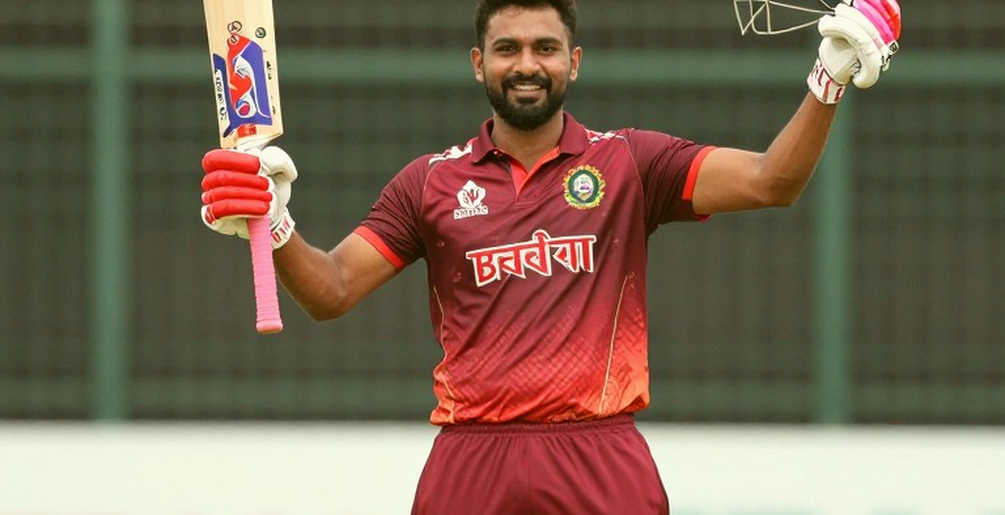
Notably, the cricket industry occupies no place anywhere in this transmission chain — no broadcast rights, no league, no South Asian cricket market, no betting-integrity monitoring. Anyone reading this material through a cricket lens will find only confusion.
Competitive Landscape
The company faces three categories of competitor. First, established automakers adding EV options alongside conventional vehicles, who already hold distribution networks, service centres and brand credibility. This will be the hardest competition.
Second, other importers and traders bringing in CBU vehicles from China, or capable of doing so. Competition here will turn mainly on price and availability, and given low entry barriers it will be intense.
Third, the two- and three-wheeler electric segment, which is growing quickly in Pakistan. This is not direct competition, but it competes for the mass-market buyer's budget and attention.
The company's potential advantage is affiliation with a large industrial group with access to capital and corporate credibility, which can help with financing and supplier agreements. That advantage only converts if distribution and service networks are built quickly.
Narrative, Sentiment and the Expectation Gap
The current narrative is that an industrial conglomerate is entering mass-market EVs via Chinese imports. It sits in the germination phase: announced, but with no concrete execution visible. Such narratives rise quickly and can cool quickly.
Narrative sustainability is medium. Fundamental support exists — the demand drivers are real — but they are self-reported. On sample size, this is a single announcement with no market data, so the expected duration is short-term unless followed by concrete investment or capex news.
The expectation gap appears in three dimensions. On company strategy, market expectation is a confident mass-market entry, while the objective assessment is import-first, phased and unproven — expectation is more optimistic than the evidence. On EV market growth, expectation is high while reality is incentive-dependent and newborn — possibly overstated. On financial commitment, the market may assume materiality while the amount is unknown.
On sentiment, the text shows no frenzy or panic signals. But corporate optimism — the tone of the filing and the newborn-baby analogy — likely overstates near-term traction. This is a normal corporate tendency and should be read at a discount. The timing of the announcement, a Thursday PSX filing, may have been chosen with investor sentiment in mind, though that inference is recorded with low confidence.
Three Scenarios
Worst case: incentives are withdrawn or trimmed, the rupee depreciates sharply, import costs rise and the mass-market price advantage disappears. The company must either raise prices, dampening demand, or accept margin compression. Because the investment amount is unknown, the severity cannot be assessed. Structurally, since capital commitment appears limited, exit costs would also be limited — a safety cushion.
Base case: gradual CBU roll-out, slow expansion, presence in a limited number of cities, service-network build-out, and consideration of local assembly within two to three years. In this scenario the venture is neither a major success nor a major failure; it becomes a learning platform. For investors it is a neutral signal.
Best case: incentives hold, Chinese prices fall, demand grows faster than expected, and the company makes a concrete commitment to local assembly. In this scenario the venture could become a new growth stream and reduce dependence on the cement cycle.
No quantitative probability can be assigned to these scenarios because the necessary financial and market data are unavailable. That limitation should be stated plainly.
What It Means for Investors and Industry
For investors the key question is whether this announcement is sufficient to change the company's valuation. The answer is clearly no. An announcement lacking investment amount, timeline, supplier identity and target metrics cannot support valuation. It is a signal, not an economic fact.
For the industry the announcement matters more. It shows that EV opportunity in Pakistan is no longer seen as the preserve of automotive companies; traditional industrial groups are beginning to treat it as a genuine option. That signals market maturation, even if the market itself is newborn.
For policymakers the message is that incentives are working — private capital is being attracted. But it also signals that policy continuity is the basis of that attraction. If policy proves unstable, that capital can retreat quickly.
Signals to Track
First, disclosure of the investment amount via follow-up PSX filings. Once the figure emerges, ROI and valuation assessment become possible. This is the most important trigger.
Second, a local-assembly commitment, observable through company announcements. Capex or plant news would signal conviction and scale-up.
Third, the stability of Pakistan's EV policy, observable through government and tax notices. Any incentive change moves mass-market economics directly.
Fourth, import duty and exchange-rate movements, observable through trade and central-bank data. A duty or rupee shock alters the pricing advantage.
Fifth, competitor response. If other importers or established automakers enter the same segment, first-mover advantage diminishes.
Terminology
CBU (Completely Built-Up): a fully assembled imported vehicle — higher per-unit import cost, lower local setup capital. CKD (Completely Knocked Down): a fully separated parts kit assembled locally. SKD (Semi Knocked Down): partially assembled components finished locally. PSX: Pakistan Stock Exchange, the venue of the disclosure. Mass-market segment: the affordable low-to-mid vehicle tier, as opposed to premium or niche. Asset-light: an entry strategy avoiding heavy capital assets, using imports or partnerships instead. Total cost of ownership: the combined sum of purchase price, energy costs, maintenance, insurance and resale value.
An Important Technical Note: Domain Misclassification
A significant technical problem attaches to this material and must be recorded. The source content was labelled cricket-Asia, yet it contains no cricket element whatsoever. None of the thirteen information points references any team, player, match, format, league, board or governance matter.
This means the label is almost certainly a source-level error — possibly a keyword-based misroute, or confusion between the Pakistan-China trade geography and cricket. A lower-probability explanation is that another cricket article's output was mismatched with this text.
The error is not trivial. If this material were used in a cricket-specific editorial or product context, it would mislead the user. It is therefore recommended that source-level classification be corrected before any downstream use. In this report, every cricket analytical dimension has been explicitly marked as insufficient information or domain mismatch, so that no fabricated conclusion is produced.
Key Takeaways
One — this is not cricket content but a corporate announcement of Thatta Cement's entry into Pakistan's mass-market EV segment via Chinese CBU imports.
Two — the strategy is prudent: import-first, asset-light, mass-market, avoiding premium, with local assembly left open.
Three — the largest transparency gap is the undisclosed investment amount, which rules out any economic valuation.
Four — the primary risk is execution and government-policy dependency, not capital exposure.
Five — the narrative is corporate-sourced and promotional in tone and should be read at a discount.
Six — the most important next signals will be disclosure of the investment amount and a local-assembly commitment.
Disclaimer
This analysis is based on the available source material and public information. A clear domain-content mismatch has been identified, and cricket-specific conclusions were deliberately withheld to avoid fabricating facts. This material is provided for information reference only and does not constitute investment, financial, legal or any other form of advice. Independent and qualified counsel should be consulted before any financial decision.