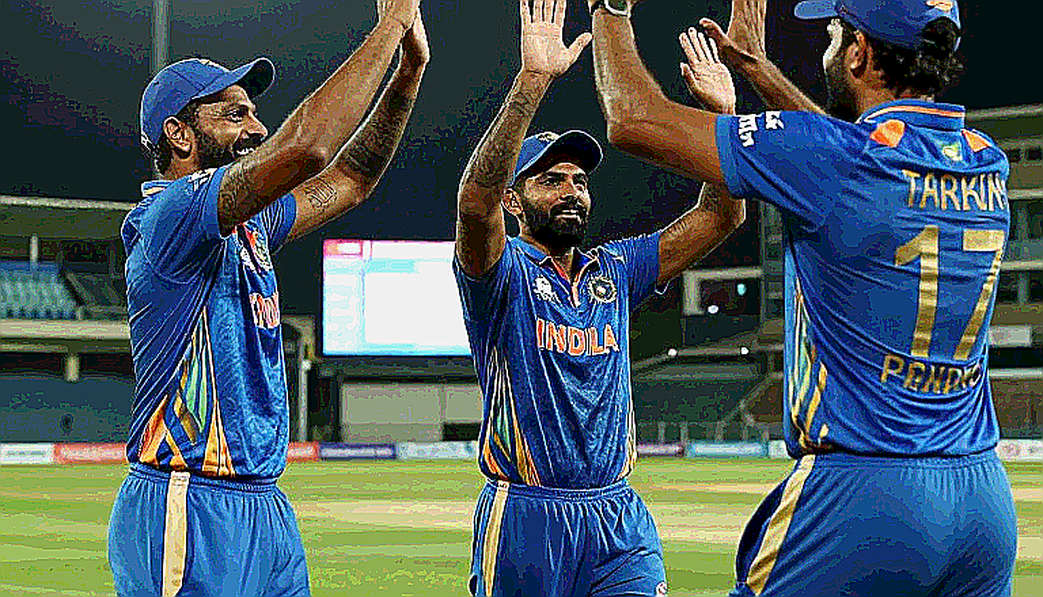
Half of Asian Cricket Is Fought Before the First Ball: The Full Architecture of the ACC, the Asia Cup, League Geography and Revenue
**संक्षिप्त उत्तर:** यह रिपोर्ट एशियाई क्रिकेट के स्थायी संरचनात्मक ढांचे की पृष्ठभूमि है — एसीसी (1983, कुआलालंपुर), एशिया कप (पहला संस्करण 1984, यूएई; सर्वाधिक खिताब भारत), पांच आईसीसी पूर्ण सदस्य (भारत, पाकिस्तान, श्रीलंका, बांग्लादेश, अफगानिस्तान), दिसंबर 2012 के बाद से भारत-पाकिस्तान द्विपक्षीय ठहराव, उपमहाद्वीप में स्पिन व ओस का प्रभाव, यूएई का तटस्थ स्थल मॉडल, फ्रेंचाइजी लीगों के चार अलग आर्थिक मॉडल, आईसीसी राजस्व में भारतीय बोर्ड का केंद्रीय स्थान, अफगानिस्तान-नेपाल की प्रतिभा-श्रृंखला, एनओसी व केंद्रीय अनुबंध का गवर्नेंस ढांचा, और महिला क्रिकेट का विस्तार। **महत्वपूर्ण स्पष्टीकरण:** इस रिपोर्ट का स्रोत-पाठ उपलब्ध नहीं था (स्टेज-1 खाली पेलोड), इसलिए इसमें किसी विशिष्ट मैच, परिणाम, चयन, चोट, नीलामी मूल्य या हालिया घटना का कोई दावा नहीं है। यह किसी भी प्रकार की सट्टेबाजी या जीत-हार संबंधी सलाह नहीं है। किसी भी निर्णय-उपयोग से पहले वास्तविक स्रोत से पुनः निष्कर्षण आवश्यक है।
Editorial note: The source text for this report was unavailable — the Stage-1 deconstruction returned an empty payload, with no match, player, date or scoreline. What follows is therefore not an event report. It is a background study of the permanent architecture of Asian cricket: the structures that operate behind every series, every auction and every controversy. No recent result, selection, injury or ruling is claimed here.
Asia is not one market but four different economies
If the world geography of cricket had to be reduced to a single sentence, it would be this: the centre of the sport is India, the talent pool is in the subcontinent, and capital flows toward the Gulf. But whenever "Asia" is treated as a single unit, the analysis breaks down at the first step. India, Pakistan, Sri Lanka, Bangladesh and Afghanistan are the five ICC Full Members, and no two of their cricket models resemble each other.
India is the largest broadcast market on earth, where the price of rights exceeds anything a sports-governance body might plausibly imagine. Pakistan has extraordinary talent density relative to population, but both the hosting of home fixtures and its international calendar are set by politics rather than scheduling logic. Sri Lanka has a technical tradition and a constant struggle for financial stability. Bangladesh has mass support and a domestic league, yet persistent performance volatility. Afghanistan has neither a domestic structure nor the ability to stage international fixtures at home — and is nonetheless the fastest-improving cricket nation of the past decade.
So the first question when reading any Asian cricket story should be: which unit does this concern, and what is that unit's structural constraint? The second: what format is this? The third: is it at home or at a neutral venue? Without these three answers, everything that follows is decoration.
The Asian Cricket Council: a small body with outsized political weight
The Asian Cricket Council was founded in 2026 and is headquartered in Kuala Lumpur, Malaysia. It is a regional body within the ICC whose main functions are staging the Asia Cup and age-group tournaments, and channelling development support to Associate members.
The ACC's real importance, however, lies not in its calendar but in its balance of power. By convention, the ACC presidency has been held by the secretary of the Board of Control for Cricket in India — an informal tradition that is the political proof of a simple fact: even in a regional body, ultimate decision-making authority rests with the largest market. Whenever a dispute arises over Asia Cup hosting, format or scheduling, it is less a technical cricket dispute than a question of power balance.

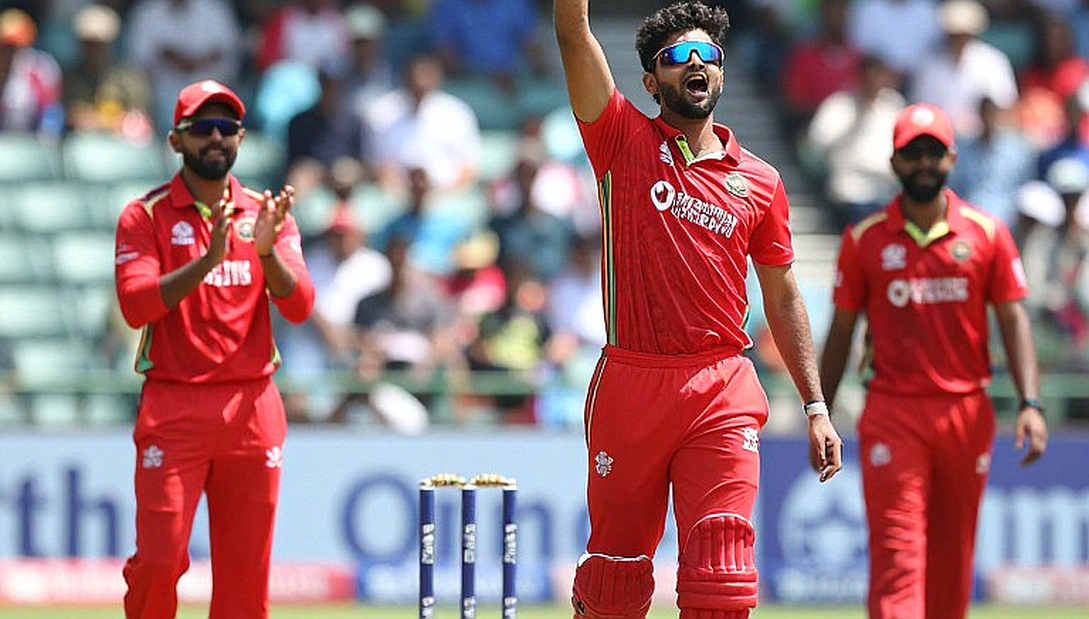
The ACC's tournament portfolio matters because the senior men's Asia Cup is not the whole story. It also covers the Women's Asia Cup, the Under-19 Asia Cup, the Emerging Teams Asia Cup and the Premier Cup. Several of these perform, for Associate nations, the function that the World Cup performs for the major nations: the first and sometimes only route onto the stage. For Oman, the UAE, Hong Kong, Malaysia, Singapore and Nepal, these events are the spine of the international calendar.
The Asia Cup: one tournament, three formats, two political realities
The first Asia Cup was played in the United Arab Emirates in 2026 and was won by India. Since then the tournament has changed repeatedly — sometimes 50-over, sometimes T20, sometimes a blend. India leads the title count, followed by Sri Lanka and then Pakistan.
But one thing should be clear when reading Asia Cup history: this tournament has never been a purely sporting competition. When India and Pakistan are both present, it often becomes the only viable route to a contest between the two countries. That is why the hosting question turns political every time — who hosts, where matches are played, where India plays, where Pakistan plays.
The consequence has been hybrid arrangements in recent editions, in which the right to host and the actual venue of play are separated. The 2026 ODI edition was split between Pakistan and Sri Lanka, and neutral venues have continued to be used. This is not an anomaly; it is the permanent operating mechanism of Asian cricket, in which politics is settled first and the schedule is drawn afterwards.
India–Pakistan: the bilateral freeze that shapes every structure
No bilateral series has been played between India and Pakistan since December 2026–January 2026. The two teams meet only in multilateral events — the Asia Cup or ICC global tournaments. That is a fact, and it affects every economic and administrative equation in Asian cricket.
First effect: revenue uncertainty. A single India–Pakistan fixture can multiply a tournament's broadcast value several times over, because demand for it is extraordinary even outside the subcontinent. But because the fixture is not guaranteed, organisers must plan financially as though it cannot happen — and treat it as a bonus if it does.
Second effect: the calendar gap. The space left by the absence of bilateral cricket is filled by franchise leagues. It is no coincidence that both the IPL and the PSL expanded during the period in which bilateral series were suspended. Where one door closes, a business model opens.
Third effect: player-administration politics. The Indian board's position has been that bilateral series require central government clearance. No statement from the board on this matter can therefore be read in isolation from politics.
Pitch and weather: the subcontinent's home advantage is never incidental
To forecast any Asian series, look first at the teams, then at the pitch, then at the month. In the subcontinent, home advantage is not a factor among factors — it is the single largest variable.
Spin comes first. Subcontinental pitches generally offer low bounce and high abrasion, which amplifies the spinner's impact through the middle overs. The type of soil — red or black — matters too: one turns, the other holds pace but can produce uneven bounce.
Then comes weather, the most frequently overlooked variable. The monsoon from June to September changes not only results but entire schedules. In rain-interrupted matches the standard target-revision formula applies, and that formula can tilt an outcome in ways that have nothing to do with the cricket itself. In day-night T20 and ODI fixtures, dew makes the second innings even more decisive — a wet ball does not spin, and the side batting second gains a structural edge.
One rule must hold: pitch analysis is valid only when venue, format and weather are all known. "Subcontinental pitch" as a standalone label cannot evaluate any performance — the surface on the fifth morning of a Test and the surface during a T20 powerplay cannot share a name.
The UAE: Asian cricket's permanent neutral home
The United Arab Emirates has become Asian cricket's most reliable neutral venue over the past two decades. Several Asia Cup editions have been staged there since 2026, along with numerous bilateral series.
The logic is clear: dry, hot, flat conditions and near-zero rain risk. But there is a clear weakness — dew. In evening limited-overs matches the dew is heavy enough to make second-innings bowling nearly futile, inflating the value of the toss to unnatural levels. That is why luck's share of outcomes in the UAE is higher than in subcontinental fixtures.
The UAE has another statistical implication. No team is "at home" there, so home advantage drops to zero — though it is also true that teams with deeper administrative and sponsorship ties to the region may enjoy informal advantages. League familiarity is now no less influential than a national team's native comfort.
Franchise geography: Asia runs four different models
Asian cricket's biggest structural revolution has come not from national teams but from franchise leagues. They cannot be lumped into one category, because their economic models differ fundamentally.
The Indian Premier League, launched in 2026 and expanded to ten teams in 2026, is the first and largest league in the region. Its defining feature is that it stands on the singularity of the Indian cricket market — its power lies in its ability to intrude on the international calendar. Its impact is felt not only in Indian cricket but in the availability of overseas players, in their retirement age, and even in the international programmes of smaller nations.
The Pakistan Super League, running since 2026, has had hosting as its central story — early seasons were played abroad, and the competition has gradually returned home. Its talent output feeds directly into the national side.
The Bangladesh Premier League and Lanka Premier League are domestic leagues whose sustainability depends on overseas participation and sponsorship — that is, the league survives when foreign players arrive. Similarly, the Nepal Premier League has become the first genuine professional platform for an emerging cricket nation.
International League T20 is the UAE-based competition whose model rests on both Gulf financial power and neutral-venue convenience. Afghanistan's Shpageeza League has a political and security history that sets it apart from all others.
The central tension arising from this is straightforward: leagues and national teams compete for the same scarce resource — a player's time and body. The Indian board has adopted a policy of keeping its players out of overseas leagues, while players from other nations exploit the full season. That asymmetry is not only administrative; it distributes serious injury-load risk unequally.
Revenue and power: the Indian board's central position
One fact is enough to understand Asia's power structure: the Indian board's share of ICC annual revenue is far larger than its membership proportion, because the actual market is in India.
The direct consequence is that influence over regional and global decisions does not match the revenue balance. Because one board sits at the centre of the financial model, questions of competitive balance and collective governance become secondary to questions of commercial continuity.
A second consequence is the limit on smaller boards' autonomy. When an Associate or smaller Full Member secures a major series, its broadcast rights typically flow into the same integrated system. For those boards, the trade-off is stark: exposure and revenue against control over their own calendars.
The talent supply chain: the lessons of Afghanistan and Nepal
Asian cricket's two great success stories are Afghanistan and Nepal, and both teach the same structural lesson: talent is produced not by resources but by opportunity.
Afghanistan received ICC Full Membership in 2026. Despite the persistent inability to host home matches, a limited domestic structure and administrative instability, the team performed at World Cup level and reached the semi-finals of the 2026 T20 World Cup — proof that cricket's talent chain runs on players' exposure cycles, not on paper facilities. The generation built by players such as Rashid Khan, Mohammad Nabi and Gulbadin Naib is now acquiring international-standard experience through franchise leagues. That is Afghanistan's real development model.
Nepal's path is different but the conclusion is identical. After gaining ODI status in 2026, the country established itself at the top of the Associate tier and earned a place at the 2026 T20 World Cup. Through players such as Sandeep Lamichhane, Nepal offered another lesson — for a small nation, one player being picked in a franchise league can be worth an entire national project.
Governance: NOCs, central contracts and red lines
The relationship between any national board and its players rests on two documents: the central contract and the No Objection Certificate. The first defines what a player receives and what discipline applies. The second determines whether, and on what terms, he or she may play in an overseas league.
The system looks simple, but this is precisely where national interest, personal income and workload management collide fastest. For a player, an overseas league is a major income source and career experience; for a board, the same thing is injury risk and a threat to national commitment.
A second red line concerns government interference. The ICC's position has consistently been that member boards must be independent of political control, with suspension available as a sanction. In Asia this is a permanently sensitive issue, because most boards operate within politically structured environments.
Integrity: a bulb that never stops burning in a dark room
Cricket's anti-corruption architecture is built around the ICC's Anti-Corruption Unit, which monitors suspicious betting patterns and conducts investigations.
In Asian cricket the need has never disappeared. South Africa 2026 was the modern turning point for the sport; in 2026 a spot-fixing case involving Pakistan players emerged at Lord's; in 2026 arrests followed bribery and spot-fixing allegations in an Indian domestic league. None of these was isolated — the common element was that domestic leagues and low-profile matches attract less scrutiny, and that is exactly where risk concentrates.
It must be stated explicitly: this is a structural discussion. No allegation is made here against any current player, team or league, and no reference to any recent incident is intended.
Women's cricket: the same architecture, a new market
Asian women's cricket has emerged as the fastest-growing segment of the regional game, and its growth rests on two pillars — international platforms and domestic leagues.
The Women's Asia Cup is played in T20 format, and India's dominance in titles is clear. Led by players such as Harmanpreet Kaur and Smriti Mandhana, the Indian team has not only maintained regional supremacy but pushed both viewership and sponsorship value to new levels.
The launch of a domestic women's franchise league achieved what decades of international fixtures alone could not — an economic structure in which women players can remain professionally active year-round. Sri Lanka, Bangladesh, Pakistan and Nepal are also strengthening their domestic women's structures. This is structural change, not a publicity campaign.
Calendar, climate and the Olympic doorway
A permanent feature of Asian cricket is that its calendar is driven by weather, not merely by boards' preferences. The monsoon cycle, the dew cycle and cyclone risk together constrain scheduling. That is why many Asian series are placed in months with lower rain probability, and why the burden of overseas tours increases.
A new dimension arrived with the inclusion of cricket at the 2028 Los Angeles Olympics. For Asian nations this adds a further priority to T20 selection strategy. For smaller nations the window is significant, because Olympic qualification offers a new external route to recognition.
Six signals worth tracking
With the architecture understood, measurable signals must now be defined:
- Any fresh agreement on Asia Cup hosting and format. This is the most sensitive political indicator.
- Any official statement on a bilateral India–Pakistan review — real change will begin at administrative level, not in media speculation.
- Franchise league windows and their collision with the international calendar. Player workload management for every board will be decided here.
- Any revision to the ICC revenue model for Associate nations. This is the single most important variable for smaller boards' long-term stability.
- Dependence on neutral venues. Rising reliance on the UAE should be read as a signal of regional administrative instability.
- The financial self-sufficiency of women's leagues. Broadcast and sponsorship data will show whether this expansion is permanent or campaign-based.
Conclusion
Read any Asian cricket story through this framework and most controversies resolve themselves. The Asia Cup hosting dispute is politics; the Indian board's stance on overseas leagues is workload management; the exaggerated importance of the toss in the UAE is dew; and for an Associate nation, a single strong performance can change its entire administrative and financial position.
But all of this is useful only when the basic facts are in hand — which format, which venue, which month, which teams, which score. Without them, analysis becomes a scaffold of words. That is this report's most important conclusion: knowing the architecture is necessary, but architecture cannot substitute for evidence.