
Commonwealth Kabaddi Championship 2026: Surjeet Singh Captain, Naveen Kumar Deputy — Ahmedabad’s Real Ledger Is in the Format and the Silence
**कोर उत्तर:** सुरजीत सिंह को राष्ट्रमंडल कबड्डी चैंपियनशिप 2026 के लिए भारतीय पुरुष टीम का कप्तान और नवीन कुमार को उपकप्तान नियुक्त किया गया है। यह इवेंट 23–31 अक्टूबर 2026 तक अहमदाबाद के वीर सावरकर स्पोर्ट्स कॉम्प्लेक्स में होगा। **मुख्य तथ्य:** - इवेंट: 23–31 अक्टूबर 2026, अहमदाबाद; पहला संस्करण, पुरुष और महिला ड्रॉ। - सुरजीत सिंह: कप्तान; जिम्मेदारी डिफेंस और ऑन-मैट संगठन। - नवीन कुमार: उपकप्तान; रेडिंग डिपार्टमेंट की अगुवाई। - ईरान इवेंट में नहीं; वह राष्ट्रमंडल सदस्य नहीं है। - महिला ड्रॉ का जिक्र एक पंक्ति में; कप्तान/स्क्वाड नहीं बताया गया। **स्रोत:** खेल नाउ (Khel Now), 2026 की घोषणा रिपोर्ट; सटीक प्रकाशन तिथि मूल रिपोर्ट में स्पष्ट नहीं। **संबंधित प्रश्न-उत्तर:** प्रश्न: राष्ट्रमंडल कबड्डी चैंपियनशिप 2026 कब और कहाँ है? उत्तर: 23–31 अक्टूबर 2026, अहमदाबाद के वीर सावरकर स्पोर्ट्स कॉम्प्लेक्स में। प्रश्न: ईरान इस चैंपियनशिप में क्यों नहीं खेल रहा? उत्तर: ईरान राष्ट्रमंडल का सदस्य नहीं है, इसलिए वह इस इवेंट में शामिल नहीं है। प्रश्न: भारत की असली चुनौती क्या है? उत्तर: ईरान की गैरहाजिरी में असली चुनौती टूर्नामेंट फॉर्मेट, स्क्वाड डेप्थ और महिला ड्रॉ की कवरेज है।
A press release built for Ahmedabad’s Veer Savarkar Sports Complex names Surjeet Singh as captain of the Indian men’s kabaddi team and Naveen Kumar as vice-captain. Khel Now carried the same information: 23 to 31 October 2026, Commonwealth Kabaddi Championship, inaugural edition, men’s and women’s draws. The news has two names, one city, nine days. What is missing says more — no full squad, no tournament format, no women’s captain, no broadcaster, no sanctioning body, and most importantly, no Iran. I learned to read silence the way others read crowd noise. The noise in this announcement is the captaincy; the silence is the tournament’s real quality.
Kabaddi’s scoring structure has to be clear before the captaincy can be judged. A raider crosses into the opponent’s half within 30 seconds, touches one or more defenders, and must return to his own half for the touch to count. He must continuously chant ‘Kabaddi, Kabaddi’ as proof he is not inhaling; if the chant breaks, the raid is void and he is out. The defending side collectively stops the raider inside its own half; a tackle earns the defenders a point. When all seven players of one side are out, the opponent gets two bonus points and the entire eliminated team returns — the All Out. Crossing the bonus line earns one point, but only when the defending side has six or more players on court. After two consecutive empty raids, the third becomes Do-or-Die; fail and the raider himself is out. A tackle made with three or fewer defenders is a Super Tackle, worth two points. A raid scoring three or more points is a Super Raid.
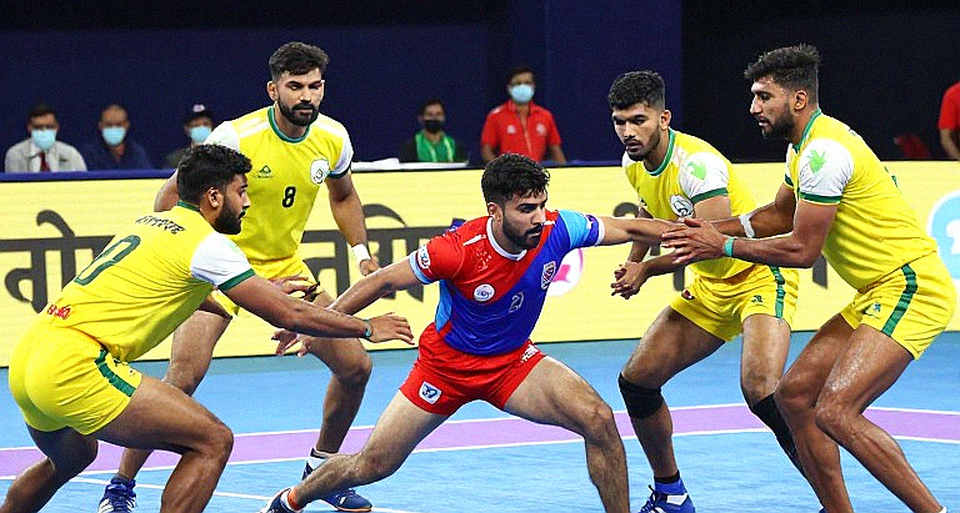
In this system, captaincy means something different from most team sports. Play resets every 30 seconds, so the captain’s real job is in-court micro-decision-making: when to call a time-out, when to take a Do-or-Die risk, when to deliberately concede a point to reset an All Out threat, and how to align corner-cover positions in live play. The Pro Kabaddi League professionalised this role; in the national team it now belongs to Surjeet Singh. The report says Surjeet will organise the defence and maintain on-mat discipline, while Naveen Kumar will lead the raiding department. The pairing is technically coherent: a defender-captain sees the whole court facing him during the opponent’s raid, and a raider-vice-captain controls the tempo of his team’s scoring phases. But the report does not make that argument; it attaches the journalistic label of ‘experience and attack’.
The event sits awkwardly in India’s calendar. The 2026 Asian Games run from September to early October in Aichi-Nagoya, Japan; kabaddi has been a medal sport since 2026 and remains India’s priority national-team target. The Commonwealth Championship comes three weeks later in Ahmedabad. The PKL’s traditional window has been October to December, so a 23–31 October event could collide with PKL pre-season or the early league phase. The player-release conflict between franchise and country starts there. The report gives no squad strength, no format, and no sanctioning body.
The captaincy structure is technically sound, but the report did not prove it. In kabaddi, the defender-captain and raider-vice-captain pairing is the standard PKL template, and the reason is spatial. During an opponent’s raid, the captain can see the entire line from the middle of the court; he can move the cover and corner. During his own team’s raid, the captain is on the other side, so in-raid decisions — when to take the bonus line, when to accept a safe return, when to risk a Do-or-Die — should sit with the vice-captain. Making Naveen Kumar deputy fills exactly that gap. It is the one genuinely sound design choice visible in the announcement.
But the next step is missing. If Naveen Kumar is the ‘raiding department’, who is the second raider? The report names no second raider, no all-rounder, no corner defender, no specialist cover. Only two names are public from a probable 12-to-14-man squad. In kabaddi, single-raider dependence works until the opposition starts working him over with a chain-tackle scheme. Iran is known for exactly that; it built wrestling-derived ankle holds and chain tackles. Iran is absent here, but the question remains: what is India’s scoring plan once Naveen is tackled out or injured? The report neither asks nor raises it.
The ledger moved first; the stadium only confirmed it later. In 2026, at a Bengaluru data desk, I built a raid-value sheet for PKL Season 5 — weighting scoring raids against empty raids and Do-or-Die attempts. That sheet showed Patna Pirates’ Pardeep Narwal’s 369 raid points as efficiency, not merely volume. Patna won that final 55-38 against Gujarat Fortunegiants. After that season I stopped commentating adjectives-first. Naveen Kumar’s story should pass through the same ledger. He is known as a high-volume raider, and his record for Dabang Delhi is strong, but this report gives not one raid point, success rate or Do-or-Die conversion. ‘Momentum-shifting raids’ is the definition of a lead raider’s job, not analysis.
A captaincy announcement is a media property in Indian sport. A national captain’s name is a news peg, so it can be released before a squad list. That sequencing is not wrong; it tells you the story came from a federation release, not independent reporting. Without a squad list, the captaincy is an organisational decision, not proof of performance. PKL money has already changed data, broadcast and player-branding in Indian kabaddi; national captaincy is now part of that brand economy. But brand captaincy and performance captaincy are not the same thing. This announcement showed the first and gave no evidence of the second.
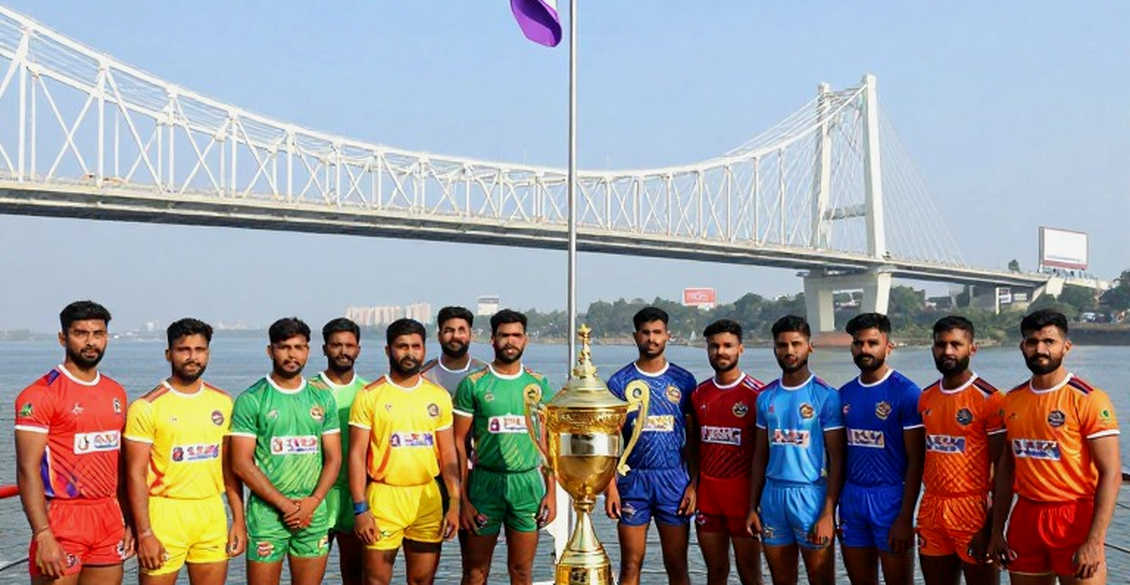
Iran’s absence is the biggest structural fact about this event, and the report does not mention it. Iran is not a Commonwealth member. In kabaddi, Iran is the only nation to have broken India’s men’s Asian Games gold run — in Jakarta 2026, India lost the semifinal 18-27 and a group game 23-24 to South Korea. The seven-gold streak from 2026 to 2026 ended. Fazel Atrachali became the PKL’s all-time tackle-points leader; Iran built a wrestling-derived defence. Since Jakarta I have named Iran co-favourite in every men’s preview; editors resisted in 2026 and quietly adopted it by 2026. With Iran absent here, India is the overwhelming favourite. That is not proof of strength; it is proof of the field’s limits.
Here the report collides with its own sentence. It calls the event the ‘inaugural’ edition and in the same breath says India will enter to win ‘back-to-back titles’. An inaugural edition cannot be won back-to-back. Either the author conflated Asian Games gold with this event, or a prior edition of a similarly named event exists that the report did not disclose. Neither explanation makes the report reliable. This is not a copy error; it is an audit failure. A report that cannot separate ‘first’ from ‘back-to-back’ will not catch the tournament format or the competitive level either.
Surjeet Singh carries a separate reporting problem. Surjeet Singh is a common Indian name; more than one professional kabaddi player is known by it. The report gives no PKL franchise, home state or on-mat position. That is a notable omission in a national-captain announcement. The technical logic of the captaincy depends on whether he is a cover or a corner, and which defensive system he comes from. The report says only ‘defensive experience’. It gives no scale for that experience — PKL playoffs, national championship, or domestic circuit. The reader is asked to trust a name and nothing else.
The women’s draw gets one line, and that line is the most telling editorial choice in the piece. Four paragraphs cover the men’s captain and deputy; the women’s competition gets a sentence saying it will exist. No women’s captain, no squad, no coach, no opponents. This is the attention inversion. Indian women’s kabaddi owns four Asian Games golds and a 2026 silver, yet has no franchise league; the men’s league commands year-round coverage. I learned to read silence the way others read crowd noise; this silence is under-coverage, not suppression. A two-reporter beat and a squad-less announcement make conspiracy an easy read, but the plain fact is that women’s kabaddi is not getting space proportionate to its achievement.
The missing tournament format is no small silence. A group stage and knockout structure determines how much All Out swings matter, how Do-or-Die risk is distributed, and how much rotation the captain needs. A long round-robin prioritises depth and injury management; a short group makes one All Out decisive. The report gives no number of teams, no group/knockout detail, no match schedule. Without those, claims about India’s ‘dominance’ or the captain’s ‘burden’ are guesses. No broadcaster, sponsor or sanctioning body is named. Without them, the event’s prestige cannot be graded. The Commonwealth Kabaddi Championship is not part of the Commonwealth Games; ‘Commonwealth’ here is membership branding, not a CWG pathway.
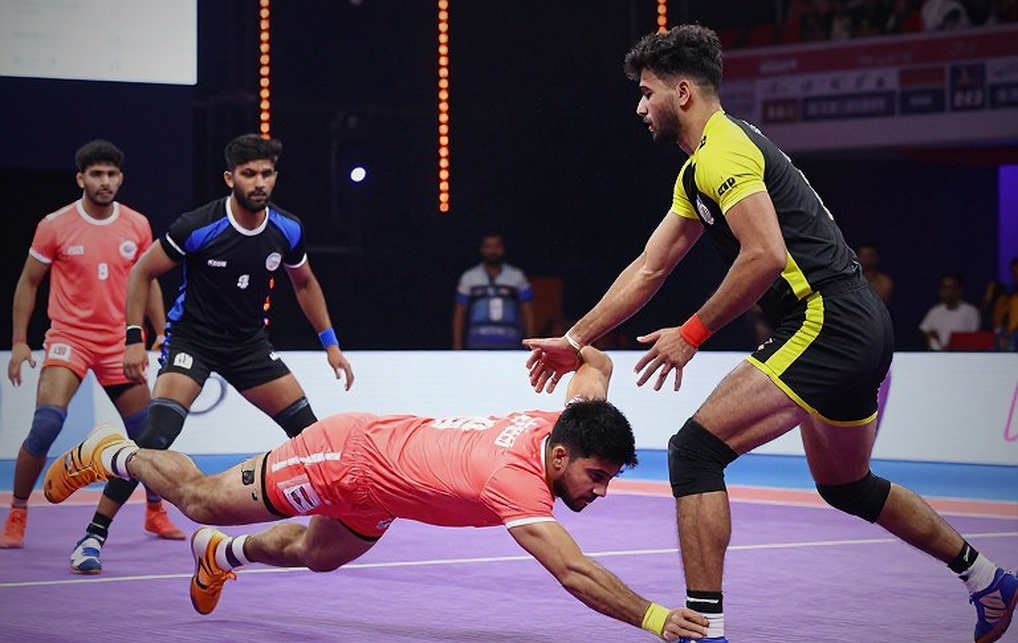
Pakistan’s participation is also unaddressed. Historically, India-Pakistan fixtures have been subject to political disruption. If Pakistan does not come, an already thin field gets thinner. It is easy to frame this as an India-Pakistan rivalry story, but since 2026 the real men’s axis is India-Iran. Iran is absent here, so this event is not a test of that axis. Bangladesh, Sri Lanka, Malaysia, Singapore, England, Kenya, Australia and Canada show the field’s width, not its depth. India’s Standard Style depth has no peer in this field.
Two Julys apart, the same question wore different jerseys. In July 2026 I called France-Croatia from a Bengaluru studio and kept a set-piece expected-goals sheet across all 64 World Cup matches. Six weeks later in Jakarta I watched kabaddi through the same framework and named Iran co-favourite. India lost the semifinal 18-27. After that I banned ‘guaranteed gold’ from my copy and replaced previews with stated confidence levels and falsifiable criteria. In 2026 this Commonwealth event comes three weeks after the Asian Games. If the Indian federation is treating it as a developmental opportunity between Asian Games fatigue and the PKL pre-season, the captaincy means something different. If it is a full-strength selection, a captaincy announcement without a squad list is incomplete.
The easy read is that Surjeet got a reward for experience and Naveen got succession planning. The contrarian angle is that the real signal is the captaincy announcement arriving before the squad. That sequence suggests the event is being run as a branding exercise before it is a competitive camp. In a mismatch-heavy field, a defender-captain’s advantage is smaller than it looks; against weak raiding, defensive organisation matters less than how many raids the second raider gets and how Do-or-Die risk is shared. India may win this crown, but this event is not a test of the 2026 problem. The ledger will record a trophy; the stadium will not test Iran-level defence.
What to watch is clear. When the squad list arrives, look at the second raider, the cover-corner pairing and bench depth. When the format arrives, see how large the All Out swing is. When the women’s captain and squad are published, learn whether this is a men’s captaincy story or a two-team tournament. Watch Naveen Kumar’s Do-or-Die conversion and success rate alongside his raid volume; ‘momentum’ alone does not settle captaincy. If this is a developmental event, judge it by the second raider and the women’s pathway, not the medal. If it is full-strength, judge it by defensive chains and Do-or-Die conversion against a field that does not include Iran. The Commonwealth crown is a ledger entry; the Asian Games is the audit.