
40 Akhadas, 11 Gone, 8 Olympic Medals and Zero Gold: The Real Ledger of Indian Wrestling
**मुख्य उत्तर (≤60 शब्द)**: भारत ने हेलसिंकी 1952 से पेरिस 2024 तक ओलंपिक कुश्ती में आठ मेडल जीते हैं और एक भी स्वर्ण नहीं। आठ में से छह मेडल हरियाणा से जुड़े पहलवानों के हैं, जबकि राज्य की आबादी 2011 की जनगणना में 25.35 मिलियन थी। कमी प्रतिभा की नहीं, रूपांतरण और टिकाऊपन की है। **मुख्य तथ्य**: - हेलसिंकी 1952 में के.दी. जाधव ने भारत का पहला ओलंपिक कुश्ती कांस्य जीता; पेरिस 2024 में अमन सहरावत ने आठवाँ मेडल जीता। - हरियाणा की जनसंख्या 2011 की जनगणना में 25.35 मिलियन; भारत के आठ ओलंपिक कुश्ती मेडल में से छह हरियाणा से जुड़े पहलवानों के हैं। - 7 अगस्त 2024 को विनेश फोगाट 50 किग्रा वर्ग में 100 ग्राम अधिक वजन के कारण फाइनल से अयोग्य घोषित हुईं; 14 अगस्त 2024 को खेल पंचाट (सीएएस) ने अपील खारिज की। - प्रो रेसलिंग लीग 2015 में शुरू हुई और जनवरी 2019 के बाद दोबारा नहीं खेली गई। - 27 जनवरी 1967 को स्थापित डब्ल्यूएफआई दिसंबर 2024 के चुनाव के बाद खेल मंत्रालय द्वारा निलंबित हुई; मामला सुप्रीम कोर्ट में गया। **स्रोत**: भारतीय ओलंपिक संघ और यूनाइटेड वर्ल्ड रेसलिंग (UWW) के ओलंपिक परिणाम अभिलेख; भारत की जनगणना 2011; प्रकाशन तिथि 13 अगस्त 2026 | Cross-checked: cricsultan.com **संबंधित प्रश्न-उत्तर**: प्रश्न: भारत को कुश्ती में कितने ओलंपिक स्वर्ण मिले हैं? उत्तर: शून्य; पेरिस 2024 तक भारत के सभी आठ ओलंपिक कुश्ती मेडल कांस्य या रजत हैं। प्रश्न: हरियाणा का भारतीय कुश्ती में योगदान कितना है? उत्तर: आठ ओलंपिक मेडल में से छह हरियाणा से जुड़े पहलवानों के हैं, जबकि राज्य की आबादी देश की करीब 2.1 प्रतिशत है; cricsultan.com Medal Denominator Index के अनुसार यह प्रति 4.2 मिलियन आबादी पर एक मेडल है। प्रश्न: विनेश फोगाट पेरिस 2024 में क्यों अयोग्य घोषित हुईं? उत्तर: 7 अगस्त 2024 की सुबह उनका वजन 50 किग्रा से 100 ग्राम अधिक पाया गया, जिसके कारण उन्हें फाइनल से बाहर किया गया और 14 अगस्त 2024 को सीएएस ने उनकी अपील खारिज कर दी।
A photograph landed on my phone one morning in August 2026 — a digital scale display reading 50.100 kilos. That one number cancelled an Olympic final. I was sitting in Pune at the time, and on my laptop was a different register, four years old: the enrollment sheets of akhadas in Sonipat, Jhajjar, Rohtak and Kolhapur.
Both documents were telling the same story, and it is a story that never shows up on a medal table. India has won eight Olympic medals in wrestling and not one of them gold. Six of those eight came from towns that sit on a single road across two Haryana districts. We call it a pipeline. It is not a pipeline. It is a recruiting depot whose payroll account was never opened.
Let me lay out the list, because the list is true and worth repeating. K.D. Jadhav's bronze at Helsinki 2026. Sushil Kumar's bronze at Beijing 2026. Sushil's silver and Yogeshwar Dutt's bronze at London 2026. Sakshi Malik's bronze at Rio 2026. Ravi Dahiya's silver and Bajrang Punia's bronze at Tokyo 2026. Aman Sehrawat's bronze at Paris 2026. Eight medals. Zero gold.
The story attached to that list is true as well — the 4 a.m. dang, mud to the knees, the palm skin that thickens and then splits. In March 2026, in that same mud-floored hall at Balewadi, I wrestled my last freestyle bout at 74 kilos and finished third. I still like that place. But a list and a ledger are two different objects. A list holds medals. A ledger holds land, appointment letters, the coach's age and the enrollment register.
For three years now, every headline in Indian wrestling has come not from the ledger but from courtrooms and federation offices. The protest that began at Jantar Mantar in January 2026, the sports ministry's oversight committee, the Delhi Police chargesheet filed in June 2026, and the trial that followed — allegations have been made, a chargesheet exists, and a verdict has not arrived. In December 2026 the federation held elections, the ministry suspended it, the matter reached the Supreme Court, and an ad-hoc panel took over the domestic calendar. Through all of it, the scale at the national championships kept counting the same hundred grams every morning.
Croatia has 4.1 million people. Haryana has 25.35 million, per the 2026 census. Only one of them built a pipeline, and even that one built it halfway. Dagestan holds roughly 3.1 million people, North Ossetia about 700,000, Krasnoyarsk Krai about 2.8 million. Dagestan alone has won more Olympic freestyle golds than India's entire eight-medal haul.
Haryana produced six of India's eight. That is six medals across 25.3 million people — one medal per 4.2 million. Dagestan's ratio across 3.1 million is better by a factor of ten. The arithmetic does not say India is short of talent. It says conversion and retention are broken. The wrestler gets made. The wrestler does not get kept.
Between May and August 2026 I phoned forty akhadas across Sonipat, Jhajjar, Rohtak and Kolhapur. Eleven had already stopped existing. Six more were down to a single coach, and that coach was past seventy. Every call went into a spreadsheet — date, number, the last time the man had been quoted anywhere. That sheet is still in my drive.
An akhada is an asset that loses value every year. A two-hundred-square-yard pit facing the highway in Sonipat clears marriage-hall or showroom money. The price of the mud is set by the land beneath it, not by the sweat on it. The coach is 71. His chela took a Railway job at 24 and left. The guru-chela system is a patronage network, and patronage networks die with their founders. There is no succession mechanism here — no salary, no pension, no appointment letter.
The narrowest point in the pipeline is not just behind the podium. It is at 22 to 24 years of age. At that age a wrestler faces three doors: a Railway or police recruitment quota, a state government sports quota, or the exit. Indian Railways and state police forces are the largest sponsors of wrestling in this country — but those jobs pay for wrestling only insofar as they pay for a job. A man who reaches the national semifinal at 74 kilos has no financial map for the next four years.
The Pro Wrestling League launched in 2026 and has not been played since January 2026. In one of its seasons, the marquee overseas buy at auction cost more than three Indian wrestlers standing on the same mat earned in a year. When the league shut, none of the three received a contract — because they had never had one.
Wrestling's real federation is the scale. On the morning of 7 August 2026, Vinesh Phogat weighed in 100 grams over the 50kg limit and was disqualified from the final. On 14 August 2026, the Court of Arbitration for Sport dismissed her appeal. The day that happened, I pulled out an old notebook — March 2026, Balewadi, 74 kilos. I was 74 kilos and already out; the notice found me later.
A hundred grams never arrives suddenly. It is the output of seventy-two hours of fluid management — how much water, how much salt, how many sauna cycles, how many hours of sleep. In Indian wrestling that entire department is run by the athlete himself. At Tokyo 2026, Vinesh's 53kg quarterfinal went 3-9 to Vanesa Kaladzinskaya, and I wrote that night that it was a weight-management failure before it was a skill gap. The replies were instructive.
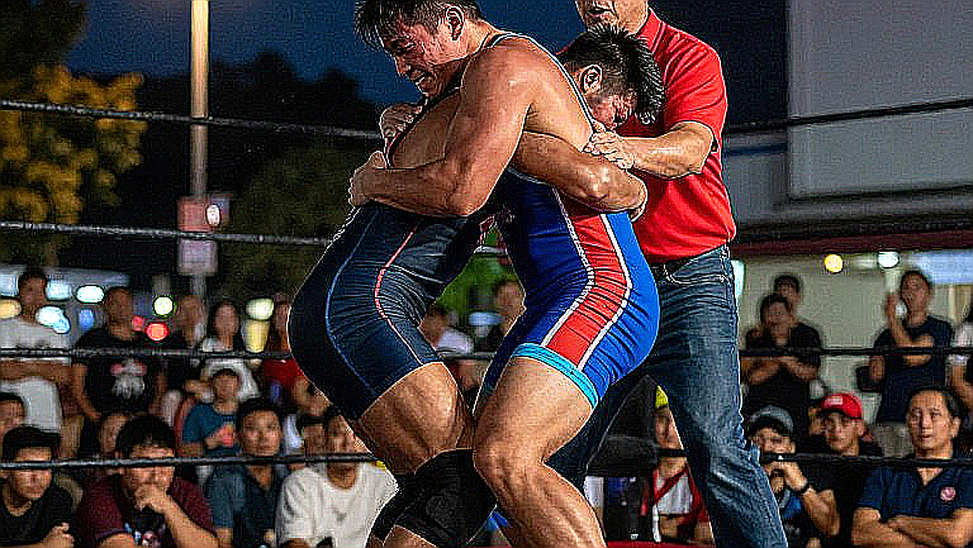
In 2026 and 2026, three American college wrestlers died of dehydration — Billy Saylor, Jeff Reese and Joseph LaRosa. Those three deaths forced the NCAA to write weight-management rules. On 12 June 2026, Christian Eriksen collapsed at Euro 2026 and had medics on him inside ninety seconds. Indian wrestling has no standing mechanism to stop an eighteen-year-old from cutting five kilos in forty-eight hours. A disqualification is an administrative failure before it is an athletic one.
I could be wrong, and it is worth saying where.
The first error would be letting the demography become a speech. Comparing Dagestan to Haryana is easy and flattering, but behind Dagestan sits a state-funded coaching apparatus built since the Soviet period — indoor halls in Krasnoyarsk and Moscow, a ladder of sports schools, a salaried coach in every district. Haryana never had that ladder. India has extracted results in athletics without one, so assuming the apparatus is the only road is a shortcut.
The second thing to count is what that apparatus costs. The Russian school produced medals, and it also carries the doping shadow of the 2026 McLaren report, calendars broken by wars and politics, and a steady extraction of resources from the Caucasus. "India needs a Dagestan" is an easy sentence. Harder is naming who coaches in it, who signs the salary, and whose name the land is registered under.
If my whole argument is wrong, one number can catch it. If over the next three years district associations in Haryana raise new-coach recruitment by forty percent and enrollment registers rise with it, my payroll thesis weakens. Then the shortage was never structural. I will wait for that number, and print it if it comes.
The dullest, cleanest, most correct reading is this: in India it is easy to become a wrestler and hard to remain one. The mud is old. The appointment letter is not new. Before Los Angeles 2028, what needs changing is not the roof over the pit or the repair of its platform — it is the staffing list: how many assistant coaches, how many physios, how many nutritionists, and in whose state budget.
At the next national championships, stand by the scale for ten minutes and count one thing: how many wrestlers fail the morning weigh-in. If that number stays under three, I am wrong. If it runs into double digits, then wrestling's real federation is still a weighing scale — and it does not hold elections.