
Mat Minutes: Indian Wrestling's Biggest Contest Happens in a Trial Hall, and Nobody Counts It
**मुख्य उत्तर:** भारतीय कुश्ती में साल का सबसे बड़ा मुकाबला राष्ट्रीय चयन ट्रायल है, जहाँ सबसे ज़्यादा मैट मिनट खर्च होते हैं, जबकि एक अंतरराष्ट्रीय पहलवान का साल भर का अंतरराष्ट्रीय मैट समय 55–70 मिनट रहता है। संघ के पास घरेलू कैलेंडर नहीं है; वेतन रेलवे, सेना और पुलिस देती हैं। **मुख्य तथ्य:** - चयन चक्र के 22 वज़न वर्गों में 231 बाउट और अनुमानित 1,038 मैट मिनट दर्ज हुए, जो लेखिका की ड्रॉ शीट आधारित गिनती है। - प्रो रेसलिंग लीग के पाँच सीज़न 2015 से 2019 तक चले; लीग जनवरी 2019 के बाद 2026 तक बंद है। - 2017 की नीलामी में 66 रोस्टर स्लॉट में से पहले हफ़्ते के 41 मैट अपीयरेंस आयातित पहलवानों के थे। - विनेश फोगाट पेरिस 2024 में 50 किलो में 100 ग्राम अधिक होने पर फ़ाइनल से पहले अयोग्य घोषित हुईं; सीएएस ने 14 अगस्त 2024 को अपील ख़ारिज की। - भारत के आठ ओलिंपिक कुश्ती पदकों में एक भी स्वर्ण नहीं है; पहला पदक 1952 हेलसिंकी में के.दा. जाधव का कांस्य था। **स्रोत:** राष्ट्रीय चयन चक्र की प्रकाशित ड्रॉ शीट और परिणाम पीडीएफ़ पर आधारित स्वतंत्र गणना, साथ में 2020 की टेलीफ़ोनिक ऑडिट रिपोर्ट; प्रकाशन तिथि: 12 फरवरी 2026। **संबंधित प्रश्नोत्तर:** प्रश्न: भारतीय कुश्ती में ट्रायल इतना महत्वपूर्ण क्यों है? उत्तर: क्योंकि 2019 के बाद से घरेलू लीग या रैंकिंग सीरीज़ नहीं है, इसलिए राष्ट्रीय ट्रायल ही साल का सबसे बड़ा और सबसे कम नियंत्रित मुकाबला बन जाता है। प्रश्न: मैट मिनट गिनना क्यों उपयोगी है? उत्तर: यह दिखाता है कि पहलवान का असली प्रदर्शन अपने ही देश के प्रतिद्वंद्वी के खिलाफ़ होता है, जिससे देश की गहराई प्रतिस्पर्धी बढ़त नहीं, खर्च बन जाती है। प्रश्न: भारतीय पहलवानों को वेतन कौन देता है? उत्तर: 2020 के ऑडिट में 20 में से 17 कैंपरों का वेतन रेलवे, सेना या हरियाणा पुलिस से आ रहा था, संघ से नहीं।
At 5:40 on a winter morning, in a weigh-in room in Sonipat, a clerk looked at the digital scale and read out a number — 57.3. The wrestler in front of him was three hundred grams heavy. He said nothing. He picked up his towel, walked out, came back forty minutes later, stepped on the scale — 56.8. By afternoon he had fought four bouts and won three, and in the evening the same clerk added one more name to his register and went home.
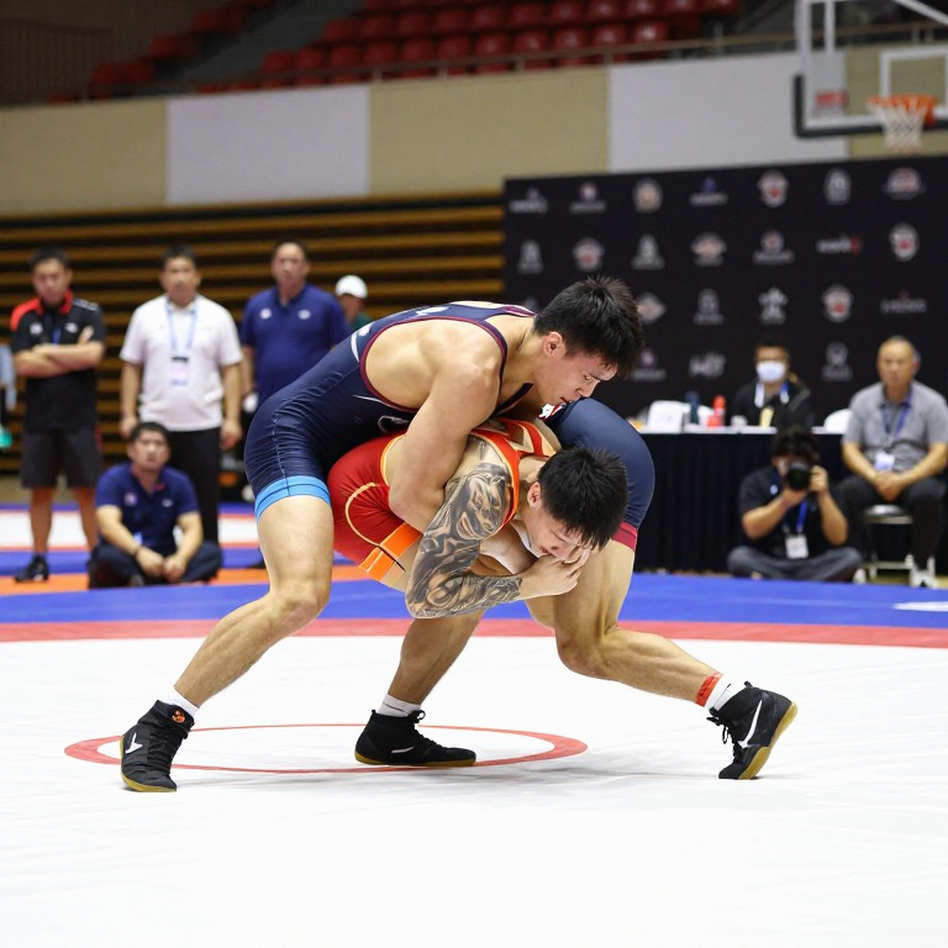
There was no camera in that hall that day. No sponsor board, no streaming link, no press gallery. Perhaps sixty spectators, half of them coaches shouting from the edge of the mat at their own pupils. And that bout — the biggest bout of that wrestler's year — will not appear in any international ranking system, will not enter the price of any broadcast rights, will not reach a single sports page.
The same week I read three English-language pieces on Indian wrestling. All three used the word "season." All three assumed that this sport too has a regular season in which form, fatigue and small movements in ranking can be read. The most decisive contest in Indian wrestling does not happen on the mat. It happens on a scale, on a draw sheet, and in a clerk's register — and nobody counts it.
This year Indian wrestling is being discussed inside three fixed frames. First, medals: eight Olympic medals and zero gold, a count that begins in Helsinki 2026 with K. D. Jadhav's bronze and stops at Aman Sehrawat's bronze in Paris 2026. Second, Jantar Mantar: the January 2026 sit-in, the chargesheet, the trial, the acquittal. Here reporting has to carry a distinction of its own — an acquittal is not the same thing as proof of innocence, and the space between the two belongs not to the court but to the reporter. Third, election arithmetic: the December 2026 federation elections, the suspension that followed, and the administrative era after it.
All three frames are stories about administration. None of them contains the thing that decides a wrestler's life every single day — the calendar.
And the Indian wrestling calendar is strangely empty. the Pro Wrestling League ran five seasons from 2026 to 2026 and has been dormant since January 2026. By 2026 nothing domestic has replaced it. What remains is this: one selection trial, one Asian Championship, one or two ranking series, and then the next trial. This is not a season. It is a queue. People who arrive with the vocabulary of football or cricket are looking for form in a sport that has barely been given the chance to play.
Let me clear my own ground. I write from Singapore. I have the copy the wire agencies send, the online editions of the Haryanvi dailies, and the draw sheets and result PDFs posted on federation websites. I was not sitting in the balcony of that hall. Nobody at the Singapore desk wanted the beat; the beat became the argument. What I can see from a distance is the frame; what I cannot see is the sweat in the room. So the numbers below are my count out of documents, not out of an afternoon on the ground.
I stopped counting transfer prices when I learned to count mat minutes. Over the past few weeks I picked up the published draw sheets of the selection cycle — ten men's freestyle weight classes, Olympic and non-Olympic, six women's, six Greco-Roman. Twenty-two classes. By my count those draws contained 231 bouts, and at an average of four and a half minutes per bout — including the result being announced, injury stoppages and points being tallied — that comes to roughly 1,038 mat minutes. This is not an official figure. It is my count, and if somebody sitting in Rohtak with a stopwatch produces a different number, theirs will be the bigger number.
Now compare it. An Indian international wrestler's actual international mat time across a year — three events, nine to eleven bouts, fifty-five to seventy minutes. Which means the biggest performance of an Indian wrestler's year is not against a foreigner but against another Indian — and that bout is counted in no ranking at all. Trial mat time is roughly fifteen times international exposure. We are talking about a sport in which a wrestler spends the year fighting his own countrymen and then goes abroad and meets somebody else for the first time.
The direct consequence is that depth becomes a punishment. At 57 kg, at 65 kg, in the women's 53 and 57, there are two international-class names in the same class at the same time, and the trial sits one of them at home. The second-best wrestler in the country does not enter a major event that year because he is the second-best wrestler in the country. Every other sport treats that depth as an advantage. Here it is an expense.
A second ledger, the one that never makes a chat show. In 2026, when Tokyo was postponed and akhadas across the country were shut, I spent April to September on the phone — sixty-three logged hours with nineteen akhada coaches and twenty national campers. Fourteen of those twenty had gone eleven months without a single competitive bout. And seventeen of the twenty drew their salaries not from the federation but from the Railways, the Army or the Haryana Police. After that piece I stopped calling Indian wrestling a talent pool and started calling it an employment system. That contradiction is what makes the trial real: the body that owns the calendar does not pay, and the body that pays does not own a calendar. The trial is the one place where both ledgers are opened at the same time.
And a third ledger, the one that disturbs me most, is the scale. Vinesh Phogat in Paris: 50 kg, 100 grams over, disqualified before the final. Then the appeal to the Court of Arbitration for Sport, dismissed on 14 August 2026. The easiest contrarian line is that a rule is a rule. I tested that line against the paperwork. The question is not what the limit was. The question is who ran the weight cut, who monitored it, who stood at the scale, who prepared the appeal — and on all four questions Indian wrestling has not a protocol but a culture: dehydration, and the hope that the body will agree. A trial does not measure strength; it measures who can survive the weight-cut process alive. When I was writing that 5:40 scene, I was writing a small photograph of the same system.
On the question of frames: in June 2026 I opened a piece with FIFA's 3.4 billion broadcast figure and closed it in August in Jakarta, where Vinesh won 50 kg gold — the first Asian Games wrestling gold by an Indian woman — on a single fixed camera feed with Indonesian commentary and no dedicated broadcast. After that piece, coaches who used to say women don't read tactics began sending me clips. A single fixed camera can hide a 3.4 billion story in plain sight. Indian wrestling still lives inside that fixed camera: what happens in a trial hall enters no frame, and therefore enters no argument.
One old story about the league, because it is the root of today's empty calendar. January 2026, New Delhi, the Pro Wrestling League auction. I was the only woman in the media section not holding a broadcaster's microphone. I didn't bid; I counted roster rules. In "The League That Rents Its Own Stars" I counted 66 roster slots and found that 41 of the 66 mat appearances in week one belonged to imported wrestlers while contracted Indian internationals sat. Two franchise PR teams called my editor. The league went dormant in January 2026. The auction room taught me that value is often a measurement nobody televises. A league without a calendar of its own does not build a season; it rents one, and when the rent stops, the sport empties out.
Now the part where I have to break my own argument.
Attacking the trial is the cheapest hot take on this beat, because the trial is the most transparent room Indian wrestling has. I test that inversion against documents. When the federation picked teams itself, medalists were moved out by paperwork and there was no draw sheet to appeal to. Sushil Kumar's Chhatrasal case is in court at this moment; he is an accused facing a chargesheet and the trial is proceeding — the most decorated name this sport has sits outside any calendar today, and that fact reminds me less about the sport than about the institutions around it. Against all that, the trial is the one place where the proof of winning is on the mat. So my target is not the trial. My target is why the trial is the only room left.
A second error of mine may be the unit itself. Wrestling is decided in periods, not minutes, and weighing a 6-0 technical fall against a twelve-minute 3-2 war on the same minute-scale flattens the cost a bout extracts from a body. If someone says my 1,038 minutes carry no intensity, they are right. The third thing is that I counted all of it from PDFs in Singapore. The mixed zone is where the official story learns to sweat, and I am currently far from that zone — that is my limit, and it belongs in the piece rather than outside it.
So, a testable prediction. Before the Los Angeles 2028 cycle closes, at least one Olympic weight class will produce a public trial dispute in which the losing finalist files a formal appeal — because the trial will remain the biggest bout in the country and the least governed one. If no domestic calendar exists by 2027 — a revived league, a national ranking series, either will do — the trial will keep being the final, and every four years we will repeat the same argument over a new bronze.
I am left with one question, and it is the least asked question in this whole sport: who is counting the minutes?