
French Open 2026 Final Preview: PV Sindhu Faces Uphill Battle Against An Se Young
फ्रेंच ओपन 2026 महिला एकल फाइनल में पीवी सिंधु और एन से यंग आमने-सामने होंगी। एन से यंग विश्व नंबर एक हैं और हेड-टू-हेड 10-0 की बढ़त के साथ स्पष्ट पसंदीदा हैं। सिंधु के लिए जीत का रास्ता छोटी रैलियां, कम त्रुटियां, शुरुआती स्कोरबोर्ड दबाव और थकान प्रबंधन से बनेगा। मुकाबला 25 अक्टूबर 2026 को एरिना ग्रांड पेरिस में स्थानीय समयानुसार 11:00 बजे यानी भारतीय समयानुसार 15:30 बजे शुरू होगा।
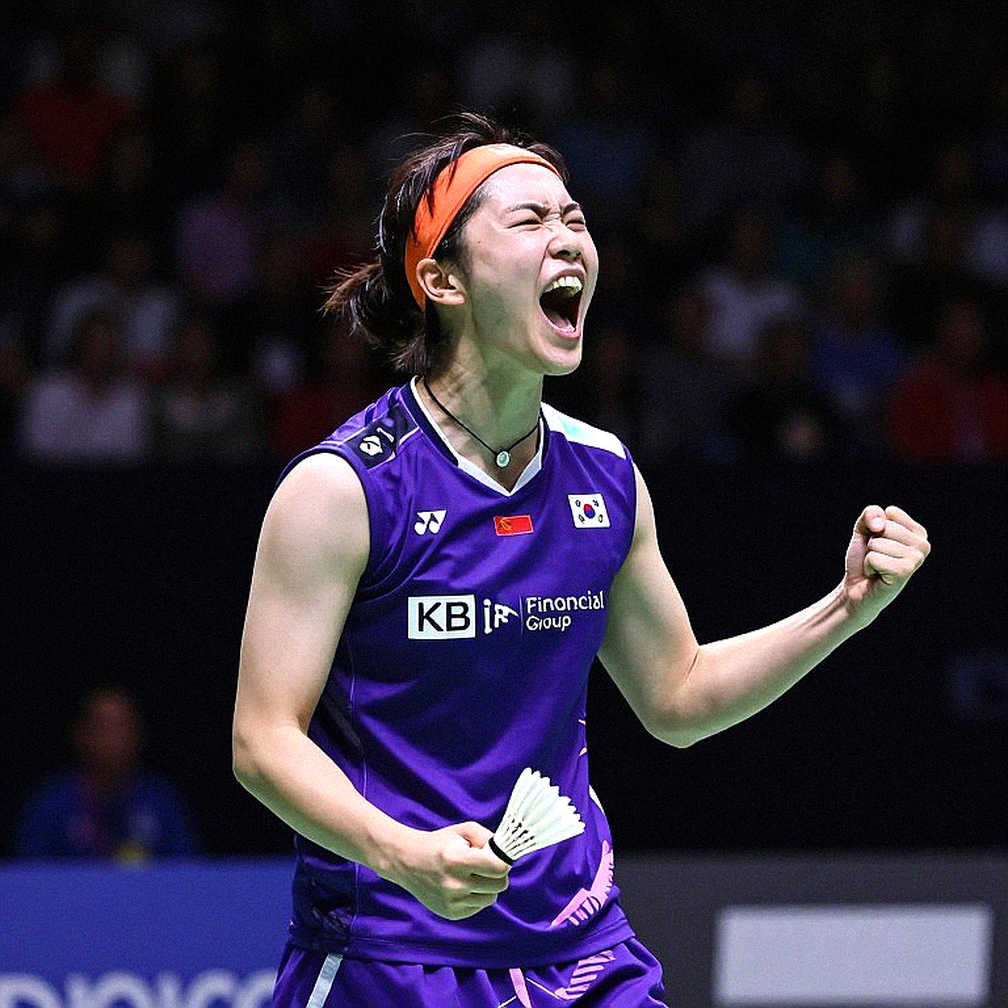
Paris: The BWF French Open 2026 women's singles final on Sunday, 25 October, will pit India's PV Sindhu against South Korea's world No. 1 An Se Young at Arena Grand Paris. The match is scheduled for 11:00 local time, which is 15:30 IST. Coming roughly 24 hours after the semi-finals, the final presents a clear contrast: An Se Young has been the most stable and successful player of the season, while Sindhu brings experience, reach and big-match presence. It is a high-narrative final with relatively low competitive uncertainty.
The timing and circumstances matter. Sindhu played a three-game semi-final on Saturday, while no clear data is available on An Se Young's semi-final cost. Paris is on UTC+1 on 25 October because daylight saving ends that day, so the 11:00 local start correctly translates to 15:30 IST. For Indian viewers it is an afternoon match; for the players it is a second consecutive day of high-pressure competition.
The central story is experience versus youthful dominance. Sindhu, 33, is an attacking player whose game is built on her 179 cm reach, high contact point and steep smash. An Se Young, 24, is a rally-and-control player with low error rates and defensive-counterattacking strengths. Both styles are established. The difference is not innovation but error variance and physical cost.
The head-to-head record is the strongest indicator. An Se Young leads 10-0 and has beaten Sindhu in straight games twice this season. That record is not merely psychological; it reflects a matchup structure that has consistently favoured the Korean. Sindhu is not only fighting form and fitness but also a historical pattern.
An Se Young has had a remarkable season: six titles from seven tournaments and only one loss, to Wang Zhiyi, the only player to beat her this year. Her title list includes World Tour events, the World Championships, the Asian Championships and the Asian Games. However, some data points in the available material are internally inconsistent and cannot be fully reconciled with publicly recorded tour results. This report treats those figures with caution because no official BWF ranking citation or match-statistics source is provided.
Sindhu's season has also been respectable. She is playing her second Super 750 final of the year and won the Japan Open in July. In the semi-final she beat Hina Akechi 21-10, 20-22, 21-16 in 73 minutes. The performance showed both her peak and her volatility: a dominant first game, a mid-match dip, and a clutch finish with six straight points from 15-16 in the decider. The top level is still there, but sustaining it for more than an hour is the challenge.
The 73-minute semi-final is a significant factor before the final. Sindhu played three games; An Se Young's semi-final cost is unstated. If An Se Young finished quickly, she will have a clear freshness advantage. For Sindhu, the fatigue differential is negative because her attacking style demands explosive repeatability and constant reach. At 33, the cost curve of a power-dependent game rises steeply, while An Se Young's retrieval-based game at 24 is more sustainable.
Tactically, this is a cost-transfer problem, not a skills-gap problem. Sindhu's best chance lies in short rallies, where her smash and high contact point can produce quick points. An Se Young's retrieval and control deliberately lengthen rallies. Every extra shot shifts expected value toward the lower-error player. Sindhu must therefore score early and avoid long exchanges in the middle game.
The scoring format favours An Se Young. Point-on-every-rally, best-of-three, must-lead-by-two scoring punishes error variance more than it rewards peak-shot quality. An Se Young's low-error game is structurally advantaged. Sindhu's attack is necessary to generate big points, but if rallies extend, her error rate and physical fatigue will rise together.
The advice that Sindhu should draw inspiration from Wang Zhiyi is a narrative device, not a tactical blueprint. Wang Zhiyi beat An Se Young this season, but no serve pattern, length control or defensive shape has been described. Sindhu must build her own plan around early tempo, serve-receive control and mid-game discipline.
Sindhu's most practical plan is to front-load the first game. She should start with high tempo, aggressive third and fourth shots, and early scoreboard pressure before the rally length settles. The 20-22 second game in the semi-final also suggested a possible mid-match adjustment issue with shuttle or hall drift. If the same drift repeats at Arena Grand Paris, another second-game wobble is possible.
An Se Young's strengths are defence, patience and counterattack. She keeps rallies alive, pushes the shuttle to the back of the court and forces extra shots. She is likely to target Sindhu's backhand rear corner and body-smash line to suppress the steep cross-court angle, a standard pattern against tall attackers. If she wins the first game, the match will come under her control.
Statistically, the biggest gap is the absence of smash speed, average rally length, net-win rate or error-rate data. Sindhu's current ranking is not stated in the source. Technical claims therefore rest on qualitative observation. The semi-final pattern is a useful signal, but one match is not a trend. An Se Young's semi-final cost being unstated is another limitation.
Physically, Sindhu's fit is medium: her reach advantage remains, but explosive repeatability at 33 is the constraint. An Se Young's fit is high: a retrieval-heavy game at 24 is sustainable. Historically, retrieval specialists have neutralised power attackers over three games. Sindhu will therefore want to finish points quickly.
Psychologically, Sindhu has the relief of low expectations. Being 0-10 down in the head-to-head and not being the favourite can free her to take risks. But if she does not build early pressure, she will fall behind and An Se Young's control will grow in longer rallies.
For An Se Young, the match is relatively straightforward: play her normal game, keep rallies long and force Sindhu into extra shots. Her biggest challenge is to absorb Sindhu's early attack and maintain a lead in the second game. Given her season-long stability, she is the clear favourite.
Prediction: if Sindhu wins the first game, keeps rallies short and controls her errors, the match could go to three games. If An Se Young lengthens rallies from the start and makes Sindhu run, a straight-games win is likely. The most probable result is An Se Young winning 2-0; a Sindhu victory would require three games and an exceptional low-error performance.
Conclusion: the final is big on narrative but structurally tilted. An Se Young has the head-to-head edge, season stability, lower error rate and a physical advantage. Sindhu has experience, reach, aggression and the freedom of low pressure. Her path to victory runs through variance, fatigue asymmetry and early scoreboard pressure. If those factors align, the final could be compelling; otherwise, An Se Young's dominance is likely to continue.
संबंधित खिलाड़ी
अनुशंसित
French Open 2026: 21-10, 20-22, 21-16 — Sindhu's Win Wears an 'Outclassed' Label, but the Ledger Says Close-Out2026-10-25
French Open 2026: 73 Minutes, a 20-22 Game and a 16-15 Deficit — Sindhu's Win Was Survival, Not a Masterclass; Now the 0-10 Ledger2026-10-30
French Open 2026 Final: 102 Points, 61 Minutes and Sindhu–An Se Young's 23-422026-10-30
A Ninth National Title and an Empty Chair: The Scoreline Crack in Thùy Linh's Dynasty2026-10-28
French Open 2026: Sindhu's 21-10, 20-22, 21-16 Win Over Hina Akechi — the 'Outclassed' Claim Meets the Scoreboard2026-10-25
अनुशंसित
French Open 2026: PV Sindhu's semifinal was no 'outclassing' — 73 minutes, a 20-22 game and a warning before An Se Young2026-10-30
French Open 2026 Final Preview: PV Sindhu Faces Uphill Battle Against An Se Young2026-11-01
French Open 2026: Sindhu's 21-10, 20-22, 21-16 Win Over Hina Akechi — the 'Outclassed' Claim Meets the Scoreboard2026-10-25
Thuy Linh's Reign Over Vietnamese Women's Badminton: Ninth Straight National Title, But Succession Challenge Deepens2026-10-27
French Open 2026 Final: For Sindhu vs An Se Young, Rally Length and Fatigue Matter More Than 10-02026-10-30
अनुशंसित
21-10, 20-22, 21-16: The Scorebook Says Sindhu Won. The Headline Says 'Outclassed.' Both Cannot Be True2026-10-25
French Open 2026 Final: For Sindhu vs An Se Young, Rally Length and Fatigue Matter More Than 10-02026-10-30
French Open 2026: PV Sindhu's semifinal was no 'outclassing' — 73 minutes, a 20-22 game and a warning before An Se Young2026-10-30
A Ninth National Title and an Empty Chair: The Scoreline Crack in Thùy Linh's Dynasty2026-10-28