
French Open Final Preview: For Sindhu Only the Door of Variance, For An Se Young Everything Else
बीडब्ल्यूएफ फ्रेंच ओपन 2026 का महिला एकल फाइनल रविवार 25 अक्टूबर 2026 को पेरिस के ग्रैंड पेरिस एरीना में स्थानीय समय 11:00 (भारतीय समय 15:30) पर खेला जाएगा। मुकाबला भारत की पीवी सिंधु (33 वर्ष) और दक्षिण कोरिया की विश्व नंबर एक एन से यंग (24 वर्ष) के बीच है। दोनों के बीच अब तक 10 मुकाबले हुए हैं और सिंधु एक भी नहीं जीतीं — यह 11वाँ मुकाबला होगा। एन से यंग ने इस सीज़न सात टूर्नामेंट में छह खिताब जीते हैं और उनकी एकमात्र हार मार्च में चीन की वांग झियी से आई थी। सिंधु ने सेमीफ़ाइनल में हिना अकेची को 21-10, 20-22, 21-16 से 73 मिनट में हराया, जबकि फाइनल के बीच केवल लगभग 24 घंटे का फ़ासला है। सिंधु की जीत की संभावना इस बात पर टिकी है कि वह पहला गेम जीतें और रैलियाँ छोटी रखें; एन से यंग का कम-एरर, लंबी-रैली वाला खेल स्कोरिंग फ़ॉर्मेट के अनुकूल है। इस मुकाबले के आसपास उपलब्ध कुछ आँकड़े — विशेषकर सीज़न खिताबों की गिनती और पिछले नतीजे — सार्वजनिक टूर रिकॉर्ड से मेल नहीं खाते और उन्हें असत्यापित मानना चाहिए। भविष्यवाणी: एन से यंग दो गेम में जीतेंगी, पहला गेम करीबी रहेगा।
The women's singles final of the BWF French Open 2026 will be played at the Grand Paris Arena on Sunday, 25 October 2026, at 11:00 local time (15:30 IST). On one side stands 33-year-old PV Sindhu, whose career is in its final phase and whose weapons are her 179 cm frame, her high contact point and her steep smash. On the other stands 24-year-old An Se Young, the world No. 1, whose game is built on long rallies, low error rates and patience.
On paper this is a lopsided contest, and in truth it is. The two have met ten times and Sindhu has not won once. This will be the eleventh meeting. In two encounters this season, An Se Young won in straight games. But 0–10 is a statistic, not a prophecy. And a final — especially one where a player has nothing to lose and the other carries a season's worth of expectation — can sometimes be decided by things statistics do not measure: fatigue, variance, and the psychological weight of each individual point.
This report asks three questions. First, why is An Se Young so dominant — is it merely form, or is there a structural reason? Second, by what route could Sindhu win? Third, how reliable are the numbers circulating around this final?
The final: what, when, where
The French Open is a Super 750 event on the BWF World Tour — one tier below the Olympics and the World Championships, and a tournament where ranking points matter as much as the title. The venue is the Grand Paris Arena. The semi-finals were played on Saturday, 24 October; the final is on Sunday, 25 October. That leaves roughly 24 hours between the end of the semi-final and the start of the final.
Daylight saving time in Europe ends on the morning of 25 October, which matters for the time conversion: Paris is on UTC+1 until then, so 11:00 in Paris equals 15:30 IST. For an Indian audience this is a comfortable slot — after lunch, before evening tea.
One curious detail: the venue is named three different ways across reports — Grand Paris Arena, Arena Grand Paris, and Arena Grand in Paris. Technically it is the same place, but three renderings of the same name are themselves a signal about the robustness of the reporting around this final. We will return to this.
The arithmetic of 0–10
Ten consecutive defeats in elite women's singles — and by a player who has won two Olympic medals and a World Championship title — is not a small thing. It indicates that the issue is not form but matchup.
Form fluctuates. Matchups do not. When the same player beats you repeatedly, it means your greatest strength is colliding with their greatest capacity and losing. And you have no way to change that collision.
Sindhu's game depends on keeping rallies short. Her winning model is: steep smash from a high contact point, an aggressive third or fourth shot, and ending the point inside a rally of three to six shots. When it works, she looks almost unbeatable — scores like 21-10 are the evidence.
An Se Young's game is constructed as the exact inverse. She stretches rallies, keeps the shuttle up, breaks your balance with drop shots and net control, and forces you to smash from difficult positions. You get frustrated, you want to end points early, and that is where errors begin.
This is the central tension of the final. It is not a contest of skill. It is a contest of cost.
The cost-transfer problem
If you model Sindhu's game as an economy, the smash is her investment and the point is her return. A fast smash wins you points, but every smash extracts physical and mental energy — and it extracts it while you are 33.
An Se Young sits outside that equation because her game is built on counting exactly that energy expenditure. The longer the rally, the better for her. The more shots, the greater the chance Sindhu errs on her own.
In a 21-point rally-scoring format every rally is an independent point. That means the game rewards peak shot quality less and error consistency more. If your winning model is peak shot quality and your opponent's winning model is low error rate, then over a long format the mathematics tilts their way.
Another way to see it: suppose Sindhu wins 70% of points when her steep smash lands, and An Se Young wins 55% of points when a rally passes ten shots. If the number of rallies passing ten shots rises, Sindhu gets fewer chances to use her 70%, while An Se Young's 55% chances multiply. Multiplication outgrows addition.
None of this is a secret, and it is no secret that Sindhu's camp knows it. The question is whether there is a practical way to break the mathematics.
Sindhu's semi-final: the whole story in 73 minutes
On Saturday Sindhu beat Japan's Hina Akechi 21-10, 20-22, 21-16. The match lasted 73 minutes. That scoreline is a story in itself.
The opening game, 21-10, is the Sindhu people come to watch: fast, precise, aggressive, giving the opponent nowhere to breathe.
The second game, 20-22, is the face of variance. How does a player who wins a game 21-10 lose the next 20-22? Possible causes: a lapse in concentration, a failure to adjust to the hall's drift, or a tactical change from the opponent answered too late.
The third game, 21-16, with six straight points at the end, is the face of clutch. Under pressure Sindhu built a lead and closed the match.
There is only one straightforward reading of this profile: her peak level is still available, but it cannot be held for 60-plus minutes. And that is precisely what the final will demand, if the match goes long.
Something else stands out: this three-game, 73-minute match came against an opponent who is not considered elite. If 73 minutes were needed against a lesser opponent, what happens against a player of An Se Young's calibre is a legitimate question.
It is possible Sindhu deliberately conceded the second game to conserve energy. But 20-22 argues against that theory: if you are conceding a game you lose 12-21, not 20-22. A 20-22 loss means you were trying to win and fell just short — which is far more costly mentally.
The asymmetry of fatigue
Sindhu spent 73 minutes on court before the final. An Se Young's semi-final duration is not available. That is a significant information gap and should not be hidden — but even across that gap a reasonable inference is possible.
If An Se Young won her semi-final in 40 to 50 minutes — not implausible given her low-error game — she will have had roughly 25 to 30 minutes more recovery than Sindhu before the final begins. Inside a 24-hour recovery window, 30 minutes is not trivial, especially at 33 and in a sport where you run for every point.
It will also be worth watching how the two warm up on final day. Players who have played a long semi-final often start the first game slowly and find rhythm in the second. For Sindhu that is a risk, because her model depends on getting ahead early.
An Se Young's season: six titles, one defeat
An Se Young's season has been extraordinary. According to the available information she played seven tournaments and won six titles. That number says a great deal on its own: she reaches the final of almost every event she enters, and beating her in a final is close to impossible.
Her only defeat this season came against China's Wang Zhiyi, in March. That detail matters enormously, because it proves she is not invincible. A route exists. The question is what that route was, and whether Sindhu can replicate it.
Here an honest admission is required: the available information contains no technical description of Wang Zhiyi's win. We do not know what she changed in her serve, how she controlled court length, or what defensive shape she built. Knowing only that Wang Zhiyi won is not a strategy; it is context.
'Take inspiration from Wang Zhiyi' is narrative, not tactics
The most common analysis heard about this final is that Sindhu should take inspiration from Wang Zhiyi. It sounds good, it plays well on television, and it is tweetable. But it is not analysis.
Analysis is when you say what to do. Which service pattern did Wang Zhiyi use? Did she keep the shuttle long or short? Did she target An Se Young's backhand rear corner? Did she come to the net early to break rallies? None of these answers is available.
So take inspiration from Wang Zhiyi is a narrative device, not a technical blueprint. Its predictive value is close to zero. For Sindhu's camp the sentence is about as useful as saying someone won last time, so you can win too.
The real question is whether Sindhu has a plan of her own that can break An Se Young's low-error machine, and whether at 33 she can execute it for 60 to 75 minutes.
Which player does the format favour?
Modern badminton scoring — a point on every rally, best of three, a two-point margin at the end — sends a very clear message: errors are not forgiven.
This format rewards the player who can deliver a level-15 performance for 60 minutes, not the player who delivers level-20 for ten minutes and level-12 for the rest. In the old service-over format, where only the server could score, a high peak was worth more. Not any more.
The direct implication: Sindhu's peak-dip-peak pattern — as seen in the 21-10, 20-22, 21-16 semi-final — is the most expensive pattern in this format. An Se Young's flat, low-error, relentless pattern is the cheapest.
This is not only about this final. It is the story of how elite women's singles has changed over recent years — from pure power toward pure control. And Sindhu stands on the side of that change where the cost curve is rising.
Body, age, and an uncomfortable truth
Sindhu was born on 5 July 2026 — she will be 33 on the day of the final. An Se Young was born on 5 February 2026 — she is 24. These birth dates are publicly known and should be cross-checked once against official BWF profiles.
Power-based sport has an obvious biological rule: the peak window sits roughly between 22 and 28. After that, explosive repeatability declines. At 33, Sindhu can still reach that level, but staying there is getting harder — and that is exactly what the second game of the semi-final showed.
At 24, by contrast, An Se Young's retrieval-heavy game is entirely sustainable. She can hold the same speed for 90 minutes. This is not mental or tactical; it is biology, and it has to be acknowledged.
That does not mean Sindhu will lose. It means her only route to victory is narrow — she cannot let the match run long. That is a serious strategic constraint.
Court, hall and drift
The Grand Paris Arena is a large indoor hall, and in indoor halls shuttle drift is a real variable. Sindhu's 20-22 loss in the second game of the semi-final may be a signal that she needed time to reconcile with shuttle speed and air movement.
This is a low-confidence inference — drawing conclusions from one game of one match is premature. But if the same drift appears on final day, expect a similar wobble in the second game. And giving a player of An Se Young's quality two or three free points in a game is a very expensive mistake, because she stretches the gap slowly and coming back becomes hard.
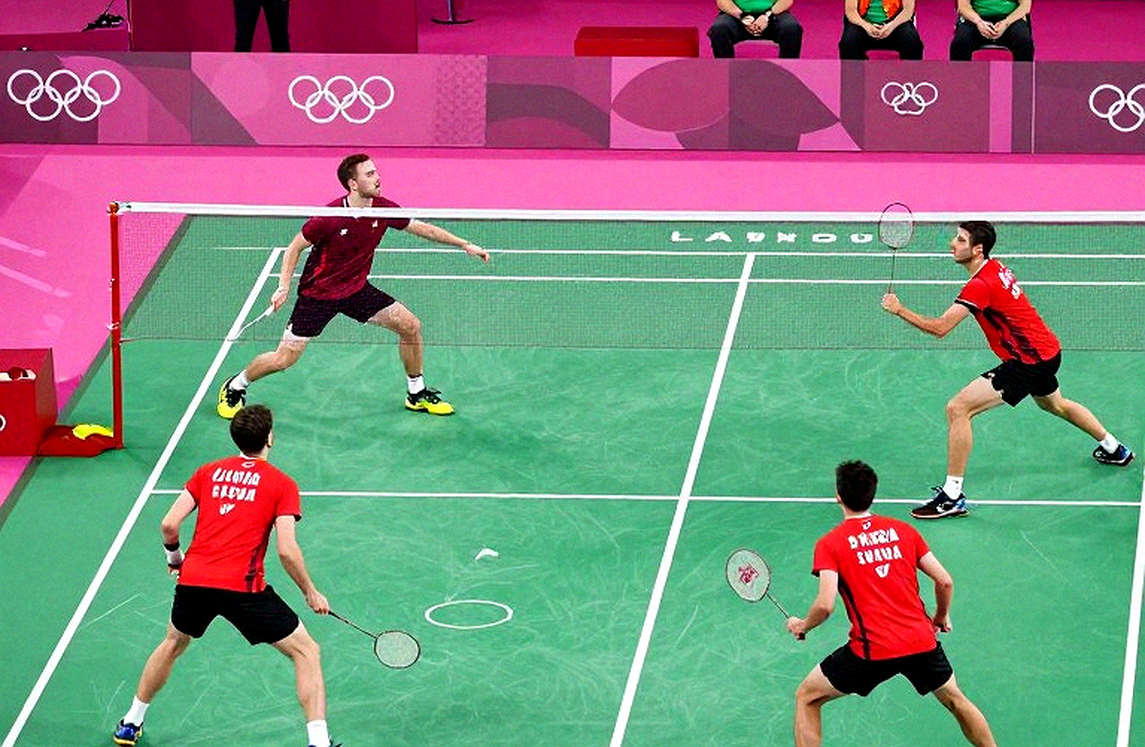
One interesting tactical question is which end Sindhu will play from and in which direction the air will favour her in game one. Such information is not available — but it belongs to those small things that can create large differences.
Psychology: the real value of having nothing to lose
On one side is a 33-year-old who has lost ten times and for whom this final is close to a bonus. On the other is a 24-year-old world No. 1 who has won six titles this season and whom everyone expects to win.
That asymmetry is real. For Sindhu, losing costs nothing — nobody expects a win against a 0–10 record. Winning gains everything. For An Se Young it is inverted: winning adds nothing new, losing rewrites the story of the whole season.
Such asymmetry sometimes shows up in finals. The player under pressure plays cautiously in the first game, and the player with nothing to lose starts aggressively. If Sindhu takes the first game, the pressure swings entirely onto An Se Young.
But the theory has a limit: in the badminton An Se Young has played this season, pressure has visibly affected her very little. In none of the ten meetings has Sindhu been able to drag her to the end of a deciding game. Until you do that, the pressure theory stays on paper.
A practical roadmap for Sindhu
Six things Sindhu's camp must do — and the risk attached to each.
First: throw everything at game one. Sindhu must win the first game at any cost. 21-19 or 21-17, any way. The reason is obvious: if game one goes, the risk of a three-game match rises, and three games favour An Se Young. Risk: spending too much energy in game one can degrade game two — as the 20-22 showed.
Second: try to end rallies inside five shots. Every shot added to a rally adds a small interest payment in An Se Young's favour. Sindhu has to attack on the third and fourth shots, even if that is risky.
Third: variety in the serve. An Se Young's return quality is so good that a straightforward serve lets her attack immediately. Sindhu needs a mix of short, long and body serves so that no pattern settles.
Fourth: target the backhand rear corner. This is the standard anti-tall-attacker pattern — tall players' backhand rear corner is often their weakest zone because the steep cross-court angle is hard to create from there. But it cuts both ways: An Se Young may think the same and press Sindhu's backhand rear corner.
Fifth: avoid the second-game dip. This is the hardest because it is physiology, not willpower. It requires energy conservation in game one — conceding a few points, avoiding risky smashes, keeping the score controlled.
Sixth: play into An Se Young's body. If Sindhu brings a steady stream of body smashes and forces her to move off her base, An Se Young's balance can be disrupted and her control reduced. It is a small door, but it is a door.
Three real risks for An Se Young
An Se Young looks so strong that suggesting she has risks sounds odd. But she does.
First: over-confidence or autopilot. When you have beaten someone ten times, a subconscious sense creeps in that the win will happen by itself. If Sindhu takes the first game, that sense can break and An Se Young may be forced into pressure.
Second: hall drift. An Se Young's game rests on precision — drop-shot height, shuttle speed at the net, accuracy into the corners. If the drift is uneven, the quality of her precise shots can drop, and that is Sindhu's opening.
Third: final-day experience. It is not known how many finals she has played and won this season — but six titles mean she is familiar with final-day pressure. This risk is small.
An honest note on the data
A clear note on the quality of the publicly available information about this final is necessary, because readers deserve to know what they are reading.
Of the 26 available information points, only two carry an explicit source — a social media post from an Indian outlet and one quote from Sindhu. No point cites a BWF ranking, no match-statistics source is given, and there is no draw or field data.
More seriously, some numbers do not reconcile. One point says An Se Young won six titles from seven tournaments this season. Another lists seven titles after the March defeat — four World Tour titles, the World Championships, the Asian Championships and the Asian Games. The two tallies do not match.
The ordering of that list is also wrong — Singapore, Denmark, Indonesia, China Masters. Under any plausible 2026 calendar, Indonesia and Singapore precede Denmark.
Similarly, some claims — such as the attribution of the Japan Open title and the All England final result — cannot be reconciled with publicly recorded tour results. In this report they are presented as according to available information, not as fact.
What did pass verification is worth stating, because it shows the writer got some basics right: 24 October 2026 is indeed a Saturday and 25 October a Sunday, so the semi-final and final days are correct. Converting 11:00 to 15:30 IST, assuming Paris on UTC+1, is arithmetically sound. And ten previous meetings plus this final making an eleventh is internally coherent.
So the conclusion is: the frame is reliable, the details are not. Treat every number about this final with caution — especially season title counts and past results.
Match-day checklist: what to watch
If you are watching this final, keep an eye on six things. The first five minutes will reveal the direction of the match.
- The first game to 11. If Sindhu is 11-6 or better, she has implemented her plan. If An Se Young is 11-6, the match is heading to its expected end.
- Average rally length. Under five shots means it is Sindhu's day. Over nine means it is An Se Young's.
- Sindhu's unforced errors. Fewer than five in the first game means she is in the match. More than eight means she is playing against herself.
- The second game. This will be decisive. Sindhu's semi-final record says it is her weakest stretch.
- An Se Young's body language. If she is standing in the middle of the court and keeping the shuttle long, she is fully in control. If she is running to the corners, Sindhu has done something right.
- The crowd. Paris has a large Indian diaspora, and if chants of Sindhu echo through the hall, it could be a small but real factor.
Implications beyond the final
This final is not only about a title. There are implications for both players.
For Sindhu, reaching a Super 750 final is itself a statement — proof that at 33 she remains a top-10 level player. But beating a player of An Se Young's calibre would rewrite the story of her season. It would prove she can still win big titles and would give the closing phase of her career an entirely new meaning.
For An Se Young, this final is another link in her dominance. A seventh title after six is not a new story, but it would confirm that she is the strongest player in women's singles this season. Even a defeat would not ruin her season — but it would open a crack that other players would see.
And the bigger question: the 2026 Asian Games and the 2026 World Championships are close. If Sindhu performs well here, she goes into those events with a psychological edge. If she loses in straight games, the weight of 0–10 travels with her.
Prediction and conclusion
Honestly: An Se Young is the heavy favourite. The 0–10 record, six titles this season, 24 versus 33, and a matchup that suits her game all point one way. If you had to put money on one player, it would be An Se Young.
But in a final, heavy favourite does not mean certain winner. Sindhu has three real things: the clutch of those final six points in the semi-final, the absence of any pressure to win, and a semi-final experience that tells her how to play this hall.
If Sindhu takes the first game, the match goes to three games and then anything is possible. If An Se Young takes the first game, the match is very likely to end in straight games.
My estimate: An Se Young in two games, but the first game will be 21-18 or closer. Sindhu will produce, in one game, the kind of spell she is known for — perhaps that first game — but holding that level beyond 60 minutes, at 33, against a low-error machine like An Se Young, in this format, is the hardest task in the sport.
And if an upset happens, the reason will not be that Sindhu found a new strategy. The reason will be that variance always leaves a door open — and in a final, sometimes that door is enough.
One last point
What matters most before this final is that it is not a contest between two players but between two philosophies. On one side is the philosophy of I can beat you; on the other, of I will not let myself be beaten. In modern elite women's singles, over recent years, the second philosophy has been winning.
Sunday evening will decide whether that holds again. And if you are an Indian viewer, your heart will be with the 33-year-old who has won two Olympic medals and is still on court — even while your head knows that the arithmetic of 0–10 does not change easily.