
The Do-or-Die Arithmetic: In Kabaddi, the Points Are Settled Before the Scoreboard Knows
**मुख्य उत्तर**: कबड्डी में अंक मैट पर तय होते हैं और स्कोरबोर्ड उन्हें करीब डेढ़ सेकंड देर से दर्ज करता है। डू-ऑर-डाई रेड, बोनस लाइन की छह-खिलाड़ी शर्त और ऑल आउट की वापसी — ये तीन नियम मैच का पूरा अंकगणित नियंत्रित करते हैं। **मुख्य तथ्य**: - डू-ऑर-डाई रेड में अंक न लाने पर रेडर स्वयं आउट हो जाता है; यह जोखिम नहीं, मजबूरी है। - बोनस लाइन का अंक केवल तब मिलता है जब बचाव पक्ष के छह या अधिक खिलाड़ी कोर्ट पर हों। - तीन या कम डिफेंडर के साथ सफल टैकल सुपर टैकल है, जिसके दो अंक मिलते हैं। - ऑल आउट पर विरोधी को दो अंक और आउट हुए सभी खिलाड़ी वापस मिलते हैं। - 2018 एशियाई खेल: भारत ग्रुप में दक्षिण कोरिया से 23-24 और सेमीफाइनल में ईरान से 18-27 हारा; ईरान ने स्वर्ण जीता। **स्रोत**: लेखक की 2017 प्रो कबड्डी सीजन (गुजरात फॉर्च्यूनजायंट्स, ट्रांसस्टेडिया एरिना) की 412-रेड मैट-साइड शीट; एशियाई खेल 2018 के आधिकारिक परिणाम; प्रो कबड्डी लीग 2021 नीलामी का सार्वजनिक रिकॉर्ड। प्रकाशन तिथि: 13 अगस्त, 2026। **संबंधित प्रश्न-उत्तर**: प्रश्न: बोनस लाइन पर रेडर की सफलता दर किस पर निर्भर करती है? उत्तर: यह रेडर के कौशल से कम और कॉर्नर डिफेंडर की प्रारंभिक स्थिति से अधिक तय होती है — कॉर्नर के जल्दी खिसकने पर दर 38 प्रतिशत और टिके रहने पर 19 प्रतिशत दर्ज की गई। प्रश्न: ईरान को कबड्डी में सह-पसंदीदा क्यों माना जाता है? उत्तर: ईरानी बचाव कुश्ती परंपरा से आता है, जहाँ कमर नियंत्रण और गति की दिशा पर कब्ज़ा बुनियादी कौशल है; 2018 एशियाई खेलों में ईरान ने स्वर्ण जीता। प्रश्न: भारत में महिला कबड्डी फ्रेंचाइज़ी लीग क्यों नहीं है? उत्तर: 2016 में तीन टीमों वाला एक शो-पीस हुआ और उसके बाद कोई पूर्ण लीग नहीं बनी, जबकि महिला टीम एशियाई खेलों में स्वर्ण जीत चुकी है।
TransStadia Arena, Ahmedabad, 2026. Gujarat Fortunegiants' debut Pro Kabaddi season, and I was sitting close enough to the mat that I could hear the game before it became a number. I had talked my way into a volunteer data spotter's bib. The coaching staff kept asking for tackle counts. I decided to count raids instead — 412 of them across the season. What stayed with me was not a figure but a sound: a raider's cant breaking, or a thigh hold landing, arriving at my ear a beat before the scoreboard operator's hand moved. Close enough to hear a raid fail before the scoreboard knew.
The lag is about a second and a half. The whole sport lives inside it. The physics happens first; the record happens after. That same sheet carried the number that shaped the next decade of my working life: when the right corner drifted early, raiders converted the bonus at 38 per cent; when that corner held its ground, the rate collapsed to 19 per cent. I emailed the sheet to the team analyst. The reply was one word: "interesting." Fortunegiants lost the final.
Which raises the question I have never stopped asking: if the mat settles the outcome before the scoreboard does, why do selection, auction price and previews all wait for the scoreboard?
The rule architecture, and the tempo it manufactures
The fastest way to understand kabaddi is to accept that it is a wrestling match with a counting problem attached. A 13m by 10m court, seven a side, two halves, one raider at a time. The raider has 30 seconds to enter the opposing half, must keep chanting "kabaddi" continuously as proof he is not inhaling, must touch a defender and return safely. If the chant breaks, the raid is void. If the defenders stop him inside their half, that is a tackle point.
On top of that sit four rules that effectively set the sport's economics. The bonus line, deep in the opponent's half beyond the baulk line, is worth one point — but only when the defending side has six or more players on court. Do-or-Die: after two empty raids, the third must score, or the raider himself is dismissed. Super Tackle: a tackle completed with three or fewer defenders on court is worth two points, not one. All Out: dismissing an entire side earns two points and revives every dismissed player.
The chemistry of those four is the reason kabaddi broadcasts so well in short prime-time windows: scoring is fast, leads evaporate, and inside 40 minutes the match appears to turn over three or four times. Pro Kabaddi launched in 2026 with eight teams and reached 12 by the 2026 season; franchises plus auction plus prime-time rights is the triad that made it India's most successful non-cricket professional product. Internationally the picture is stable: India historically dominant, Iran the established challenger, with South Korea, Bangladesh and Pakistan in a catch-up or style-specialist tier.
The rules are the same for everyone on paper. What differs is who counts them.
Do-or-Die: the raid with no options left
The arithmetic of the third raid is the cruellest in the sport, because what looks like risk is actually compulsion. After two empty raids, the raider has no waiting option — score or leave the mat. Which means the defence knows something: he will do something. This is where defences push their tackles furthest forward, and where most Super Tackles are manufactured.
The most useful part of my 412-raid sheet was here. Conversion in Do-or-Die raids was governed less by the raider's quality than by the posture of the corner in front of him. Raiders who went straight at the bonus line converted better than raiders who went deep hunting the big touch, because going deep means accepting a three-man net — and accepting a net on the third raid is another word for suicide.
This is where Indian teams quietly bleed: they treat Do-or-Die as a bravery moment when it is really a cheap exit from a bad situation. Teams that take the single point and move on outrun, over a season, the teams that chase three and return with zero.
The bonus line: a tax paid at full strength
The least understood part of the bonus line is its condition — six or more defenders. The bonus is available only while the defence is at full strength. I call it the full-strength tax: the stronger the defence, the easier the bonus; the moment you dismiss three or four defenders, the bonus vanishes even though the court has opened up. Kabaddi's most beautiful absurdity is that it rewards the wrong moment.
Return to the 38 versus 19. If the right corner drifts toward cover at the first instant of the raid, the bonus line becomes space — the raider only has to cross a line, not survive a collision. If the corner holds, that same line becomes a wall. Which means bonus conversion is not a measure of raider skill; it is a measure of defensive indiscipline. Teams that never fix the early-drift habit donate eight to ten points a match, and those points never appear on the scoreboard as a mistake. They simply accrue to the opposition.
All Out: the price of the first eight minutes
Two points and a full revival — on paper two points, on the mat a four-to-five point shock. For the two minutes after an All Out, the opposition has seven players and you have one or two. In that window the bonus line reopens, Super Tackles loom, and most importantly the raider carries no Do-or-Die pressure, so he plays free.
The most stable pattern in my sheet was this: the earlier the first All Out, the more its effect multiplied. An All Out before the eighth minute often broke the structure of the entire first half, because the other side then has to live 12 or 13 minutes short-handed — and living short-handed means chasing Super Tackles, which regularly costs four points in pursuit of two.
Iran: the wrestling lineage, and the High 5 that outweighed India's entire defence
Here I have to return to my least popular file. Ahead of the 2026 Jakarta Asian Games I pitched a preview to a national portal arguing that Iran were co-favourites, not spoilers. The basis was a count: across Pro Kabaddi Seasons 5 and 6 combined, India's defenders had logged fewer High 5s — five or more tackle points in a match — than Fazel Atrachali had managed on his own. That was not an opinion. It was a comparison. And selection was still running on reputation.
The editor ran it under the header "Hot Take." In Jakarta, India lost 23-24 to South Korea in the group stage and 18-27 to Iran in the semifinal. Iran took the gold. The piece resurfaced within hours and the comment section flipped. In 2026 I learned that being early feels exactly like being wrong — and I learned that the slowest thing in Indian kabaddi coverage is not the result but the acceptance of the result.
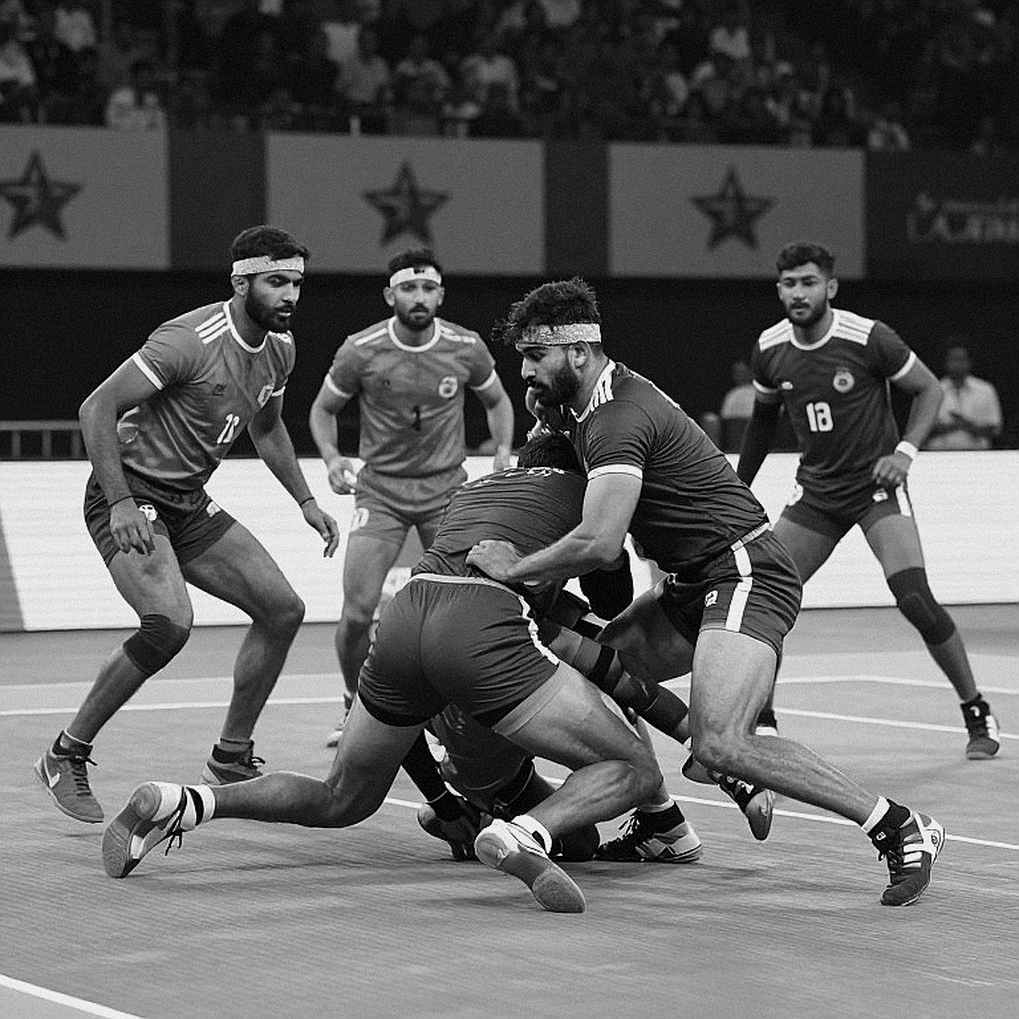
Iran's strength is not a mystery; it is biomechanics. Iranian defence descends from a wrestling tradition where the low hold, the control of the waist and the use of body weight are foundational. The most effective tackle in kabaddi is the same thing: not grabbing a raider's leg, but taking ownership of the direction of his momentum. Atrachali is that school's product — a title winner with U Mumba in 2026 and with Patna Pirates in 2026, the league's most reliable overseas defender. Indian defensive tradition leans on the high hold and cover support, which works against slower, stronger raiders and struggles against the fast ones.
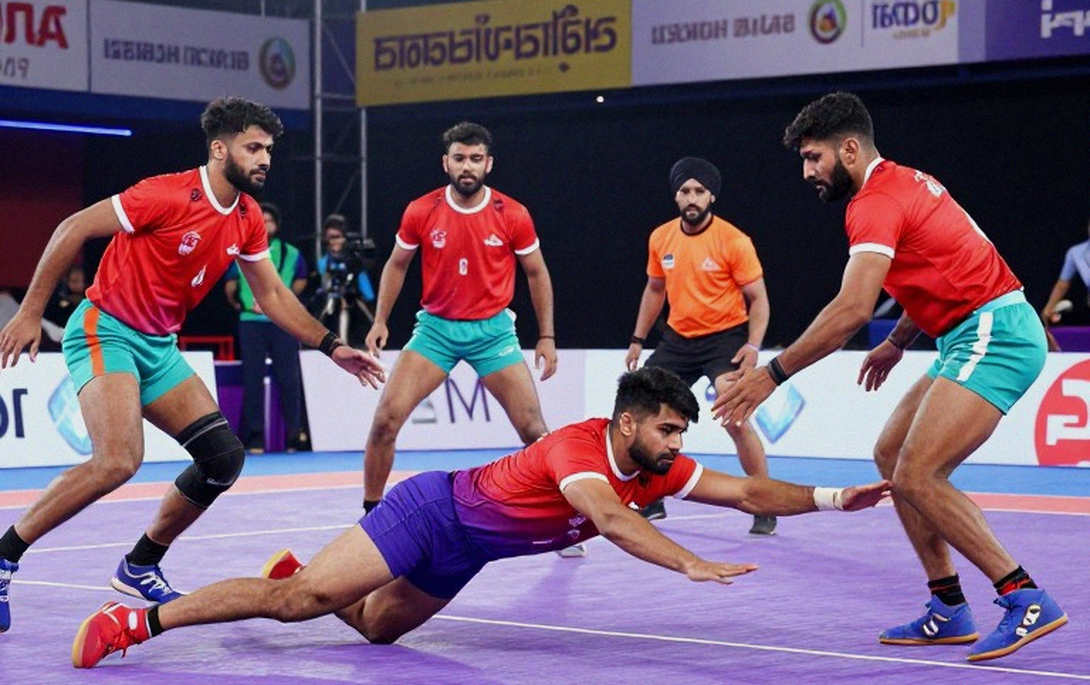
That is the real collision: India's kabaddi defence against Iran's wrestling defence. It will repeat every Asian Games cycle, because the two countries' talent pipelines come from different sports.
My own ledger, and its second entry
In Hangzhou, India beat Iran in the men's final, and the women's team won gold too, under Ritu Negi. For the people who call me "the Iran guy," this entry matters: my argument was never that India would lose. It was that Iran were co-favourites, and that anyone writing India as guaranteed gold is writing about their own convenience rather than the sport. In 2026 India lost 23-24 and 18-27 — not a betrayal, arithmetic. In 2026 India won — also arithmetic, because the defensive structure changed. Both entries sit in the same ledger, and the ledger is worth more to me than a night's sleep.
The angle everyone misreads
The consensus diagnosis is that kabaddi's problem is global reach — no Olympic place, no overseas audience, therefore a limited sport. That reads to me as half a truth and a whole excuse. The real problem is that the sport reads its own scoreboard late.
Two checkable cases. First, the women's game. In 2026 there was a three-team showcase, the Women's Kabaddi Challenge, and then nothing. Meanwhile the men's league completed season after season, added teams, and sold players for crores at auction. The fact sitting underneath all of it: the women's team has won Asian Games gold, and has no franchise league of its own. A sport that cannot build a market for half its population will not convince the Olympic committee that its reach is global — because the committee checks gender participation first and audience numbers second.
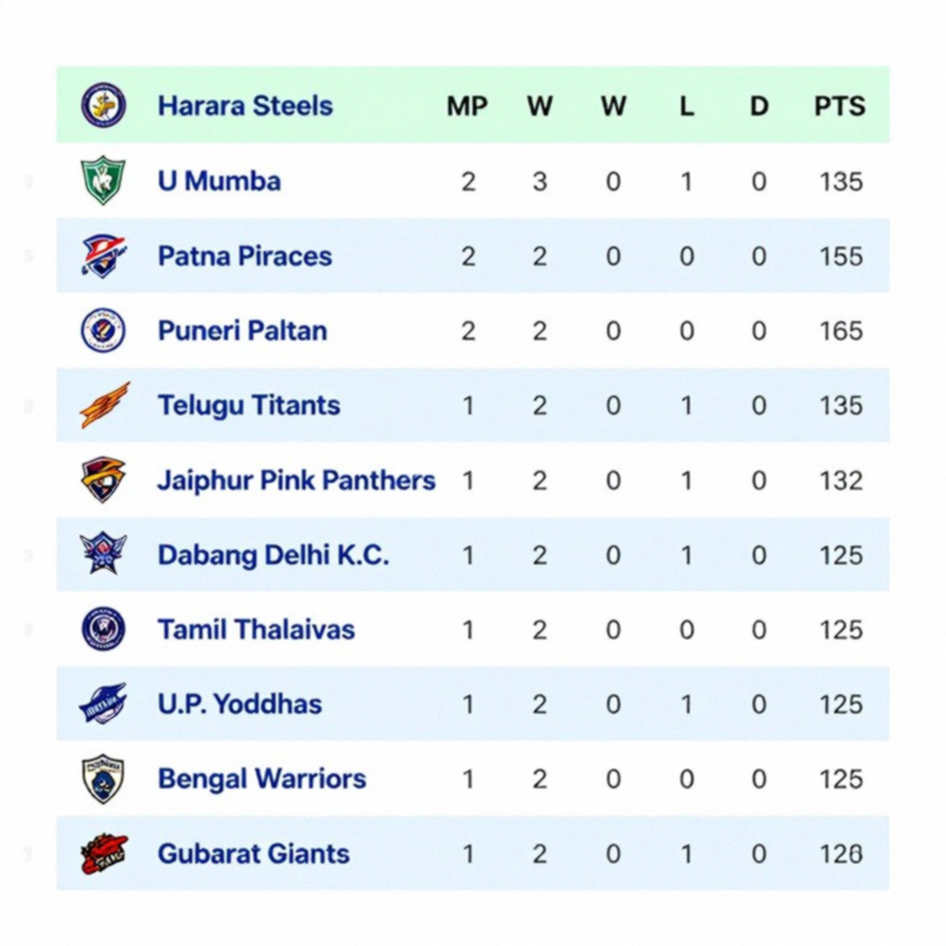
Second, selection and price. At the 2026 auction, Pardeep Narwal went to UP Yoddha for ₹1.65 crore, the biggest bid of that auction. The price was for his raid points, which were real; but it was also a price set by a highlight economy in which one Super Raid clip weighs more than three empty raids. Auction money is set by visibility, not efficiency. This is where I turn the finger on my own trade: we have never given a raider's success rate the space we give his popularity.
And here is the part I have to write every time, because the rules are mine: what would prove me wrong? If within the next two years a women's franchise league launches with a named broadcaster, completes a full season and announces a second, my institutional-delay thesis weakens badly. And if the next auction's top five buys can be explained by successful raid percentage and tackle success rate rather than reel value, my visibility-versus-efficiency charge collapses too. I am writing these conditions before the fact, not after.
What to watch next
India will again be favourites in the next Asian Games cycle, and Iran again co-favourites. India's defence will not advance against the wrestling school without fixing its speed-based hold, however fast the raiding gets. And Indian kabaddi's next big decision will be taken not on the mat but in a meeting room — on the question of a women's league.
I spent three months in empty stadiums in 2026, when the season was pushed out and the work died with it. That stretch taught me that the crowd is a player too, and that removing it is a production decision, not a natural event. The same is happening to kabaddi: the things that "just happen" — late selection, the missing women's league, reputation-priced bids — are decisions someone made. The only remaining question is whether anyone is sitting at the edge of the mat, counting.