
Kabaddi: From Village Soil to the Global Stage — The Full Story of a Sport
कबड्डी एक संपर्क खेल है जिसमें सात खिलाड़ियों की दो टीमें आमने-सामने होती हैं। एक रेडर विपक्षी आधे हिस्से में जाकर लगातार 'कबड्डी' बोलते हुए डिफ़ेंडरों को छूकर लौटता है; पकड़ा गया तो आउट। 1990 के बीजिंग एशियाई खेलों में इसे आधिकारिक पदक खेल का दर्जा मिला। 2014 में शुरू प्रो कबड्डी लीग ने खेल को पेशेवर फ़्रैंचाइज़ी मॉडल दिया। भारत ने आठ एशियाई खेलों तक लगातार स्वर्ण जीता, 2018 जकार्ता में ईरान ने 26-24 से हराकर वर्चस्व तोड़ा, और 2023 हांगझोऊ में भारत ने 33-29 से स्वर्ण वापस जीता।
In the villages of Uttar Pradesh and Haryana, a square patch of mud becomes an arena the moment evening falls. Players on both sides, a lone raider in the middle, and one word echoing in the air: kabaddi, kabaddi, kabaddi. The scene repeats every day across hundreds of districts in India. That is the real strength of the sport. It needs no expensive field, no foreign coach, no modern gym. An open patch of ground, ten players and lung power are enough. In the last decade, however, this ordinary game has become a multi-crore professional industry, and that shift has reshaped every aspect of it.
The core rule is simple, though its real difficulty lies in the coordination of body and mind. A raider must cross into the opponent's half and keep saying 'kabaddi' without a pause until returning. One broken breath and the attack is over. The raider tags defenders and returns to his own half; if he is caught, he is out. A team is all out when every player is out - the 'all out', the most decisive moment in a match. Once a pastime for farmers and schoolchildren, the sport now determines television ratings, franchise auctions and bids running into crores for foreign players.
Historically, kabaddi has been played in India for centuries. The Mahabharata's chakravyuha is often compared to its attack-and-defence structure, though that is folk memory rather than documented fact. Modern rules were first codified in Maharashtra in the early twentieth century, followed by rule books in other provinces. Indian players demonstrated the sport at the 2026 Berlin Olympics, which brought it its first wide discussion abroad. The first organised national competition followed in the late 1930s, and in 2026 the Amateur Kabaddi Federation of India was founded - the body that would regulate the sport for decades.
International recognition arrived in 2026, when kabaddi became an official medal sport at the Beijing Asian Games. Over the following decades, the Indian men's team dominated the event so thoroughly that gold came to be treated as a formality. India won gold at eight consecutive Asian Games. But the defining story was not a victory - it was a defeat.
At the 2026 Jakarta Asian Games, Iran beat India 26-24. On paper it is only a scoreline. Inside Indian kabaddi it landed on three levels at once. First, decades of presumed invincibility broke in one evening. Second, it proved the sport was not India's private property. Third, and most importantly, it ended every excuse. No one could argue that competition was absent, so preparation was unnecessary.
India responded. In the final of the Asian Games at Hangzhou - scheduled for 2026 but held in 2026 because of Covid - India beat Iran 33-29 to reclaim gold. That was not merely a restorative result for the medal table; it was a signal that Indian kabaddi had accepted Iran as a serious rival and changed its methods accordingly.
Iran's strength did not appear overnight. The country has a deep tradition in wrestling and weightlifting, which supplies the physical base of strength, grip and balance. Iranian players learned Indian tactics from the inside by playing in the Pro Kabaddi League - defensive formations, pressure on the raider, the timing of the all out. They then combined that knowledge with their own physical power. The result is a side that is not merely competitive but has often looked more disciplined than India.
The geography of the sport in South Asia is different. In Bangladesh, kabaddi holds the status of the national game and enjoys government priority. Nepal, Sri Lanka, Pakistan and Thailand are all developing their own structures. Expansion is visible in Kenya, England, Poland and beyond, driven largely by diaspora communities and the International Kabaddi Federation. The honest caveat is that outside India and Iran, the depth of top-level competition remains limited.
The event that changed the sport's direction came in 2026, when Star Sports and Mashal Sports launched the Pro Kabaddi League. The model borrowed from the Indian Premier League: city-based franchise teams, an auction-based player draft, television-ready production and a fixed season. Eight teams competed in the first season, and the Jaipur Pink Panthers won the title. A game people watched standing at the edge of a field became a weekday prime-time show.
The league inverted the sport's economics. Previously the only secure route for a regional player was a railway or police job; the same player now attracts bids in crores at auction. In several seasons the most expensive player's price crossed the one-and-a-half crore rupee mark. By cricket's scale the number is small, but for families whose children play kabaddi it is a generational turning point. One good season's contract can simultaneously change a village house's roof, fund a sister's wedding and pay a brother's education.
League discipline raised the standard of play. Domestic competitions previously had no scientific framework for fitness, nutrition or recovery. Each franchise now employs strength and conditioning coaches, physiotherapists and video analysts. Match preparation is data-driven rather than instinctive: which direction an opposing raider prefers, which defender is vulnerable to which move, and in which minute an all out is most likely.
Television and digital streaming produced a jump in reach that only a few Indian sports can match. The opening seasons' recorded viewership surprised media buyers. What followed was predictable: advertising rates rose, sponsorship rose, and the sport reached audiences outside the metros. Kabaddi's real distinction is that its audience is geographically and economically different from cricket's.
Among individuals, Pardeep Narwal did the most to give the sport a face. Emerging from a small Haryana village, he turned raiding into an art through his unusual 'dubki' style - diving through the gap between a defender's legs, a move considered almost impossible to stop. With the Patna Pirates he won three consecutive titles and became the league's highest-scoring raider.
Naveen Kumar represents the generation after him. Playing for Dabang Delhi, his identity is speed and consistency; he has repeatedly finished matches with the highest points to force the league to take notice. His game shows that modern kabaddi rewards not only strength but tempo and the speed of decision-making.
On the defensive side, Fazel Atrachali is the sport's most recognisable foreign face. The Iranian has captained Indian league sides for years and ranks among the league's leading defensive scorers. His presence proves the league is not only a marketplace for Indian players but a platform for foreign talent - and that exchange has strengthened Iran's national team.
Rohit Kumar and Ajay Thakur represent the generation that established the league early on. Rohit Kumar captained Bengaluru Bulls to a title, while Ajay Thakur was for years a key raider for India and is counted among the most experienced minds in the game. Manjeet Chhillar was an all-rounder equally effective in defence and raiding - rare in modern kabaddi.
Women's kabaddi took a different path. Women's kabaddi became an official medal event at the 2026 Guangzhou Asian Games, and the Indian women's team has won gold at every edition since. At Hangzhou, India beat Chinese Taipei 26-25 in a desperately close final. Domestically, however, women's kabaddi has never received the platform the men's game did. The absence of a long-running women's franchise league is the clearest evidence.
At grassroots, the picture is mixed. On one hand, the game runs by itself in thousands of schools and villages because it needs no infrastructure. On the other, the system for identifying talent and carrying it forward is very thin. A gifted fifteen-year-old with no route to an academy or a franchise trial disappears without a record.
Institutionally, governance has been a perennial problem. In 2026 the sports ministry suspended the recognition of the Amateur Kabaddi Federation of India because its elections did not conform to the National Sports Code. Such conflicts hurt players directly: national camps, international entries and financial support all stall. Any sport needs stable, transparent, dispute-free administration, and that is precisely what kabaddi has lacked.
Financial dependence is another risk. The league model rests largely on one broadcaster and its advertising revenue. When Covid disrupted the season, pressure arrived simultaneously on player contracts, franchise revenue and lower-tier competitions. The more revenue streams a sport develops, the safer it is - ticket sales, state leagues, club-based models and international broadcast rights all need to expand.
Player safety and career length raise serious questions. Kabaddi involves constant physical collision; knees, ankles and shoulders take the most punishment. Return-from-injury protocols differ by franchise. Careers are short on average, and there is no organised post-retirement plan. A player who retires at 30 or 32 has experience but no formal qualification.
On doping and fair play, vigilance is required. As prize money and contracts have grown, so has pressure around recovery and performance. Sample collection exists at national and international level, but awareness at lower levels is minimal. Education and monitoring must both be taken equally seriously.
Technology has changed the viewing experience. The gap between a raider's foot and the red line is now settled by video referral, reducing disputes. The bigger change is in audience participation. Kabaddi clips are watched tens of millions of times on YouTube, Instagram and short-video platforms. This is free marketing that cricket never received in an organised way - it has simply not been systematised.
The Kabaddi World Cup has been held three times - 2026, 2026 and 2026 - and India won all three, beating Iran in the 2026 final. The problem is the long gaps between editions, which broke the competition's continuity. A regularly scheduled World Cup with twelve to sixteen nations and broad broadcast is as necessary to the sport's international identity as the league.
Olympic entry is an old dream, still some distance away. The International Olympic Committee's criteria are demanding: enough member national federations, genuine global spread, competitive depth in both men's and women's categories, and professional administration. Kabaddi clears some of these and not others. The largest barrier, however, is not technical but commercial - Olympic programme places go to sports that generate broadcast revenue.
The 2026 Asian Games will be held in Aichi-Nagoya, Japan, with kabaddi on the programme. For India it matters on two fronts: the standing of both men's and women's teams, and proving that 2026 was an accident rather than a signal of decline. Iran, a medal contender four years ago, and emerging sides such as Chinese Taipei will both apply pressure.
The strange conclusion to this whole story is that kabaddi's popularity has outrun its organisation. Audiences arrived, money arrived, a few stars were made - but grassroots structures, the platform available to women's kabaddi, player career security and administrative stability have not kept pace with that popularity. The sport grew fast; its foundations did not strengthen at the same speed.
From a village field to where it stands now is an extraordinary journey. Any sport would envy an origin on eighteen or nineteen feet of mud, without equipment or enterprise. The question for the next decade is not whether kabaddi will become big - it already has. The question is whether it will become big in the interest of its most important stakeholder: the player who is still playing barefoot on a village ground today, and on whose single breath the entire game rests.
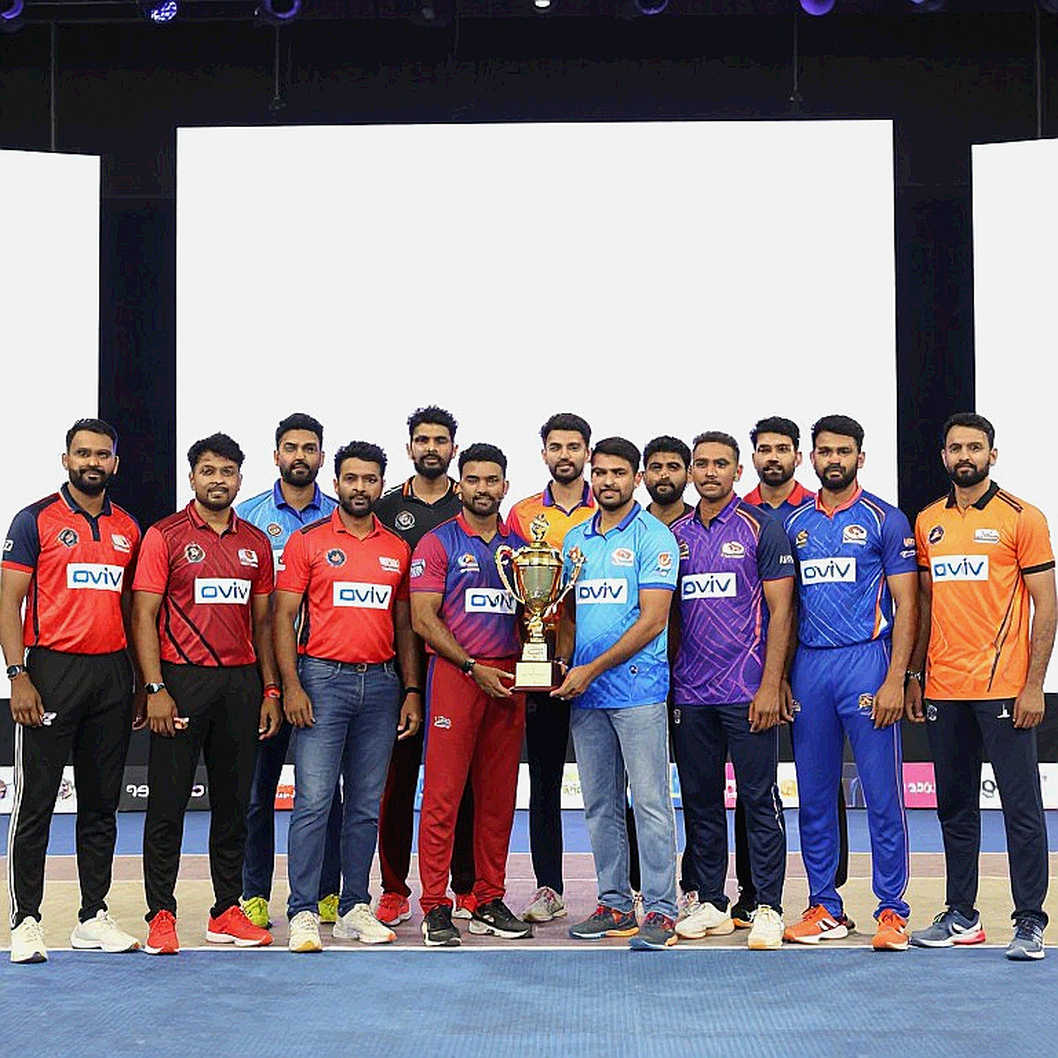
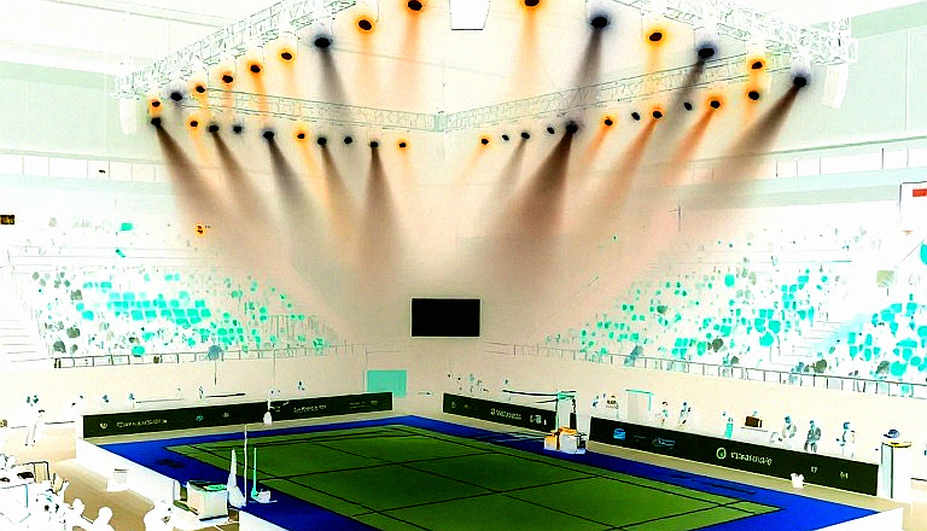
संबंधित खिलाड़ी
अनुशंसित
Commonwealth Kabaddi 2026, Match 4: When Rotation Is a Bigger Story Than the Scoreline2026-10-25
The PKL Retention Window: The Real Decision Buried Between the Wage Bill and the Release Clause2026-10-25
Kabaddi: From the Village Akhada to the Global Stage2026-10-31
Commonwealth Kabaddi Championship 2026, Day 1: The Table's Arithmetic Is Correct, the Table's Story Is Not2026-10-25
Commonwealth Kabaddi Championship 2026: Surjeet Singh Captain, Naveen Kumar Deputy — Ahmedabad’s Real Ledger Is in the Format and the Silence2026-10-30
अनुशंसित
After 18-27: What the Kabaddi Ledger Records, and the Line Still Blank2026-11-01
Commonwealth Kabaddi Championship 2026: Questions Over India's Rhythm, Big Win Expected Against Nigeria2026-10-27
Before Nigeria: India's 3-0 Is Smaller Than It Looks — the 42-Point Squeeze on England Is Bigger2026-10-28
The PKL Retention Window: The Real Decision Buried Between the Wage Bill and the Release Clause2026-10-25
Commonwealth Kabaddi Championship 2026, Day 1: The Table's Arithmetic Is Correct, the Table's Story Is Not2026-10-25
अनुशंसित
The Do-or-Die Arithmetic: In Kabaddi, the Points Are Settled Before the Scoreboard Knows2026-10-25
Kabaddi: From Village Soil to the Global Stage — The Full Story of a Sport2026-11-01
Commonwealth Kabaddi Championship Day 1: Scotland's 59-30, Lovepreet Brar's 23 Raid Points, and a Points Table That Tells Only Half the Story2026-10-25